Registering with NZ On Screen means you can:
We won't share your data with anyone (see our Privacy Policy) and we won't spam you. It's that simple.
Don Reynolds started working in the sound department, and has gone on to produce fifteen features, many of them Kiwi classics.
He began working in sound in the late 60s, while training with the National Film Unit. Five years later Reynolds established sound company Associated Sounds, which grew to become one of the biggest independent post-production facilities in the country.
Reynolds worked on many key productions of the 1970s, including the landmark documentary series Tangata Whenua, independently-made TV drama The Games Affair, and shorts Dagg Day Afternoon and A State of Siege. During the renaissance of Kiwi filmmaking which began in the mid-70s, Reynolds could often be found either holding the microphone boom, recording the sound or mixing the completed soundtrack. He worked on the Blerta television series - home to a smorgasboard of future film talents - as well as features Solo and Smash Palace.
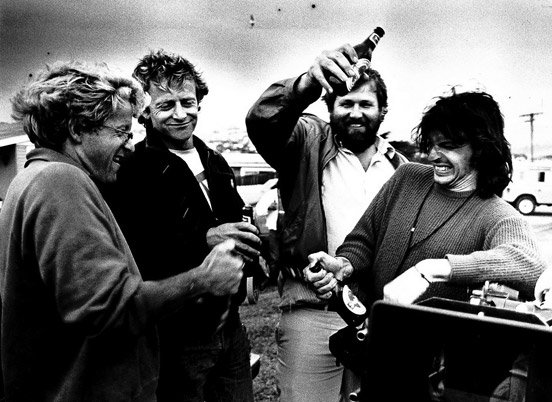
Reynolds shifted into producing through his sound work on Goodbye Pork Pie: in 1980 director Geoff Murphy came to him with a proposal for Associated Sounds to provide sound equipment and mix the film's soundtrack, much of which was recorded after the fact, on a deferred basis (i.e. by being paid out of the film's future income).
In 1983 Reynolds produced and worked on sound for an adaptation of Keri Hulme short story Hooks and Feelers. Shot partly on his Wainuiomata property, the short film was directed by Melanie Rodriga; the following year Rodriga and Reynolds went on to make their debut as feature film director and producer with Trial Run, the tale of an isolated photographer (Annie Whittle) threatened by a mysterious figure.
Over the next four years Reynolds would produce, or have a hand in producing, eight more features. In 1984 he helped negotiate the sometimes tense shoot for psychological drama Heart of the Stag, which went on to win praise, some singling out its star, Bruno Lawrence.
Reynolds would re-unite with Stag director Michael Firth in 1985, for the feature Sylvia, which they co-produced together. Based on the life of teacher Sylvia Ashton-Warner, the movie was voted one of the year's ten best by Village Voice critic Andrew Sarris.
Reynolds next worked on the ambitious cross-country shoot for science fiction classic The Quiet Earth. The film saw him working once more with director Geoff Murphy (Reynolds co-produced, alongside the project's original director, Sam Pillsbury).
Working with producer Chris Hampson, Reynolds next produced two films with ambitions unmatched by their budgets: underseen road movie/romance Arriving Tuesday, and Illustrious Energy, an acclaimed tale of nineteenth century Chinese goldminers. Illustrious Energy marked the directorial debut of cinematographer Leon Narbey.
The late 80s saw Reynolds caught up in company Mirage Entertainment, and the French shoot of Larry Parr romance A Soldier's Tale. Reynolds' production company Cinepro had merged with Parr's company shortly before the October 1987 stockmarket crash, and the collapse of Mirage.
Reynolds went to work at newly created TVNZ drama subsidiary South Pacific Pictures, and within the year was appointed Chief Executive. He produced Welsh-Kiwi rugby romp Old Scores, was executive producer on the Kiwi classic End of the Golden Weather, and part of a 13-strong multi-national team behind Alexander Graham Bell mini-series The Sound and the Silence. In 1991 Reynolds moved to TVNZ as Director of Production and Co-production, with a responsibility for locally produced shows.
During this period Reynolds was one of a trio of executives who worked on overcoming unease within TVNZ about the viability of launching a daily soap opera. The soap was Shortland Street, and Reynolds helped secure a guarantee that the show's primetime slot would remain in place for a year, giving it time to find its footing.
The Shortland Street team took advice on making the programme from Australian soap experts Grundy Television. Later Reynolds moved to London, to work for Grundy as Senior Vice President of Drama. While in London he transferred to an international co-production role with Canadian company Atlantis Films (later Alliance Atlantis). Reynolds had earlier worked with the company on Kiwi-Canadian co-production Gold, set during the Central Otago goldrush. The company's output would include an ill-fated TV reimagining of Jules Verne's Mysterious Island, shot down under.
Next Reynolds moved to Sydney, to take up a newly-created position as Head of Programme Production for the Australian Broadcasting Corporation. The job made him responsible for all ABC production in television, radio and multi-media.
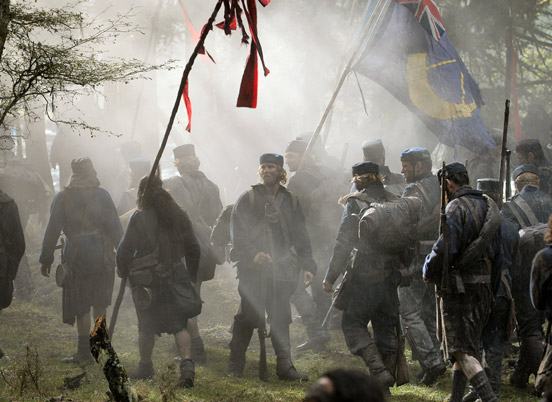
Keen to get more hands on, Reynolds created Sydney-based company Film.Com Pty. In 2002 he joined with commercials veteran Geoff Dixon to run Silverscreen Films. The company produced three features, before hitting the wall: Geoff Murphy thriller Spooked, Australian drama Peaches, and Vincent Ward historical epic River Queen.
Reynolds' next feature is Australian psychological thriller Hidden Shadows.