Registering with NZ On Screen means you can:
We won't share your data with anyone (see our Privacy Policy) and we won't spam you. It's that simple.
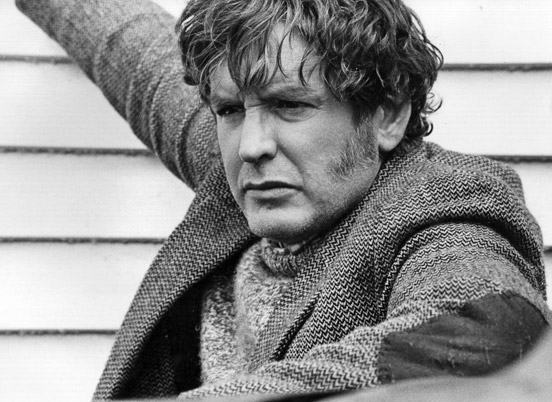
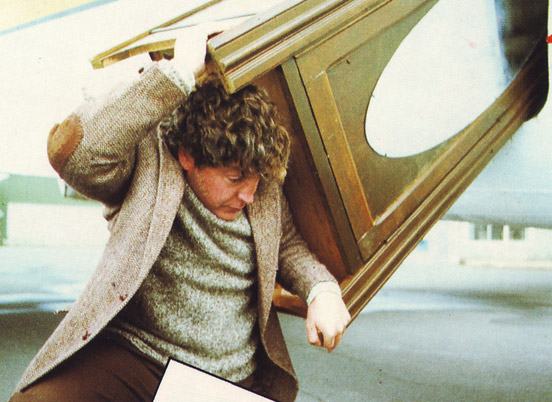
Grant Tilly's acting career has included performances in a run of acclaimed New Zealand plays, including Foreskin's Lament, The Daylight Atheist, and Joyful and Triumphant. His screen career has also hardly lacked for variety: he has played pedantic bureaucrats (Gliding On), cow-cockies (Carry Me Back), missionaries (The Governor), and villainous German officers (Savage Islands).
Tilly was born in Sydney, though he was only there a month before his holidaying New Zealand parents returned to Wellington. Later he trained as a teacher in Wellington and Dunedin, then began working at the local education board, at a special unit based around training and teaching art and craft.
As the 60s began, Tilly won a Government bursary to study Child Drama in England. On his return he began tutoring at an acting school run by Nola Millar, who later founded the New Zealand Drama School. Tilly would continue his association with various incarnations of the drama school until 1988, balancing work as an acting tutor with performances for stage, screen and radio.
Tilly first appeared on screen in one-off television plays, including well-reviewed comedy The Tired Man (1967), and the Feltex award-winning Green Gin Sunset (1969). In Sunset Tilly starred as a newly wedded merchant seaman choosing between settling down, or heading back to sea.
He also worked with writer/actor Joe Musaphia on live children's show Joe's World, which saw him and Joe Musaphia in front of the cameras, mixing comic ad-libbing with educational content.
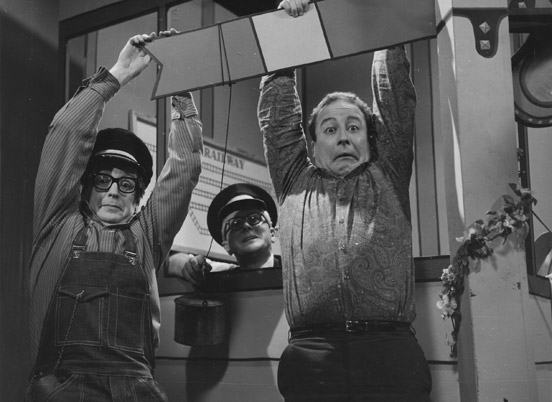
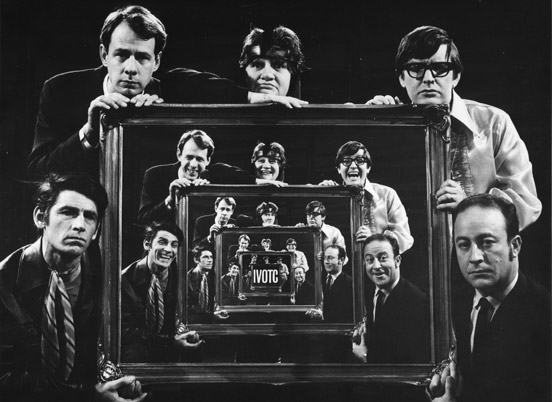
In 1969 Tilly joined the cast of early sketch and music show In View of the Circumstances, written by Musaphia and Roger Hall. Tilly recalls that the creative team were instructed to avoid mentions of "the Queen, religion, or the RSA". He would also work with Hall (and John Clarke) on-stage, in the ill-fated Brian Edwards Travelling Road Show.
In the 70s Tilly's screen work began to sound a more serious tune, though his natural bent for understated comedy would resurface as the decade came to a close. Alongside work on a run of shorts, he had a small role as a doctor in Paul Maunder's social realist drama Gone Up North for a While, and played unionists in pioneering forestry town drama series Pukemanu and The Longest Winter.
The Longest Winter (1975), directed by Tony Isaac, dramatised the impact of the Great Depression over three episodes. Tilly appeared in scenes based on the Queen Street riot of 1932, portraying real-life unionist Jim Edwards.
Tilly suspects that his work in The Longest Winter may have won him a key role in historical epic The Governor. Tilly donned a cassock to play reverend Henry Williams, as he tries to mediate between Governor George Grey and Hone Heke.
Tilly's name is often associated with the work of playwright Roger Hall. Tilly has appeared in many of Hall's plays, including one-man show C'mon Black. In 1976, when Hall wrote his breakthrough hit play Glide Time - a tale of public servants doing very little - he had Tilly in mind for the role of storeman Jim. Tilly was busy on another play, though he did find time to design the Glide Time set. Later though he played Jim in a one hour television adaptation, Glide Time (1978).
By the time Gliding On began its long television run in 1981, actor Michael Haigh had made the role his own. Instead Tilly spent time playing Wally, "one of those awful little self-important bureaucrats".
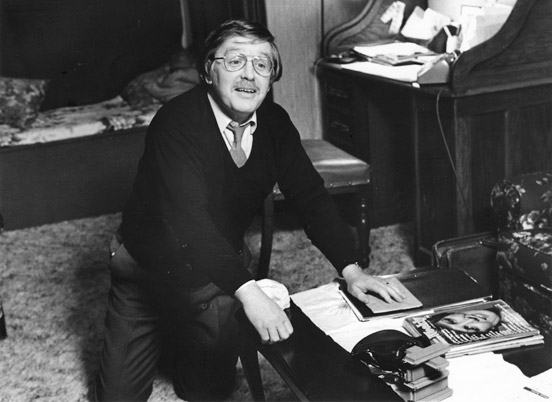
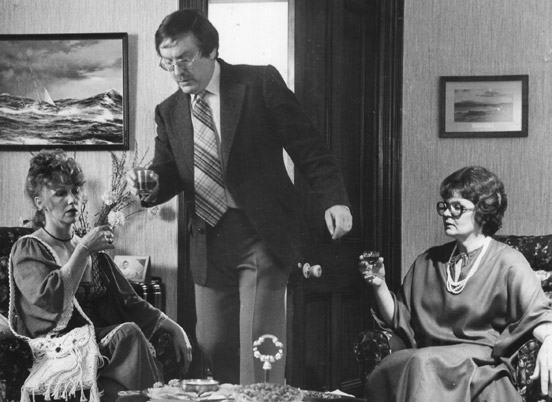
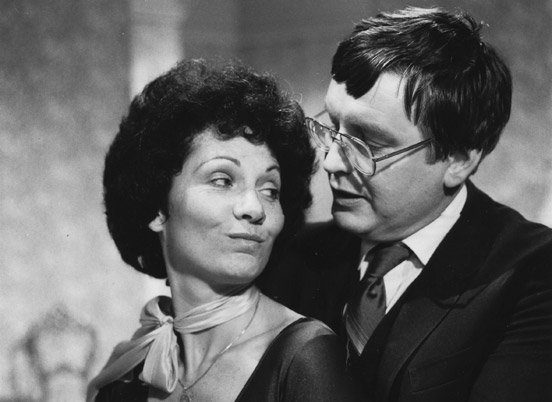
On stage, Tilly had acted in Hall's second adult play Middle Age Spread, the tale of a headmaster having an affair, and a mid-life crisis. In 1979 Tilly got to star in the big screen adaptation. American showbusiness magazine Variety praised Tilly's performance, comparing him to "an antipodean Woody Allen".
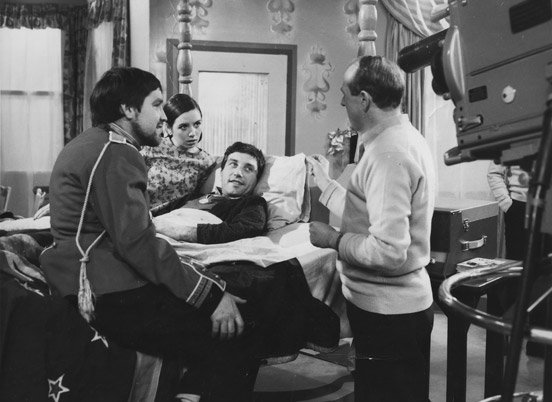
Tilly also co-starred in the Hall-penned Bed Time, a sitcom about a woman who starts earning more than her husband. But the Bed Time pilot was never used. Under the title Conjugal Rights, it later became a successful stage show and comedy on English Television, sans Tilly.
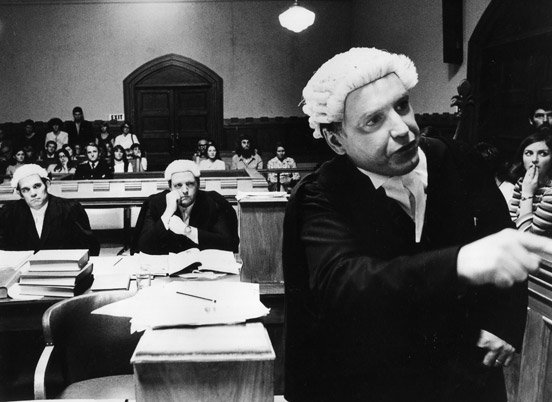
By the late 70s, Tilly was popping up on screen all over the place. Aside from forgotten 1978 sketch show The Les Deverett Variety Hour, he appeared on the big screen as a repressed accountant in small town tale Skin Deep, a crown prosecutor in Beyond Reasonable Doubt, and a yankee assassin in Dangerous Orphans.
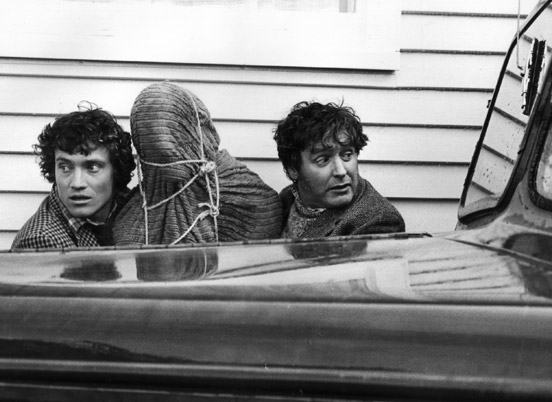
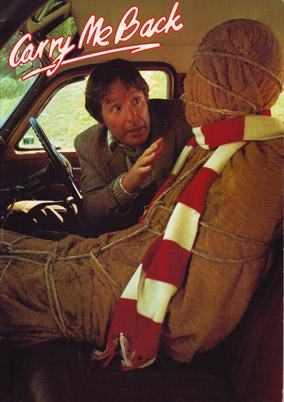
Three years after Middle Age Spread came Tilly's second big-screen starring role, yokels comedy Carry Me Back. Tilly and Kelly Johnson (Goodbye Pork Pie) played farmers who head into the city for a rugby game, then have to secretly transport their recently deceased father back to the farm. Tilly got a memorable scene where his character finally unleashes his side of the story, to the dead father sitting quietly next to him in the car.
Australian critic David Stratton praised the well-developed characters and Tilly's versatility, arguing that he was hardly recognizable from Middle Age Spread. The same year Tilly also played forgotten co-star to newsreader Angela D'Audney, in one-off TV play The Venus Touch.
In 1986 Tilly joined the powerhouse cast of fantasy series Cuckoo Land, an early television show written by author Margaret Mahy. Tilly played a conservationist who lives in a tree, and the show's fantastical settings meant he did most of his acting in front of a blue screen.
Two years later he starred in serio-comic television series Bert and Maisy, based on the play by Robert Lord. Tilly played Bert, with Alice Fraser as his on-screen wife. It was one of Tilly's less enjoyable experiences, as he felt pressures from above to shave off eccentricities that made the characters interesting.
In 1989 Tilly was given a Listener TV award for his portrayal of artist Toss Woollaston in the Rawiri Paratene-penned tele-play Erua. He argued that it was "an awesome responsibility" to play someone who was still alive.
Tilly's work as an off-screen narrator dates back until at least 1971, and includes early current affairs show Survey, reality show Emergency Heroes and movie romance Flight of the Albatross.
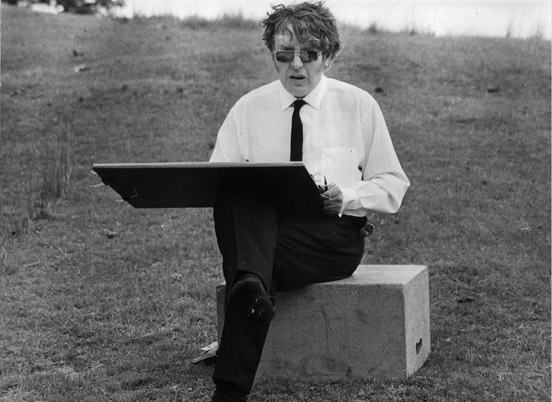
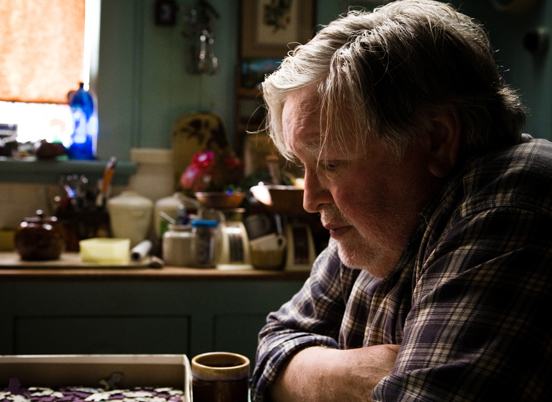
Though Tilly continues to act occasionally on-screen - he appears in 2009 short Roof Rattling, and played hospital head Dennis Bonham in TV movie Clare, based on the cervical cancer experiments at Auckland National Women's Hospital - these days he is busy in other fields. Tilly began illustrating scenes of Wellington for a local newspaper in the 70s, and now concentrates on pop-up-style artworks of buildings.