You are here:

Howard Morrison

Entertainer [Te Arawa]

 Howard Morrison

Biography

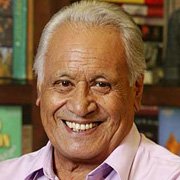
Howard Morrison was born on August 18, 1935 in Rotorua, one of six children born to Temuera Morrison, a former Maori All Black, and entertainer Kahurangi Morrison (also known as Gertrude Harete Davidson). His siblings included former Ngati Rangiwehiwehi kapahaka leader Atareta Maxwell, who died in 2007, Judith Merenia Tapsell, Rene Mitchell and Linda Morrison. 

Morrison was raised in Rotorua and in Ruatahuna, attending a native school in Te Urewera before going to Te Aute College in the Hawkes Bay and Rotorua Boys High School.

His dream of becoming a professional entertainer was sparked by Maori culture groups and concert parties, but the jobs he took after leaving school included working as a land survey chainman for the Department of Maori Affairs, an electricity meter reader for the Tourist Department and a storeman at the Whakatu freezing works near Hastings.

It was at Whakatu in 1954 that Morrison replaced Kahu Pineaha in the Clive Trio (with Isabel Cowan and Virginia Whatarau). He also joined Te Awapuni Maori Concert Party. This gave him his first taste of touring the country.

By 1955 Morrison was back in Rotorua, playing rugby for Waikite and organising vocal groups to entertain at rugby club socials.

After touring Australia with the Aotearoa Concert Party, he put together a group with his brother Laurie, cousin John, Gary Rangiihu, Chubby Hamiora and Wi Wharekura to contest and win Rotorua's Christmas carnival talent quest. Morrison, Rangiihu and Hamiora then added guitarist Gerry Merito to contest a talent contest in Hamilton as the Ohinemutu Quartet, coming third.

In 1957 Morrison married Rangiwhata Ann Manahi (Lady Kuia) in 1957. They had two sons and a daughter. It was also the year he got more serious about his music, forming the Howard Morrison Quartet with his brother and cousin and Gerry Merito. It caught the eye of Auckland entrepreneur Benny Levin, who toured them nationally on a rock and roll package show and as support to American comedian Stan Freberg.

Levin put them in producer Eldred Stebbing 's Auckland studio on a single by single deal with Zodiac Records. Their first record, 'There's Only One of You', came out in 1958 on 78 and 45, but it was the second, 'Hoki Mai' coupled with 'Po Kare Kare Ana', which took off in Auckland and Rotorua.

In 1959 Harry M Miller spotted the band playing its regular Saturday night gig at Auckland's Colony dine and dance restaurant and became its manager, setting up La Gloria records to release its output. 

At this stage the line-up stabilized. John and Laurie Morrison and Tai Eru had been and gone, and Wi Wharekura and Noel King took up the baritone and bass roles.

Looking at the success the band had for Zodiac with 'The Battle of the Waikato', Miller suggested it parody another Lonnie Donegan song, 'My Old Man's a Dustman'. 'My Old Man's an All Black', a humorous protest at the exclusion of Maori from the team for the1960 rugby tour of South Africa, was recorded cheaply at a concert at the Pukekohe Town Hall and went on to sell 60,000 copies.   

Miller shifted to Australia in 1963, but Morrison was reluctant to follow. The quartet disbanded in 1964 and Morrison went solo, touring the country with American artists Ben E King, Gene McDaniels and Dee Dee Sharp and with the Miss New Zealand Show.

In 1966 he acted in Pacific Film's musical comedy Don't Let It Get You  with a young Kiri Te Kanawa as well as the Keil Isles, the Quin Tikis and Lew Pryme. This performance helped Morrison earn the Entertainer Of The Year award.

Over the next few years he established a reputation on the Asian Pacific circuit including Hawaii, Thailand, Kuala Lumpur, Singapore, Taiwan, Hong Kong and Manila, returning home for short cabaret residencies in Auckland.

In 1968 he released two solo albums on Joe Brown's label, Born Free and Power Game, as well as a duet album with country singer John Hore, Take Ten. He switched to RCA in 1969 for Getting It All Together.

Morrison's passion was not just for music, he also felt a need to help rangatahi Maori to reach higher levels of achievement in education. He was recruited into the Department of Maori Affairs by its visionary secretary Kara Puketapu as a youth consultant, and the success of his work in schools and his marae education programmes snared him the position of director of youth development in 1979.

Morrison's nephew, actor Temuera Morrison said his uncle's love for his nephews and nieces was a precurser to his work with youth development. He says he owed his success in part to the pathway his uncle carved out for him.

"I remember as a young boy, growing up - we were always told to stand up and make a speech, stand up and sing a song, do this and do that, and when I look back, he was grooming us, training us for our journey."

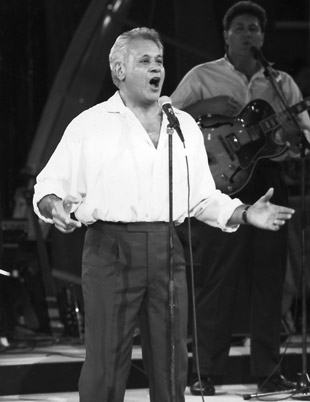
He says as well as a booming voice and a charismatic stage presence, his uncle Howard had a rare ability to draw in a crowd and have them in the palm of his hand. 

"As a young guy, I used to see him always working the crowd, milking the crowd, and knowing which song to come in on. He would have a selection of songs and he would rehearse all of them and he would tell the band, 'well, good luck,' because he wasn't quite sure how he was going to play the crowd. That was a specific talent. "

In 1982 Morrison recorded a television special in Hamilton. The spin off album and single on RCA gave Morrison his greatest solo success, with 'How Great Thou Art' or 'Whakaaria Mai' topping the national charts for five weeks.

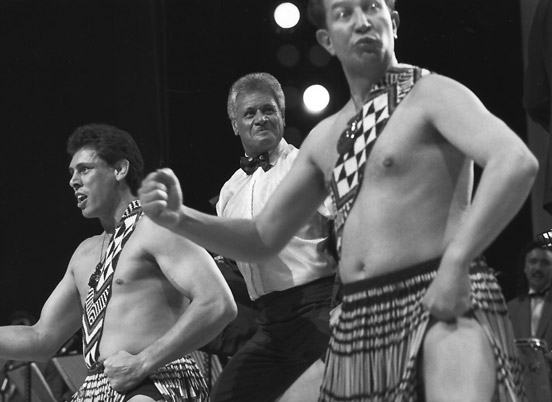
In 1990 Morrison was knighted for his services to entertainment, with the investiture ceremony at his home marae of Ohinemutu. In 2006 he received an honorary doctorate by the University of Waikato.

To Sir with Love was his last concert in Rotorua at the Convention Centre in 2009. Sir Howard Morrison died on September 24, 2009, and is buried at Kauae Cemetery in Ngongotaha, Rotorua.