Registering with NZ On Screen means you can:
We won't share your data with anyone (see our Privacy Policy) and we won't spam you. It's that simple.
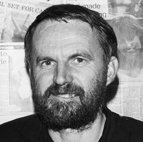
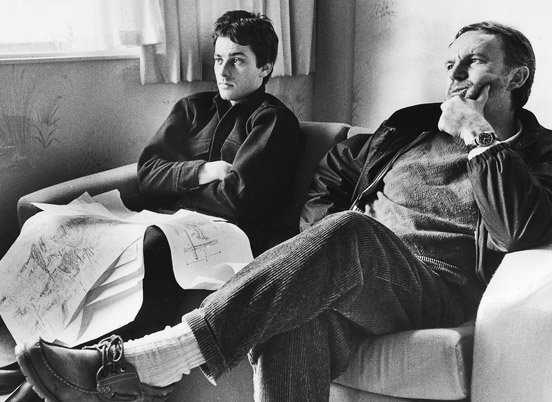
John Maynard is a rare survivor in the ephemeral business of film producing. After 30 years of continuous activity in both New Zealand and Australia, he is highly regarded on both sides of the Tasman.
He is recognised particularly for his support and encouragement of emerging talent, often with risky and original films. Most notably, he helped launch the feature film making careers of directors Vincent Ward and Jane Campion.
Maynard was born in Australia and was appointed foundation director of the Govett-Brewster Art Gallery in New Plymouth in 1967. The gallery opened in 1970 with Real Time, a major light-and-sound environment set up in collaboration with Leon Narbey.
In 1971 Maynard resigned from the gallery to study and travel in Australia, India, Europe and Britain. During this period his play Partisan:Bound to Assist was broadcast on Kiwi television to receptive audiences. Plans to turn this this story of a young lawyer and a civil liberties organisation boss into a series never left the planning stages. In 1975 he was appointed Exhibitions' Officer at the Auckland City Art Gallery.
In 1979 Maynard transfered his attention to film, producing his first feature, Geoff Steven's small town tale Skin Deep. The two would work together again on two ambitious documentaries filmed in China, The Humble Force and Gung Ho. Maynard also produced a successful documentary for Leon Narbey (the cameraman who had shot all of the above projects) — Man of the Trees, about conservationist Richard St. Barbe Baker.
Maynard's next feature was Vincent Ward's Vigil (1984) the first New Zealand film to be selected for competition at the Cannes Film Festival. Ambitious follow-up The Navigator lost a key investor shortly before filming was due to start, but Maynard successfully resurrected the project as an Australian-NZ co-production, after moving across the Tasman. He clinched an amazing hat-trick the following year with Jane Campion's Australian-shot debut, Sweetie (1989), in the process becoming the only Australasian producer to get three consecutive pictures into competition for the Palme D'Or.
Campion's next film eclipsed her first by far. Originally made for television, An Angel At My Table (1990), produced by Maynard and his partner Bridget Ikin, was hugely successful and established her as a world class director.
These are the headliners on a long slate of Maynard's productions. Titles that found less purchase with audiences include Geoff Steven's second feature Strata, cinematographer Leon Narbey's The Footstep Man, Anna Campion's English-shot Loaded, and Sweetie co-writer Gerard Lee's comedy All Men Are Liars.
The name of Narbey's picture was resurrected for a distribution company Maynard ran for a few years in the 1990s. Footstep Pictures specialized in assisting small independent pictures into cinemas. Its greatest success was Once Were Warriors, which did tremendous business.
After coming and going for some time, Maynard finally plumped for Australia as his permanent base. His taste for aesthetically and politically challenging films has remained undimmed, and resulted in some strong pictures, notably crime family drama The Boys directed by Rowan Woods, The Bank and East Timor tragedy Balibo, both directed by Maynard's business partner Robert Connolly, and Romulus My Father, helmed by actor Richard Roxburgh.
In 2005, in recognition of his support for directors and the ADG, the Australian Directors Guild awarded their highest honour to Maynard, the Cecil Holmes Memorial Award.