You are here:

John O'Shea

Filmmaker

 John O'Shea

Biography

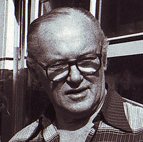
John Dempsey O'Shea was a dedicated cinephile and consummate practitioner of film. He championed an independent New Zealand film industry from the beginning of his career until his death, age 81, in 2001.

O'Shea started as an assistant to the censor in the 1940s. In the early O'Shea met NFU cameraman Roger Mirams, when Mirams was looking for a writer to work on a documentary about racial prejudice. Mirams had started his own independent filmmaking company in 1947, with fellow NFU defector Alun Falconer. When Falconer left New Zealand in 1950, the way was left clear for O'Shea and Mirams to make their first feature for the company, now called Pacific Films.

And so the duo co-directed and produced Broken Barrier, the story of the relationship between a Pākehā journalist and a young Māori woman. Lacking the ability to record sound, apart from a few specific scenes, O'Shea cleverly constructed the script so that each character's thoughts were heard as a voice-over.

Broken Barrier premiered in 1952. It was the first New Zealand feature since World War II. Only two other features emerged between 1945 and 1970, both directed by O'Shea.

By 1957 both of Pacific's original founders had left to pursue moviemaking overseas; by the 60's O'Shea's name was synonymous with Pacific Film Productions Ltd. The company produced newsreels, training films, sponsored documentaries, road safety films, television commercials and sports events; including every All Black test between 1956 and 1962.

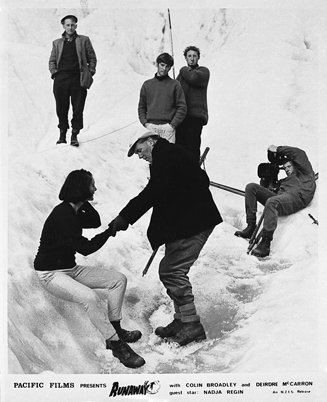
The second and third Pacific features followed later that decade: 1964's stylish man alone meets Euro-cinema mood piece Runaway (released in England in severely shortened form as Runaway Killer) and 1966's considerably lighter and better received Don't Let it Get You, which showcased the musical talents of Howard Morrison, Lew Pryme, and Kiri Te Kanawa.

Pacific Films became a fertile training ground for young filmmakers, "a sort of alfresco film school" (John O'Shea, 1992). Many of the staff - including directors Gaylene Preston, Barry Barclay, Tony Williams, and cinematographers Michael Seresin and Waka Attewell  - would go on to win Kiwi filmmaking renown. After extended banging on the door of local television by O'Shea, Pacific's team were eventually commissioned to contribute to TV documentary slot Survey, where Williams' talents quickly shone.

In 1974 John O'Shea and Pacific Films produced landmark documentary series, Tangata Whenua (The People of the Land). The six-part series, written and presented by historian Michael King and directed by Barry Barclay, was hugely significant in terms of sophisticated representation of Māori culture on NZ television.

In 1987 O'Shea produced Tama Poata and Barclay's lyrical Ngati, the first feature to be written and directed by Māori. The film received national and international critical acclaim. Sadly Barclay's follow up Te Rua would see director and producer having conflicting visions as to what the finished film should look like, and who its audience was.

O'Shea continued to play a part in the evolution of NZ film and television.  He was a founding member of the New Zealand Film Archive, the Wellington Film society and the New Zealand Film Commission.

In 1990 John O'Shea received an OBE for his services to film and in 1992 he received the first Lifetime Achievement Award presented by the NZ Film Commission. The following year he was the subject of this documentary by Bryan Bruce.

John O'Shea passed away in 2001.