Registering with NZ On Screen means you can:
We won't share your data with anyone (see our Privacy Policy) and we won't spam you. It's that simple.
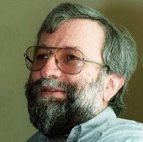
When writer and historian Michael King died in 2004 at the age of 58, the NZ Herald obituary wrote:
"The man who explained so much about the people of New Zealand leaves a formidable body of literature, a plain language, accessible history likely to endure and a faith in his country."
Michael King was born in Wellington in 1945. He grew up in the seaside suburb of Paremata, enjoying a Kiwi childhood often spent exploring the whenua. After taking a BA in English and History at Victoria University, King moved to Hamilton to work as a journalist with The Waikato Times. His academic studies continued with an MA at the University of Waikato.
At this time he decided to address the yawning gap in historical scholarship on Māori subjects. His early writing encompassed many Māori topics, starting with Moko: Maori Tattooing in the Twentieth Century in 1972.
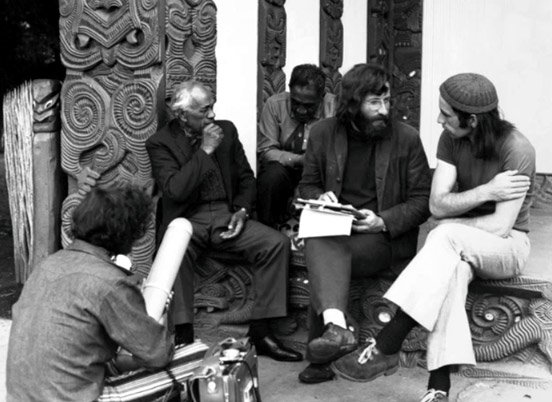
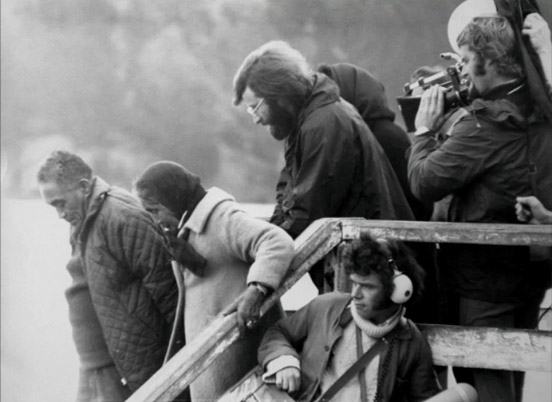
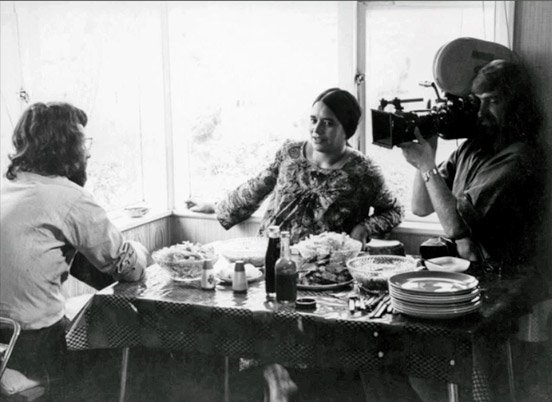
It was a wide open field, and King was good at it. His affinity for Māori subjects led to him acting as a researcher, writer and presenter on the landmark TV series, Tangata Whenua, produced by John O'Shea and directed by Barry Barclay. The series won King a 1975 Feltex award for writing.
Inevitably, however, King's credentials as a historian of Māori culture would be questioned by a new generation of Māori academics. King agreed he was "culturally removed" from his subject, but defended his writing on the grounds that nobody else was doing it. Unlike a number of his critics, King put his money where his mouth was, sensitively researching his subjects and actively helping emerging Māori writers by assisting them to get their work published.
The focus of King's work did change considerably, however. His ruminations on his own cultural heritage led to a key work, Being Pakeha (1985). The book stepped away from pure history, and instead confronted the essence of what it meant to be a Pākehā New Zealander. King would also write biographies of Princess Te Puea (1977), writer Frank Sargeson (1995) and Whina Cooper (2003).
Some of King's work was mediated by the necessity of making a living. Like many creative people, he constantly struggled to bring in an income. King mixed popular writing with academic work and research, often juggling an enormous work load.
Diabetes, a bout with throat cancer and the ill health of his second wife, Maria Jungowska, compounded King's problems but he rarely complained. He regarded the thin financial rewards of his craft with admirable stoicism, stating "please understand that there is nothing else that I wish to do."
King was arguably at his peak when he was killed in a freak vehicle accident in 2004.
His biography of Janet Frame, Wrestling with the Angel (2000) was met with acclaim; his own life was being documented in a film for television, History Man (2004); and his most recent book, The Penguin History of New Zealand (2003), was topping best seller lists. The book would go on to sell an incredible 220,000 copies and counting, and convert a new generation of New Zealanders to become interested in their own history.
King won many accolades, awards, and fellowships during his career, including the 2003 Prime Minister's Award for Literary Achievement. He received the Winston Churchill Fellowship (1980), the Fulbright Visiting Writers' Fellowship (1988), and the Order of the British Empire (1988).
In 1987 and 1989 King won the NZ Literary Fund Award, in 1984 and 1990 the Wattie Book Of The Year Award and, in 1978, the NZ Book Award (non-fiction). He was the Burns Fellow at Otago University in 1998-99.