Registering with NZ On Screen means you can:
We won't share your data with anyone (see our Privacy Policy) and we won't spam you. It's that simple.
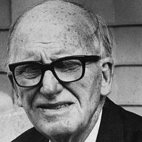
'Pioneer' is an overused word, but Rudall Hayward’s claim to the title is strong. Hayward was directing and shooting feature films in the 1920s, in an age when movies were almost inevitably made by people in, or from, other lands. Fifty years later his final movie To Love a Maori (1972), made in partnership with second wife Ramai, was the first colour feature directed by New Zealanders on home soil.
Hayward was an ambitious, prolific and publicity-savvy filmmaker. Aside from short comedies, educational films and newsreels, his half century-long career encompasses seven feature films. Four of them were made before the arrival of talkies, more than any silent director working in New Zealand.
Many of the films explore historical conflicts between Māori and Pākehā; Writers Sam Edwards and Stuart Murray have argued that the features are Hayward’s major achievements, and that in them he “visualized and examined many of the myths that underpin New Zealand society and history”. Author Deborah Shepard argues that Hayward’s early features display “a sensitivity and political awareness of Māori history” well beyond his Pākehā contemporaries.
Hayward was born in Wolverhampton England in 1900, to a family with a long history as touring performers and entrepreneurs. Rudall arrived in New Zealand in 1905, when his family toured New Zealand with a variety show which included early film screenings.
In 1909 his father and uncle bought Auckland’s Royal Albert Hall, and turned it into a cinema. By 1912 Hayward’s Picture Enterprises ran at least 14 movie theatres across New Zealand; Rudall junior began learning the projectionist’s ropes at the age of nine.
Later Hayward studied electricity for two years at Waihi’s School of Mines, then began working in films - seemingly to the chagrin of his family, who were aware that distributing movies made more financial sense than making them. Hayward worked on a film for a visiting Australian director - "painting the legs of an Australian actress" to make her look Māori, for 1921’s The Betrayer - and worked on movies in Australia.
Queen Street theatres showed no interest in Hayward’s first film, two-reel comedy The Bloke from Freeman’s Bay (1921). According to Hayward, his uncle Henry offered money to burn it in order to preserve the family name. Hayward persuaded an Aunt to run it in her Ponsonby theatre, and postered every space he could. After calling the police and complaining about the crowds, he helped create newspaper headlines, ensuring later screenings.
As a child, Hayward had been inspired by the writings of historian James Cowan. He would often return to Cowan’s work for inspiration in years to come, realising that New Zealand’s history offered material as dramatic as any Hollywood western. “I decided to capture some of the wild history of our beginnings on a strip of celluloid film, and immediately, while there were still people alive who remembered the period accurately.”
At the age of 21 Hayward directed and produced his first feature, romantic melodrama My Lady of the Cave. He adapted the tale from a popular newspaper serial. Profits made from local screenings were lost "trying to get it released overseas". He married Hilda Moren the following year, and they installed a darkroom in her mother’s house. Hilda’s many contributions included costumes, casting, and editing.
Between 1925 and 1928 Hayward directed, produced, and co-wrote (or adapted) another three features: the original silent version of Rewi’s Last Stand (1925), The Te Kooti Trial (1927), and The Bush Cinderella (1928).
The Te Kooti Trial is based on incidents from the military campaign of legendary leader Te Kooti. Hayward used local Māori in his cast, and gave the starring role to elderly Tuhoe chief Te Pairi o te Rangi, who had carried rifles for Te Kooti as a boy. On the day planned for the film’s premiere, the Government arranged a private screening to get feedback from Māori politicians and Ringatu elders, after which the censor demanded the removal of two subtitles referring to Te Kooti’s "fake miracles". Some have argued that Hayward then used the incident to win publicity for the film, but it appears more likely that the fuss was created by Whakatane Films, the company that financed it.
The Bush Cinderella was a romance staring 1927 Miss New Zealand Dale Austen; Hayward wrote in 1940 that the low budget helped make it his most successful film.
As the depression took hold, the Haywards began travelling around New Zealand towns, pumping out a series of comedic shorts. Each film showcased some locals on screen, a chase scene, and included the name of the town in the title, to help win over local audiences. Mock-documentary Forgotten Silver pays tribute to these ‘community comedies’.
The arrival of talkies in the late 20s threw New Zealand films into a coma. Hayward’s films and career changed dramatically, arguably for the worse. Faced with buying "extortionately" priced American sound equipment, Hayward and his team apparently spent two years developing their own. Hayward used the camera on early comedy Hamilton Talks (1934) and newsreels, including an interview with George Bernard Shaw which Hayward said was shown internationally.
He also shot - and likely directed - depression-era tale On the Friendly Road (1936) remembered most for scenes of radio legend Reverend Colin Scrimgeour (aka Uncle Scrim).
Hayward followed it with his second, sound version of Rewi’s Last Stand, injecting romance into a battle from the New Zealand Wars which Māori periodical Te Iwi has noted was in reality "a bloody, almost genocidal confrontation". Hayward filmed on a painstakingly recreated replica of Orakau Pa in the Waikato. He later took the only negative with him to England, where the film was recut into a substantially shorter form as The Last Stand. This version was later screened for many years to Kiwi school children.
Rewi also introduced Hayward to his future wife and creative partner, photographer Ramai Te Miha (aka Patricia Miller), who played one of the leading roles. They married in 1943, and three years later departed for Britain with Rudall’s specially-built camera. There they made newsreels, documentaries, and Rudall directed 34-minute ship tale The Goodwin Sands.
By 1952 the couple were back in New Zealand, soon winning many international sales for a doco on Opo the dolphin, and later shooting a series of children's educational films. There were also filmmaking excursions to Australia, Albania, and an invitation from the Chinese Government to make a series of films on China.
In the 70s, the Hayward’s filmmaking exploits had finally begun to win renewed attention. The NZBC screened Rewi’s Last Stand, and Rudall was given a special Feltex Award, and later an MBE. He was also the subject of an admiring article in Landfall by visiting American scholar Robert Sklar, who argued Hayward’s screen picture career was one of the longest in the world.
The couple worked on two films for television and completed their final feature To Love a Maori, a praised yet under-resourced tale of young Māori moving into the city, shot in colour on 16mm. Rudall Hayward died of pneumonia in 1974, while on a promotional tour for the film.
Since then the Film Archive have restored three of Hayward’s early features. He is also the subject of extended chapters in books New Zealand Filmmakers and Between the Lines.
Sources include
Rudall Hayward, ‘Twenty Years Behind a Movie Camera’ - NZ Listener, 8 November 1940
Diane Pivac, Rudall Hayward’s The Te Kooti Trail: Stirring the pages of New Zealand history (Booklet) - New Zealand Film Archive, 2001
Diane Pivac, 'The Bush Cinderella' - 2000 NZ Film Festival Souvenir Programme
Sam Edwards, 'Docudrama From The Twenties - Rudall Hayward, Whakatane, and the Te Kooti Trial' - Historical Review: Bay of Plenty Journal of History, November 1993, Volume 41, Number 2
Sam Edwards and Stuart Murray, ‘A Rough Island Story - The Film Life of Rudall Charles Hayward’ in New Zealand Filmmakers. Editors Ian Conrich and Stuart Murray (Detroit: Wayne State University Press, 2007) Page 35
Sam Edwards and Helen Martin, New Zealand Film 1912 - 1996 (Auckland:Oxford University Press, 1997)
Deborah Shepard, ‘Shadow Play - The film-making partnership of Rudall & Ramai Hayward’ in Between the Lives - Partners in Art. Editor Deborah Shepard (Auckland University Press, 2005) Page 113
Lindsay Shelton, 'Hayward, Rudall Charles Victor' (Profile) Te Ara Website. accessed 9 December 2010
Robert Sklar, ‘Rudall Hayward, New Zealand Film-Maker’ - Landfall 98, June 1971, Page 147