You are here:

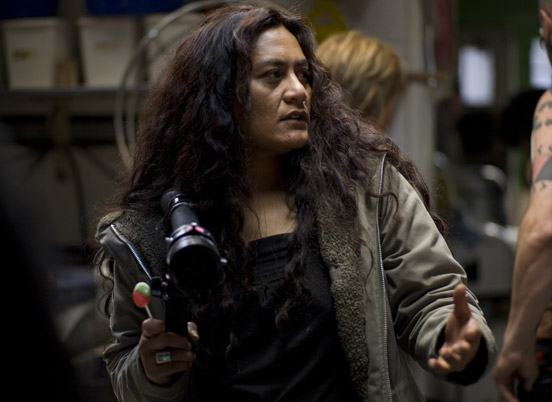
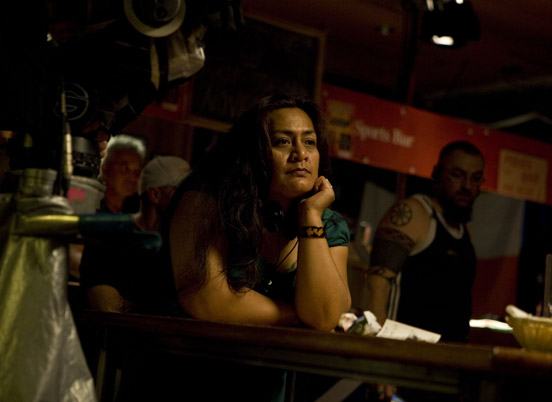
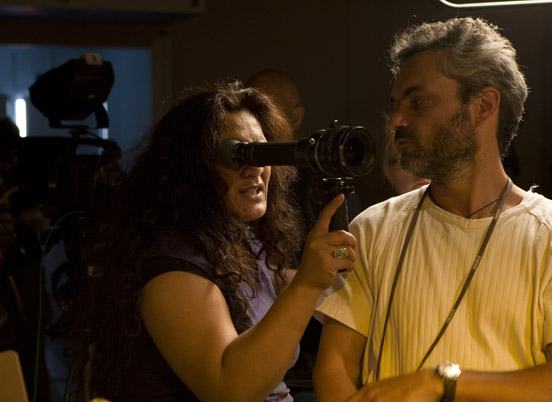
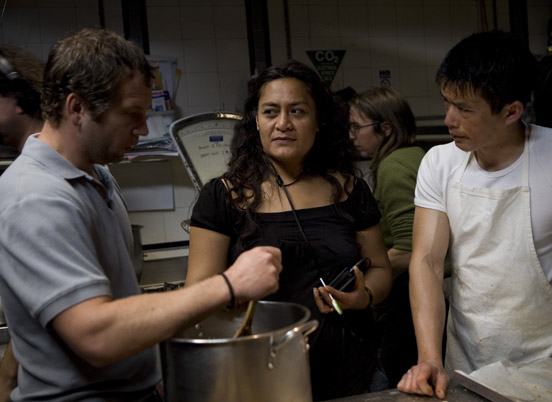
Sima Urale

Director

 Sima Urale

Biography

Born in Samoa in 1967, Sima Urale immigrated from a small village to Wellington at the age of five.

At the age of 19 she won a place at Toi Whakaari New Zealand Drama School, where fellow student Emily Perkins recalls her as being "earthy and strong", and "wonderful" in a starring role in The Cherry Orchard. After graduating Urale acted in sketch series Skitz (including Samoan-themed spinoff The Semisis) and was cast by director Nathaniel Lees for Samoan play Think of a Garden. She won a Chapman Tripp award for her performance, which Lees labelled "extraordinary".

After two years as an actor, Urale realised she wanted to create stories that,  in the words of Herald writer Greg Dixon, "appealed to a broader -and browner - audience". Friends and family pulled together to raise money, and she won a place at Melbourne's Victorian College of the Arts Film and Television (formerly Swinburne). Urale won the VCA Encouragement Student Award, and in 1994 graduated with a bachelors degree in arts, film and television.

On returning home to Wellington, she wrote and directed O Tamaiti (1996), a powerful black and white short focused on a young Samoan boy having to play parent. Urale writes about it here. The film made a strong debut, winning an impressive load of awards, including a Silver Lion for Short Film at the Venice Film Festival and Best Short at the New Zealand Film and TV Awards, plus a prize at the Chicago Film Festival.

In 1997 Urale directed her first documentary, Velvet Dreams, for TVNZ's Work of Art series. Ironic and playful, Velvet Dreams explores stereotypical images of bare-breasted South Seas maidens painted on velvet. It went on to screen at the NZ and Hawaii film festivals, and won Best Documentary Award at Canada's Yorkton International Film Festival.

Urale's second short Still Life (2001) focussed on an elderly Pākehā couple. It became the first Kiwi short to take the top award at the prestigious Montreal Film Festival. Still Life received a Special Mention Award at the Locarno Film Festival in Switzerland, as well as three awards at the local Drifting Clouds International Film Festival.

Her first music video Sub-cranium Feeling, filmed underwater for her brother King Kapisi, won Best Music Video at the BFM, Mai Time, and Flying Fish Awards, and in 2004 was awarded a NZ On Air 1000 Music Video Celebration's Award. The same year Urale won the first Fulbright-Creative New Zealand Pacific Writers' Residency at the University of Hawaii. In 2006 she attended the six month Mauritz Binger Script development programme in Amsterdam, where she focused on her long-in-development feature project Moana.

After returning to New Zealand, she directed award-winning short Coffee & Allah. The film was written by Indian-born emigre Shuchi Khotari, and shot by Urale's favourite director of photography Rewa Harre, who in Urale's words " has the patience and peacful nature of the Dalai Lama". Writer Kothari then succeeded in winning over Urale with a feature film script, having herself been won over by the director's distinctive style; the way she "walks a delicate line between light and dark". Apron Strings, the result, is the tale of two mothers, one Indian (Brit-born Laila Rouass) and one Pākehā (Jennifer Ludlam), seeking courage to confront secrets from their past. The film was picked for the opening night of the 40th Auckland Film Festival, and was officially selected for Toronto.

As a visual storyteller, Urale retains the Samoan oral tradition of story-telling or fagogo, bringing to it a contemporary twist. At the forefront of filmmakers telling Pacific stories, she is influenced both by her Samoan heritage and the urban cultural experience of living in Aotearoa.


Sources include
Greg Dixon, 'Frame of mind' (Interview) - NZ Herald, 6 August 2008
Michael Fitzgerald, 'Shaking Up the Happy Isles' (Interview) - Time magazine , 25 July 2005
David O'Donnell, 'Everything is family: David O'Donnell interviews Nathaniel Lees', in Performing Aotearoa: New Zealand Drama and Theatre in an Age of Transition, edited by Marc Maufort and David O'Donnell (Brussels, PIE Peter Lang, 2007), Pages 331-347
'Interview with Sima Urale', Flicks.co.nz website. Loaded August 2008. Accessed 20 September 2011