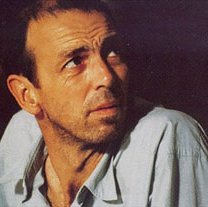
Cinematographer Stuart Dryburgh helped create the distinctive look of Kiwi classics The Piano, An Angel at My Table, Kitchen Sink and In My Father's Den. In recent years Dryburgh has worked mainly overseas, on movies as various as Lone Star and Bridget Jones's Diary. His early beginnings working as a gaffer taught him much about how light can create mood.
Dryburgh's family emigrated to New Zealand from London, when Stuart was ten. His father gave him a camera, kickstarting an interest in photography. Dryburgh began studying architecture at Auckland University, making a 16mm film for his final year architectural project.
An attempt to break into the Australian film industry as an editor resulted in Dryburgh driving taxis in Sydney for six months. Later he got a job as a runner and lighting assistant on 1978 Kiwi feature Middle Aged Spread (adapted from the popular Roger Hall play).
Finding himself working amongst a talented cadre of emerging cinematographers, Dryburgh shrewdly decided to concentrate on the job of gaffer (the chief electrician responsible for lighting on a film set). As a result he found himself working and learning alongside many major names in New Zealand cinematography, in the process gaining a reputation as a skilled lighting specialist. Dryburgh especially credits the teaching of the "terrific" Alun Bollinger, during the experience of making Goodbye Pork Pie and Vigil.
Dryburgh began shooting a range of commercials, music videos and short films, including the half-hour Jewel's Darl (1985) the tale of a relationship between a young transvestite and his transgender friend, and two stylish shorts with director Gregor Nicholas, Rushes and performance piece Drum/Sing.
In 1987 Drybrugh shot his first feature, largely handheld, helicoptering up mountainsides with a small crew for ski movie The Leading Edge. He got the job because "I was relatively cheap and I could ski". But the film that would showcase his potential was Kitchen Sink, for which Dryburgh credits director Alison MacLean's "incredibly clear" vision. The short tale of a woman who pulls a hair out of the plug hole, and finds something entirely different, Kitchen Sink's high contrast black and white look was pivotal to its surreal mood. The film was a multi-awardwinner, recieved international acclaim, and remains an enduring seller overseas. Dryburgh followed it with work on anthology show Ray Bradbury Theatre, then shared duties with Alun Bollinger on madly ambitious puppet series Space Knights.
When Bollinger proved unavailable, Dryburgh was given the chance to shoot An Angel at my Table, a three-part television drama that would grow to become a Kiwi TV and cinema classic. This 1990 biopic of writer Janet Frame was originally shot on 16mm. Dryburgh used a range of compositions and filters to strengthen the film's many moods, from the cold blues of the hospital scenes, to the brighter lights of Spain and the bach where Frame becomes a writer.
An Angel at My Table won accolades, and standing ovations at European festivals. In 1992 Dryburgh reunited with Angel director Jane Campion on gothic romance The Piano, which proved to be his calling card overseas, with its rendition of the New Zealand bush and sea scapes to compelling psychological effect.
The Piano is a textbook example of what can emerge from close collaboration between director and cinematographer. Campion provided Dryburgh with many drawings and visual references. A combination of filters and low lighting levels helped give the film's exteriors their distinctive "submarine" blue look, a look which initially caused worry for some of the film's producers and castmembers. The Piano won Dryburgh cinematography awards in America, Australia and Poland. He was nominated, but beaten to the Academy Award by Schindler's List.
Dryburgh made a cinematographic double punch by following The Piano with impressive work on another Kiwi classic, the more conservatively budgeted Once Were Warriors. Dryburgh used high speed film, lots of lights, and a special printing process to achieve the film's unusual mixture of social realism and stylisation. Dryburgh shot tests to find a look that would give the skin tones of the Māori cast "a real punch and gorgeousness to them". He also operated the camera, describing Warriors' look as "glamour lighting in a dirty old state house".
Since Once Were Warriors Dryburgh has worked largely overseas, mainly on American-funded projects. His first experience in Hollywood proved a rare backward step; Dryburgh was removed from Al Pacino thriller The Devil's Advocate after three weeks, forced to carry the can by Warner Brothers, after the director fell behind schedule. He moved on to The Perez Family, a romance involving Cuban refugees, where Dryburgh's lighting work echoed aspects of Warriors.
After working on John Sayles' acclaimed border drama Lone Star, Dryburgh reunited with Jane Campion in Europe, to shoot Henry James adaptation The Portrait of a Lady. Determined to avoid the normal period film trappings, Dryburgh minimised wide shots and used a highly mobile camera.
A long series of overseas projects followed, including Bridget Jones's Diary and the pilot episode of TV's Sex and the City (shot on 16mm). Dryburgh was persuaded back to New Zealand by the "unbelievably good script" of In My Father's Den, shooting wildly out of sequence in an effort to capture different seasons on film. Den would win him cinematography awards in England, Shanghai and New Zealand.
In 2007 he shot The Painted Veil, an adaptation of W. Somerset Maugham's novel about tainted love in a time of cholera. Set in 1930s colonial China, the film starred Naomi Watts and Edward Norton.
Dryburgh's latest projects include an adaptation of The Tempest, directed by Frida stylist Julie Taymor, and period piece Amelia, which reunites him with Perez Family/ Monsoon Wedding director Mira Nair. The film is based on the life of pilot Amelia Earhart.
Dryburgh's Hollywood work has also seen him working often with other New Zealanders: Oz-Kiwi director Roger Donaldson on 2003 thriller The Recruit, actor Marton Csokas on fantasy Aeon Flux and Warriors star Temuera Morrison, for the Vietnam-themed Beautiful Country.
- This profile is adapted from the Duncan Petrie book Shot in New Zealand (Random House, 2007).