Director's Notes
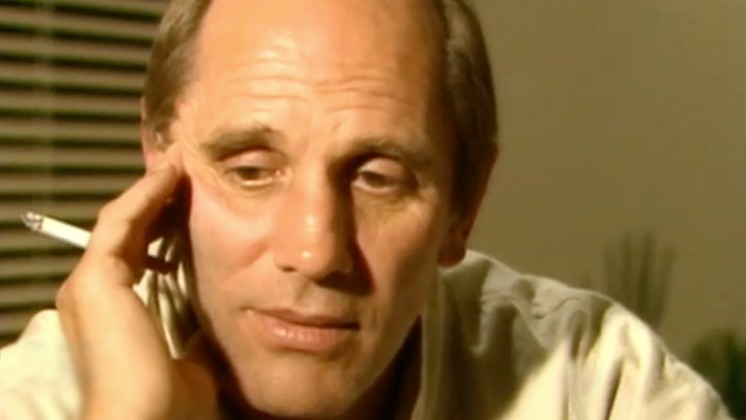
Okay, I’m the bastard who wrote and directed the Bruno doco! It was 11 years ago and — still, parts of the family (Veronica most of all) have me high on their shitlist.
I still don’t know quite why, or honestly, what they could find to dislike about the film. I watched it again recently. Really, it’s a tribute to the man, the artist, the naughty, needy boy, the bloody genius.
I never really knew Bruno. I mean, I’d directed him, acted with him in a stupid skit comedy on TV, met him once in Three Lamps in Auckland and we kind of accidentally spent an afternoon drinking and smoking (both kinds) in the Tavern while this band he was ignoring (his band) was doing sound checks. But I never really knew him.
He was older of course — just that bit older and therefore cooler and part of the famous ratpack of NZ music and cinema. I was just impressed that he knew my name and welcomed me like an old friend … so, when he died and a few years passed, and Nicki Saker said she wanted to produce a documentary on Bruno Lawrence, I thought it was a chance to repay him for the neat afternoon we’d spent — in the hot Auckland sun — out the back of the bar — talking all kinds of crap and laughing a lot.
If you look at the raw footage — from the dozens of interviews (including the ones we didn’t use at all) — you could have made a very different film about Bruno. It’s fair to say that while everyone’s eyes lit up as they told me what wonderful memories they had of him, everyone saw the other side too. There was always a subtext, always a “but you know …”
And, of course, I wanted to recapture that turmoil the man was able to create.
I made repeated phone calls to Merata Mita in Hawaii at enormous cost, until finally Geoff Murphy gave in and spoke to me. He was grumpy, I was pleading (whining) — not a good look, and he said no. Not even sorry, just no. Then I found the wild tapes of Neil Roberts’ interview with Bruno in Sydney — where he talks about Geoff. And I HAD to use that.
And then all the others who’d loved his incorrigible wild antics — but also wanted him to grow older and a wee bit wiser with them — and expressed sorrow that he’d trapped himself in his reputation, like an insect in amber.
All of them — especially Veronica, who I admire for her forthrightness and sheer durability, but also the ones Veronica’s unhappy about — who equally loved Bruno: Keith Aberdein (I wasn’t supposed to talk to him apparently — ‘what would he know?’), and Andy Anderson (he was never Bruno’s friend apparently), and those who were approved — Wattie, John Charles, Tony Barry, Sam Neill, Rick Bryant, the Waimarama kids, even Greer Robson and Chris Seresin — all of them gave me their personal picture of Bruno. How can I be anything but grateful?
I’d never had any urge to direct a biography. Of anyone really. But Bruno’s story got to me. There’s so much of him in me — in all of us post-war, post-feminist, post-HIV boys.
Waka Attewell knew. We were doing joint interviews — from behind the camera and alongside it. Both of us pulling the stories out of people we knew — admired — feared — envied. A good director of photography (Waka is a VERY good DoP) always shoots what a director is thinking — not what he’s saying.
Geoff Conway and I kept writing the story we were editing, on a white board as we cut. We must have re-cut that film a dozen times. A good editor (Geoff is a VERY good editor) always cuts what a director is feeling — not what he’s saying.
Anyway, we all poured our hearts into this Bruno story. Me, Nicki, Waka, Chris and Jo Hiles and Geoff — for Bruno and for ourselves. Because that story was our story too.
And you know, TVNZ buried it in a January 2008 timeslot — treated the film (and us) like shit stuck to their shoes — and, well, that was the last piece of television I ever made. Eleven years ago. I’m proud of Numero Bruno — it’s me at my passionate, loquacious best as a documentary maker. I’m really sad about the lacklustre industry that television in New Zealand has become, but then again — I don’t do that stuff any more, so I can say so.
Love, peace and creative fulfillingness to you all …
Steve
Back to top
A Perspective
"His first name conjures up so many memories that the surname is just about superfluous" - Roger Booth, Bruno - The Bruno Lawrence Story.
Where to start with a man like Bruno Lawrence? Director Steve La Hood has packed an awful lot into a thorough 67 minutes. Starting with the awful finality of his passing, he retraces the steps of a wild man jazz drummer who became so much more, (arguably New Zealand's most screen-grabbing actor), ultimately circling back to Lawrence's tangi and last resting place.
The grave is a good place to start, as it characteristically sums up his quirky individuality. Lawrence is the only Pākehā in the cemetery, facing in the opposite direction to everyone else. Exactly how he joked he wanted it, in an earlier interview.
Lawrence's story is told largely through the reminiscences of his family and friends, but narration is also used to keep the story moving. An impressive collection of archival clips is employed. These not only transport the viewer back in time, they offer testimony to the sheer variety of Lawrence's activities.
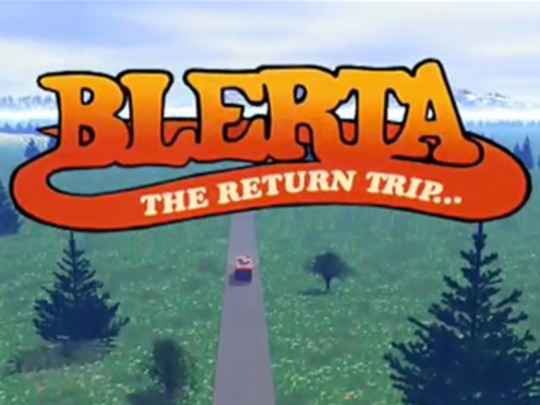
The first half of the film concentrates on Lawrence as a creative rebel and pathfinder. His partnership with Geoff Murphy, in multi-media hippy touring troupe Blerta, and on film, helped to stake a claim for a new generation of film-makers. It's impossible to imagine how the independent feature film industry might ever have got going without the sheer ability and cussedness of characters like Lawrence.
But nobody's perfect, and having built up Bruno as an idol, La Hood moves on to detail the feet of clay; the flip-side to the free-flowing talent and expressiveness.
His womanizing, his drug abuse, his drinking - all these vices were pursued in legendary self-destructive proportions, and inspire some suitably colourful anecdotage, often expressed with a mixture of rueful regret and reluctant admiration.
As if these were not deadly sins enough, we then learn that Lawrence was a chronic gambler as well. At which point it becomes evident that the real hero of Bruno Lawrence's very wayward journey through life was his wife, Veronica, who somehow kept a home and family functional for a man whose demons drove him to acts of irrational chaos.
But the same demons fed his inspiration. As Ian Mune observes, "he didn't capture a scene, he created a scene ... a sense that anything could happen".
The link between personal experience and the evident truth in Lawrence's best acting work is made clear by this documentary.
One can also clearly infer the misery he must have felt taking part in ordinary fee-paying assignments for which he felt no special affinity. The picture of Lawrence near the end, alone and lonely in a small Melbourne flat, his most prized possession a large poster containing scribbled notes from his children, is especially poignant.
Back to top