A perspective
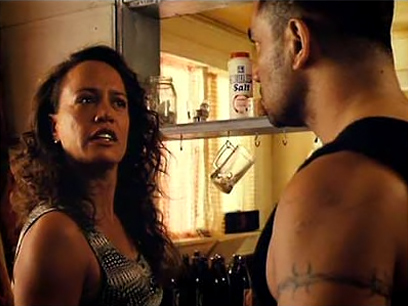
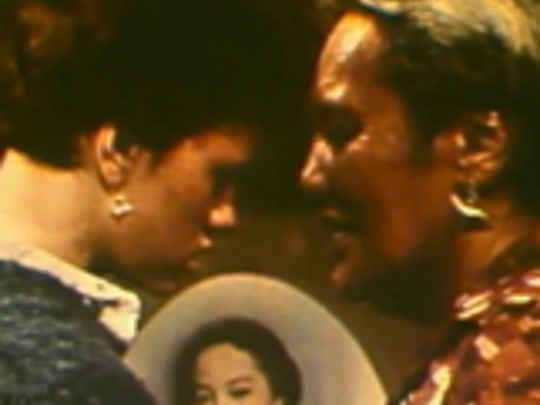
This is a brutal tale of an urban Māori whānau falling apart, as patriarch Jake abuses his rage and Beth struggles to hold the family together in a South Auckland slum. The film captured the attention of not only "shaken and silent" audiences worldwide, but confronted New Zealanders with life beyond the cliches of sheep and pretty scenery. The opening shot (South Island alpine scenery revealed to be a billboard above a grey industrial landscape) signals the film's intent. The New York Times called the result "social realism with a savage kick."
If one New Zealand film can claim to have effected social change and stirred debate, Once Were Warriors is it.
Before the Second World War 80% of Māori lived in rural areas. By the mid-1990s that statistic was reversed. The drift was driven by employment opportunities, but as Dr Pita Sharples says: "The change from the rural to an urban way of life was a huge culture shock. So many families were soon run down and the children were in trouble. They were broke, they had their power and water cut off, they owed rates and stuff like this. The discipline of the city was totally different from the discipline of the country. So there were huge problems."
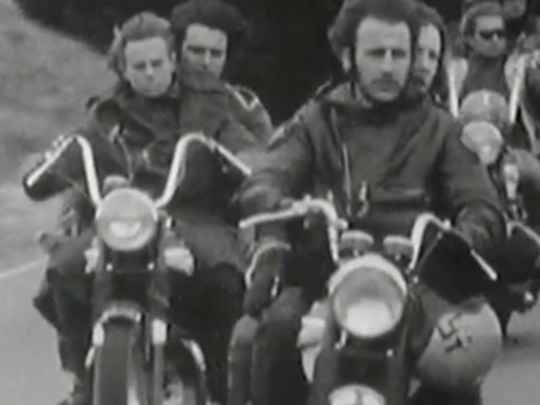
Gangs attracted some young Māori who lacked a sense of belonging and purpose. Many found themselves more connected to a rootless global subculture than their own history. This was the context in which Alan Duff's bestselling novel Once Were Warriors (his first) was published in 1990.
Production company Communicado was looking for a first feature to develop, and producer Robin Scholes secured the rights to the novel. Ian Mune was approached but felt the book was too difficult to adapt. The mantle was passed to Lee Tamahori, who agreed to direct immediately after reading Duff's draft. Although Tamahori hadn't directed any features, he had experience working as a crew member on several key NZ films and was one of the A-list commercials directors at the time.
Tamahori introduced Riwia Brown as a possible writer. Brown, Tamahori and Scholes thrashed out a basic outline for a new screenplay over a long weekend, and Brown was commissioned to write the new screenplay. They were determined to shape the novel's focus more to Beth's story and to make it more positive; the story about the clash of traditional and modern values became as much about the breakdown (and redemption) of family as reinvigoration of "warrior pride".
Brown says she saw it as a universal story, "but because this family is Māori there's another dimension to this story and that is, people finding their cultural identity ... [it] gave me a huge opportunity to make a Māori woman the heroine of this story and to write about what affects us as Māori, and that [includes] the good, the bad, and the ugly."
Tamahori's experience and contacts opened up the resources he needed for his feature directing debut. Advertising was booming, providing plenty of opportunities for Tamahori and his heads of department to put ideas into practice on big-budget commercials. The self-styled "classic hybrid" child of a European mother and Māori father, Tamahori had a privileged perspective from which to direct the story.
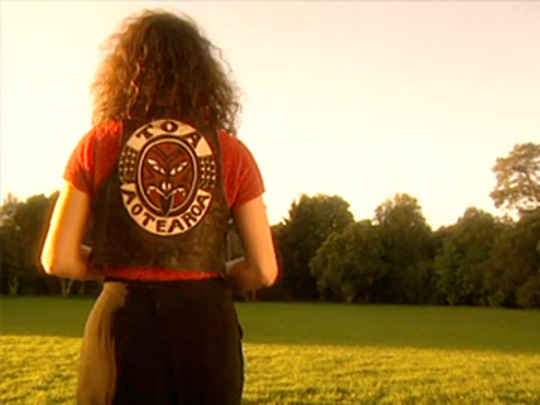
Once Were Warriors' unflinching depiction of domestic violence matched his professed keenness for films that evoke a response: films that "make you reel out of the theatre and you have to go to a bar and have a drink". Tamahori paired the film's social realist themes with a propulsive energy and style: quick-fire editing, rap music, and burnished black and red tinged visuals ("Māori colours"). Cinematographer Stuart Dryburgh evoked the badges and power symbols of the characters' world: work-out weights look like they come from a scrap metal yard and gang patches are lit with the same impact as corporate brands. Cast members were sent to the suntan clinic as part of the mission to have the cast "look as glamorous and as beautiful as the mafia did in The Godfather."
The powerful message struck a chord: that a family living in a hard and uncompromising new world wasteland might find hope in the strong traditions of their people and history. Pākehā and Māori audiences were stirred to acknowledge that this was one of "our" stories as much as Footrot Flats or Came a Hot Friday. Some men were provoked by the film to turn themselves in and seek treatment for violent behaviour.
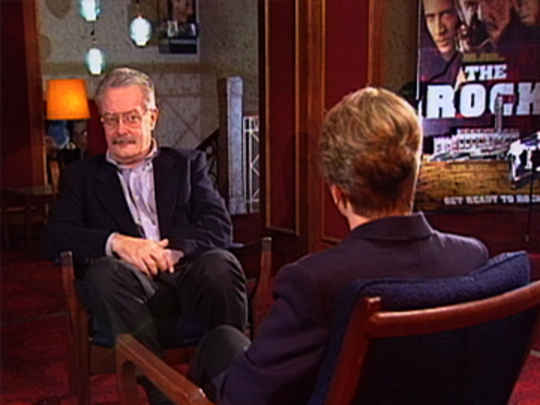
It had nearly not gotten made: Scholes recalled in a 2010 ScreenTalk interview that the film only secured NZ Film Commission funding (after repeated turndowns) thanks to an impassioned speech by Gisborne police commander Rana Waitai. He stressed the project's timeliness in front of the Film Commission board. Scholes remembered distributors at the movie's premiere making bets on how little money it would make. The belief at the time was that "Māori stories would not succeed" commercially.
Warriors was such a success, some small town cinemas even reopened so that they could screen it. Until being knocked off its perch by The World's Fastest Indian in 2005, it was the highest grossing New Zealand-made film released in Aotearoa. It also scooped most of the film awards going at the 1995 NZ Film and Television Awards.
It was the first Māori story to find a sizeable international audience (taking $25 million at the international box office). Although some had heard of art exhibition Te Māori a decade earlier, for most overseas audiences Once Were Warriors was the first alternative image of NZ (to the cliches of scenery, sheep and All Blacks) they'd seen. The Lord of Rings trilogy and Whale Rider would later prove much more palatable advocates for New Zealand tourism.
Among numerous festival prizes Warriors took the Most Popular Film, Best Actress, Grand Prix des Amériques and Ecumenical Jury Prize at Montreal, and Best First Film at Venice. American critic Roger Ebert raved that Tamahori's "powerful and chilling" film was directed "with such narrative momentum that we are swept along in the enveloping tragedy of the family's life".
"Director, stars and writers all come from backgrounds that are at least part Māori, and together they create a powerful sense of longing [...]. None of these principals are familiar here, which makes the film's furiously energetic performances seem that much more intense." wrote Janet Maslin in the New York Times.
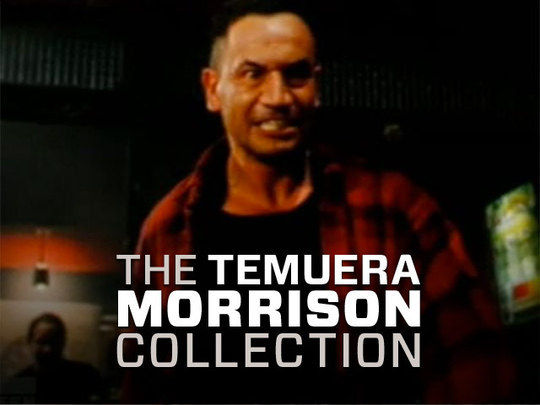
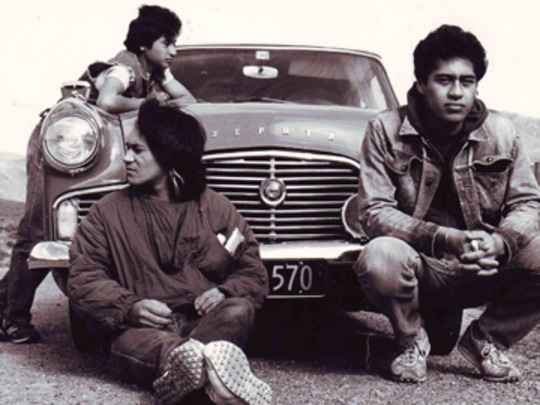
For actors Temuera Morrison and Rena Owen the roles of Jake and Beth represented career defining roles. Warriors launched the careers of Julian Arahanga, Taungaroa Emile and Calvin Tutaeo, and provided a Hollywood calling card for Morrison, Cliff Curtis and director Tamahori.
The casting of novices in the support roles was due to the tireless efforts of Don Selwyn. Selwyn toured the country auditioning kids from schools and men from gyms. He also coached Morrison nightly on set, demonstrating how Jake could be portrayed as a tragic, complex character.
The soundtrack effectively mixed pop gems pulled from the vault by Scholes (Poi E and What's the Time Mr Wolf?); commercial know-how in the hands of Murray Grindlay; and traditional instrument sounds, inspired by Hirini Melbourne's collection of taonga pūoro.
Dialogue from the film entered the culture. Jake Heke's order to Beth to "cook me some eggs" — with its mix of the mundane and a barely disguised subtext of threat — said much about New Zealand. The phrase was recognisable to real-life victims of abuse; at the same time it was mindlessly adopted by drunk scarfies who opening bottles of Speights with a fish slice in imitation of Jake the Mus. As with much of Once Were Warriors, it was an invocation to look in the mirror.
Back to top
Writer's perspective
The adaptation of Alan Duff's book and the development of the screenplay for Once Were Warriors was one of the most challenging and yet creative times of my early writing career.
Following a chance meeting with Lee Tamahori in Wellington in 1992, I was asked to consult on the future direction and development of the screenplay. After working with Lee and Robin Scholes on the structure of the next draft, I was asked to consider writing the film script. That's when the hard work began, but in truth it was a labour of love.
Lee wanted to make a gritty urban-based drama, so it was important to create characters that people could feel empathetic towards, in a story that had to be compelling for its future audience.
Once it was decided that Beth was the protagonist the challenge was to keep Jake's character from dominating the story. But each character had its challenge within the context of the drama. I particularly found the writing of Grace difficult — not the actual characterization, but being aware of the tragic demise of the innocent.
Because of the hard-hitting and dark nature of the material it was essential to script an up ending. One of my favorite scenes is when Beth gives her "once we were warriors" speech to Jake before she and her family drive away, and the audience is left thinking — I think the Heke family will be alright!
I was fortunate to be supported through the writing period by a talented director and a dogged producer. It was a privilege to be involved in bringing Once Were Warriors to the screen, but the success the film had is still a hard act to follow.
Back to top
A Māori Perspective
By
Maraea Rakuraku
24/01/2013
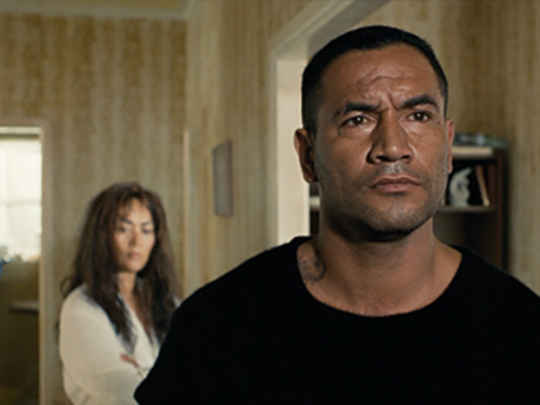
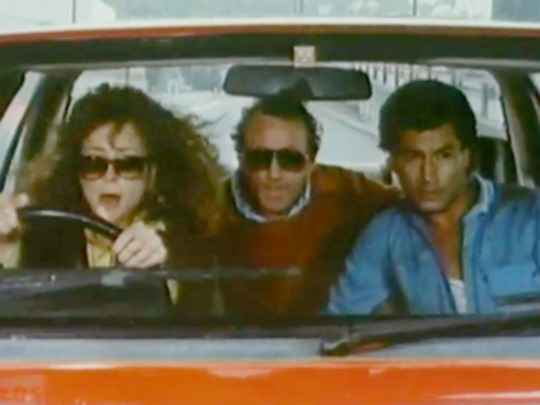
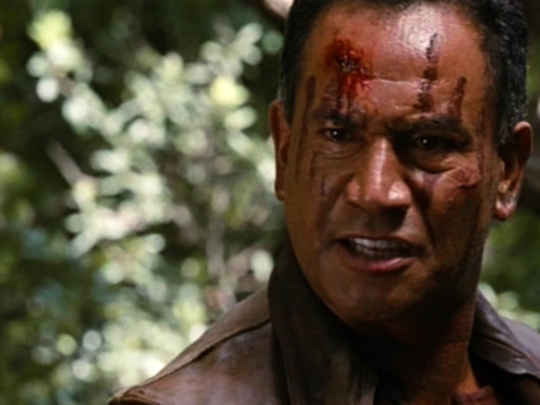
"Where the f**k is everyone!" bellows Jake Heke aka Jake the Muss (Temuera Morrison) as he swaggers onto the screen and into the New Zealand consciousness, via Once Were Warriors.
The socioeconomic reality of urban Māori who have become disconnected from their tribal roots is hammered home in Once Were Warriors. Pubs replace marae as places to meet and socialise, and whanaungatanga is achieved through drinking and parties. Unemployment, petty theft, gang prospecting, domestic violence, sexual abuse and suicide are played out through a Māori whānau at the centre of that existence, headed by charismatic sociopath Jake Heke.
On paper Once Were Warriors seemed risky: a first feature outing for a director (Lee Tamahori) used to 30 second advertisement serialisations, a producer (Robin Scholes) and production house (Communicado) seeking to make a dramatic entry into the feature film market, and a playwright (Riwia Brown) adapting a first novel (albeit a bestseller).
Add to the mix a cast of virtual unknowns, and a story permeated with violence and politically and culturally sensitive themes. It's no wonder initial responses from the NZ Film Commission and Television New Zealand were lukewarm.
With its context —urban Māori New Zealand — where positions of power and authority are held by Pākehā, and the threat of state intervention hovers predatorily, Once Were Warriors presented a very real and raw expose of life when you are disconnected from your tribal roots, poor and Māori.
It shocked, outraged and reflected a reality of Māori far removed from previous stereotypical onscreen portrayals. Think Billy T James in Came a Hot Friday (1984), who confirmed for many Pākehā and some Māori what they believed already: that Māori can sing and play the guitar; that Māori are naturally predisposed towards violence.
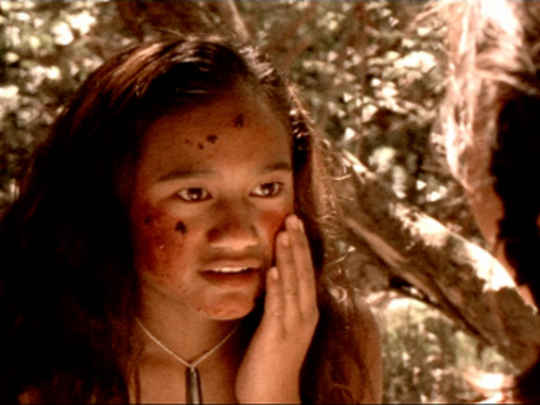
While it had the potential to languish in the self-blame of the 1990 novel and affirm those generalisations, it took a reworking of the narrative by scriptwriter Riwia Brown, to place the heart of the story with the character Beth (Rena Owen) whose marriage to Jake (Temuera Morrison) is destroying their whānau.
Stuart Dryburgh's brooding cinematography, the tight, kinetic direction by Tamahori, and powerful acting performances all aid in evoking the trapped circumstance of the Heke whānau. These contributions provided context, and elevated what could otherwise have been a shallow treatment to the level of an epic, with themes of tragedy, redemption and survival that proved universally appealing.
Some American audiences paralleled Jake and Beth with Ike and Tina Turner. Former ANC (African National Congress) members imprisoned during the apartheid regime in South Africa identified with the post colonialism subtext.
Meanwhile at home, Once Were Warriors was creating an industry of Māori academic rigour and protest. As the film attracted notice, it also stirred controversy amongst Māori. At issue was representation, and some accused the film of glamourising gangs and misusing Māori tikanga.
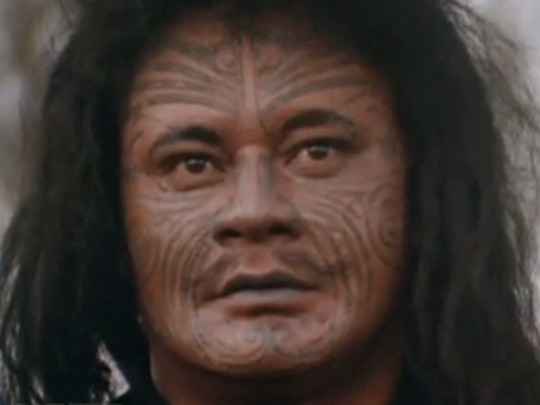
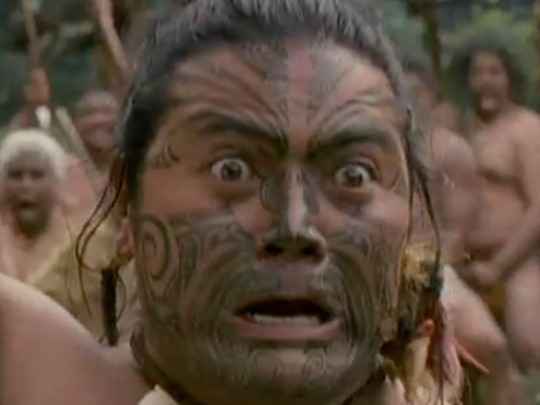
The eerie whirring of the pūrerehua, used to pre-empt the eruption of violence in the film was for some taonga pūoro practitioners a travesty. As too was the use of tā moko as a means of initiation into a gang lifestyle (a use that prompted a complaint to the Race Relations Office). University papers were developed to contextualise and talk back to the imagery and misconceptions of Māori.
Once Were Warriors appeared at the Cannes Film Festival the same year as Peter Jackson's Heavenly Creatures. Two films from the same country showcasing the directorial style of its upcoming talents with stories centred in the New Zealand psyche. If you needed a 'cinema of unease' reflection of the wide chasms that existed between New Zealand's two peoples, there was the evidence. They could not have been more different — or similar — to each other.
Back to top