00:00
/
00:00
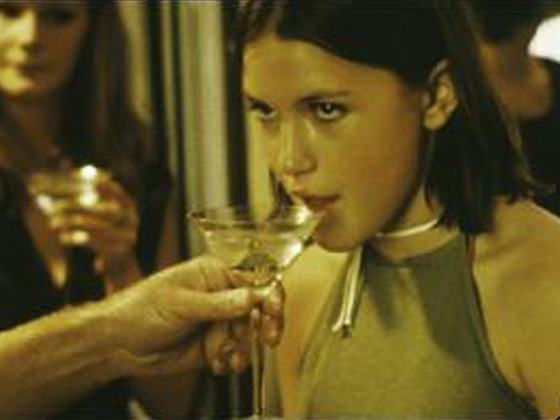
Rain
Film (Trailer and Excerpts) – 2001
A Perspective
Rain was the first feature from successful commercials and short film director, Christine Jeffs. A 1970s family summer holiday is the context for a poetically haunting exploration of adolescent confusion and midlife disappointment: from sunburnt innocence to the fall of the film’s tragic conclusion.
The film was adapted from the 1994 novel of the same name by Kirsty Gunn. The novel is told from the perspective of 13-year old Janey and the film keeps the focus on Janey and her teenage discoveries, entwined in the self-absorption of the adults around her.
Jeffs relocates the film from the novel's Taupō setting to a bay of baches on the Mahurangi Peninsula, north of Auckland (the baches have now been removed, after the bay became part of a regional park). The satisfactions of nostalgia for a languid golden hour — when paisley-clad parents drank whiskey sours, smoked, danced and flirted at beach parties, while the kids were left to amuse themselves — are slowly eroded by an undercurrent of roiling tension.
Visually striking metaphors run throughout the film, and are evocatively captured by director of photography John Toon. Boats lilt, useless, amongst the mudflats’ ebbing tide. Says director Christine Jeffs: "Water was important. It didn't need to be a lake, and it didn't need to be the sea. It was just about water."
The moody mudflats, wide open spaces and tidal ebbs and flows are an apt setting for a story awash in sublimated desire. The marriage of Janey’s parents is worn and unshed tears are mirrored in heavy clouds. The water is threat, lure and sustenance: the young girl has one foot paddling in childhood and the other in a sea of mixed emotion.
Rain is full of observations of the smallest, yet most significant, moments that pass between people, often played out in silence. Emotions don't explode so much as stain. Around the silences are the sounds of the sea and a supple (first-time) film composition by Neil Finn and Ed Cake (aka Edmund McWilliams).
The two young leads — Alicia Fulford-Wierzbicki and Aaron Murphy — deliver powerful, almost surprising, performances alongside the experienced Sarah Peirse, Marton Csokas, and Alistair Browning as the listless adults.
In the novel there's a passage of grafted wisdom: "Things just happen, that's all. And then they're gone." The intense, slow-burning film makes sure the 'things' leave an indelible mark.
Rain won awards at the 2002 Asia Pacific Film Festival and the 2001 NZ Film and TV Awards (for actors Fulford-Wierzbicki, Peirse and Browning). It was nominated for Best First Feature (the Caméra d'Or) at the Cannes Film Festival, and attracted international attention. Jeffs was selected for Variety’s 2002 ‘Ten Directors to Watch’ list, and enthused reviews appeared in everything from The NZ Herald (which named Rain one of the 10 best films of the year) to The New York Times.
Many singled out Peirse for special praise. New York Newsday writer Jan Stuart argued that she "delivers a gorgeously haunted performance that is no less sympathetic for its subtlety”.
LA Times critic Kevin Thomas praised Jeff's direction, and called the film "breathtakingly assured and stylish ...“Rain is a sensual, moody coming-of-age drama of wide implications and stunning impact that marks an important feature debut for New Zealand writer-director Christine Jeffs.”
- Paul Stanley Ward was editor of NZ On Screen from 2008 to 2014. He continued to write for the website until early 2019.
Sources include
Rain press kit
Kirsty Gunn, Rain (Grove Press, 1996)
Kevin Thomas, 'Storm Brews Beneath Idyllic Surface in Stunning Rain' (Review of Rain) - The LA Times, 3 May 2002
Jan Stuart, 'A Summer of Growing Up, Growing Old' (Review of Rain) - Newsday, 25 April 2002

If you liked this, you might also like...
NZ Book Collection
This collection features screen adaptations from New...
The Coming-of-Age Collection
From The God Boy to Boy, plus singers, whale riders and...
Stroke
Christine Jeffs also directed this short film
Watermark
More danger in the mangroves
Loose Enz - The Good Samaritan
More marriage dissolved in drink
Truant
Another coming of age drama
The Weight of Elephants
Another feature told from a child’s perspective
Swimming Lessons
Philippa Campbell’s debut as a screen producer
Shortland Street - Kirsty and Lionel's wedding
Featuring actor Marton Csokas as Leonard Dodds
Choice Night
More coming of age drama
I Like Rain
A music video about liking rain
The Making of The Governor
Cinematographer John Toon features in this doco
Broken English
Featuring actor Marton Csokas
Plain Tastes
Also features actor Marton Csokas
Nights in the Gardens of Spain
More middle-aged confrontation with sexuality
So True
A more idyllic Kiwi summer
Rain
No relation
The Map Reader
Another coming of age movie
Juniper
Martin Csokas also acted in this feature
Big Aroha
Music to play on a Kiwi summer holiday
The Governor 2 - No Way to Treat A Lady (Episode Two)
Another tale of about marriage breakdown
It's Ōtepoti's Fault
Another bittersweet look at family
The Champion - First Episode
Sarah Peirse also played a mother in this