Registering with NZ On Screen means you can:
We won't share your data with anyone (see our Privacy Policy) and we won't spam you. It's that simple.
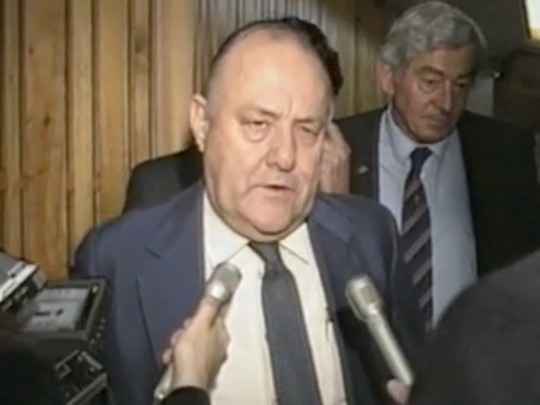
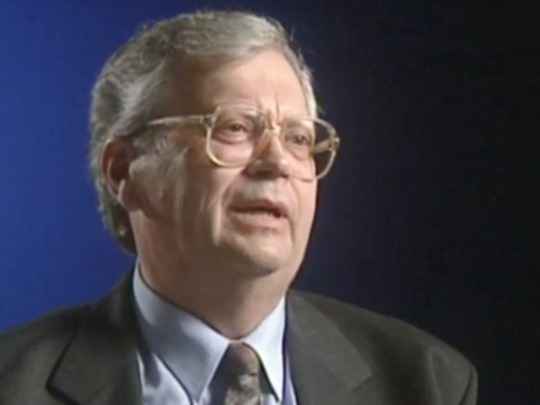
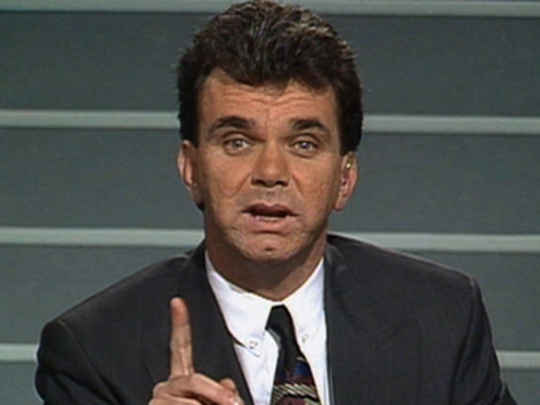
Four-part series Revolution examined radical changes in New Zealand society in the 1980s and 1990s. This final episode sums up, after examining "the second wave" of neoliberal reform when National took power in 1990 shortly after Telecom was sold to American interests. Incoming finance minister Ruth "mother of all budgets" Richardson oversaw a reduction of welfare payments, a shake-up of the health system, and a curbing of union powers. Richardson: "in a human sense I understood that [community outrage], but that wasn't going to deflect me".
It is now 13 years since Revolution was made for Television New Zealand and there has been no equivalent documentary of recent political history on our screens since as far as I can ascertain. The ...
[From the introduction to the book accompanying the TV series, published by Hodder Moa Beckett, 1996]
Revolution is a journalist's assembly of observations about the transformation of New ...
Please keep your comments relevant to this title. Email addresses are never displayed, but they are required to confirm your comments.

Images Ink
You need to be logged in to add to your favourites.
Television, 1996 (Full Length Episode)
The first episode in the Revolution series
Television, 1996 (Full Length Episode)
The second epiosde in the Revolution series
Television, 1996 (Full Length Episode)
The third episode in the Revolution series
Television, 1988 (Excerpts)
A series satirising NZ politics in the 1980s via puppet caricature
Short Film, 1987 (Full Length)
A classic short film directed by Revolution editor Bill Toepfer
Television, 1987 (Full Length Episode)
This episode features a union dispute
Dean Goodman
Posted at 05.52PM - 18.09.2011
The Sue Wood section where she recounts the snap election drama in Part 1 is priceless. She was perhaps the best MP never elected to Parliament. But the series is a bit weak on the economics/business angles, especially during the Lange/Douglas war - which itself could have been explored in more detail. I was a financial/political reporter at the time, spent my late teens/early 20s staking out Parliament and corporate boadrooms. Maybe graphics would have helped, especially given the interest rate surges resulting directly from their battles. Missing are Lange's infamous comment about the need to take a "tea break" from economic reform - which really set things off, and the fascinating minutiae and personality conflicts of the time. It's easy to forget how deeply Lange was hated - and he was litigiuous as hell vs. the press, too. Chase CEO Colin Reynolds told me he was "a buffoon." In some ways I think there's more nostalgia for Muldoon than for Lange, but that's another series. Key sidekicks like Richard Prebble are barely mentioned. Others, such as Trevor De Cleene (RIP) and Razor Gang chief Doug Kidd, are ignored. Also MIA are the impact of corporate crashes such as Equiticorp, Chase, etc. I remember the '87 crash coincided with the FOL conference, where people such as Jim Knox and Ken Douglas could barely contain their glee. They specifically wondered if Ron Brierley and Ron Trotter were having a bad day, like it was some joke. Even at 18, I could tell how naive the unions were - crash = recession = layoffs of their own rank and file. And also DFC - that was a major disaster under David F. Caygill's watch. We should remember that the affable Caygill was a reluctant replacement for his mentor, Roger Douglas, and often said he wanted Roger back. It's remarkable the government lasted as long as it did. Caygill would have been good for this series. It would have been funny to see the TV footage of Geoffrey Palmer days before he was axed. I think he was at the Telethon, singing along and doing hand gestures totally out of time to the music. That summed up his short, hapless reign. Another time, he donned McDonald's gear and served burgers at a local outlet for some photo op I recall writing about - maybe that was his true calling. Oh yeah, the central bank reforms were astounding - independence, and a specified 0-2 percent inflation target - or maybe I missed that episode (if so, apologies). Maybe a talking head from The Economist or the U.S. Federal Reserve could have put things into perspective.