00:00
/
00:00
Sleeping Dogs
Film (Trailer and Excerpts) – 1977
A perspective
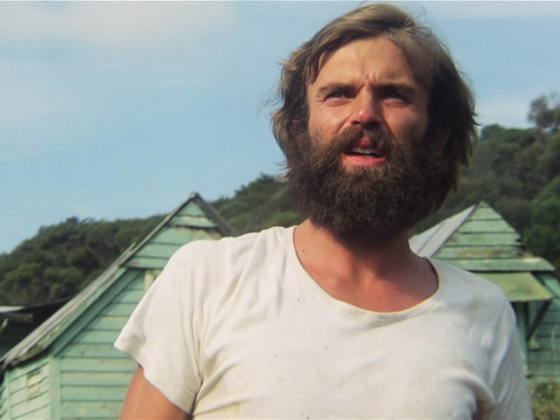
Sleeping Dogs heralded the new wave of New Zealand feature films in the late 1970s, and was a key factor in the establishment of the New Zealand Film Commission. It was also the first New Zealand film released in the United States (a feat rarely repeated), and it launched the international careers of director Roger Donaldson and lead actor Sam Neill. Neill was 30 at the time, and in his first major screen role his charisma is palpable; Donaldson's assured direction, particularly of the action pieces, would set him on his way to a long career helming studio films in Hollywood.
Donaldson made this film (based on CK Stead's novel Smith's Dream) at a time when New Zealanders, beginning to shrug off the cultural cringe, were hungry to see images of themselves on the big screen. It was released widely and was well attended (in contrast to the few films that had previously been made here, which struggled to find audiences).
Politically, the 1970s were a time of fear and uncertainty; there was an oil crisis and inflation was rampant. The story, with its 'man alone' anti-authority themes, presented a distinctly local take on the zeitgeist.
While the street riots portrayed (see the second clip) seemed far-fetched at the time, the film anticipated the violent altercations between police riot squads and anti-apartheid protesters that would take place during the 1981 Springbok rugby tour.
Many of the scenes, especially large-scale set-pieces, were ambitious, with helicopters, fighter planes, explosions and riots in Auckland city streets. A major coup was to enlist the support of the Royal New Zealand Air Force, who supplied helicopters and Skyhawk jets.
Aware of the need for an international name to help finance the picture, Donaldson tried to get Jack Nicholson for the role of Colonel Willoughby. His agent laughed when the fee ($5000) was mentioned, and suggested they consider American tough guy and Sam Peckinpah regular Warren Oates instead. Warren accepted, and his larger than life character makes a strong impact on the picture.
Reviews of the film were mostly favourable, though more so about the directing than the script. Variety commented on the film's "sharp directional flair, particularly the action segments, the taut performances by the large cast and a handsome technical gloss in all departments". The cinematography was also noted: "Without going for easy scenic shots, Michael Seresin's camera work records the freshness of a landscape hardly seen on international screens."
Added Roger Ebert: "Roger Donaldson's sharp, suspenseful direction does wonders for the material. What it lacks in originality, Sleeping Dogs makes up in intensity and conviction."
- After helping organise the Out Takes Film Festival, Richard King went on to direct Sydney's Mardi Gras Film Festival from 1999 to 2003. In 2007 he programmed the NZ International Film Festival.

If you liked this, you might also like...
Best of the 70s
This collection celebrates the best of 1970s television,...
NZ Book Collection
This collection features screen adaptations from New...
The Geoff Murphy Collection
This collection pays tribute to filmmaker Geoff Murphy —...
The Sam Neill Collection
Actor, director, makes the odd bottle of pinot noir: a...
The Roger Donaldson Collection
A collection devoted to the career of director Roger...
The NZ Film Commission turns 40
A collection celebrating 40 years of the NZ Film...
The Making of Sleeping Dogs
Documentary on the making of Sleeping Dogs
Dream in the Making - The Making of Sleeping Dogs
Behind the scenes of feature Sleeping Dogs
Smash Palace
Roger Donaldson's next feature film
The Life of Ian
Documentary in which Ian Mune discusses Sleeping Dogs
Kaleidoscope - CK Stead
A profile of CK Stead, who wrote the original book
Book to Box Office
This adaptation of CK Stead's novel is discussed
Kaleidoscope - Roger Donaldson in Hollywood
Interview with director Roger Donaldson
The City of No
Early TV performance from Sam Neill
Cowboys of Culture
Documentary on NZ's film renaissance, including this movie
Hunt for the Wilderpeople
Another film featuring Sam Neill on the run
Kaleidoscope - Ian Mune
Interview with actor Ian Mune
Coming Home - Roger Donaldson & Steve Millen
Director Roger Donaldson features in this
Kaleidoscope - NZ Cinema, the Past Decade
Sleeping Dogs features in this survey of NZ film
Gordon Bennett
Co-star Nevan Rowe directed this short film
Landfall - A Film about Ourselves
Another early Sam Neill performance
Winners & Losers: The Woman at the Store
A TV film that paved the way for Sleeping Dogs
The Silent One
Another Ian Mune adaptation of a classic NZ novel
The World's Fastest Indian
A music video directed by Roger Donaldson
The Neville Purvis Family Show - Episode
Co-writer Arthur Baysting stars in this
The God Boy
Another pioneering drama written by Ian Mune
NZ Film Commission turns 40 - Past Memories
Roger Donaldson on taking a strange phone call about this...
Shaker Run
More dodgy NZ government forces
Undercover
More drama involving authority written by Arthur Baysting
Start Again
Roger Donaldson documentary on NZ hippy culture
Sheba (She Sha She Shoo)
Composer Murray Grindlay had a pop career too
Patu!
A film about the Springbok protests
The Making of Smash Palace
Documentary on Roger Donaldson's second movie
Flare - A Ski Trip
Short film directed by Sam Neill
Winners & Losers: Shining with the Shiner
Another Roger Mune and Ian Donaldson collaboration
Moynihan - You Can't Win 'Em All (Episode Two)
Ian Mune stars as union organiser Leo Moynihan
Pheno was Here
More chaffing against the system
Frontseat - Series One, Episode 14
Interview with Sleeping Dogs cinematographer Michael Seresin
Nutcase
Also directed by Roger Donaldson
Cow
Also starring Ian Mune
The Governor 1 - The Reverend Traitor (First Episode)
Historical TV drama released the same year as Sleeping Dogs
Carnival Coast
Also Stars Ian Mune
The Maintenance of Silence
Another film about state power and protesst
The Water Cycle
Sam Neill cameos in this 1972 NFU doco
Dean Spanley
Sam Neill stars alongside Peter O'Toole
Harry - This is Personal (First Episode)
Sam Neill on the other side of the law
The Sealhunters
Sam Neill edited this short
For Art's Sake - A Century of Cinema
NZ Film Commission's Lindsay Shelton discusses Kiwi films
The Grass is Greener - Sam Neill
Documentary about Sam Neill's Australian acting career
Geoff Perry
Early Roger Donaldson documentary about a Kiwi racer
Holmes - Roger Donaldson
Interview with Roger Donaldson in Queenstown
Derek
Another screen breakthrough by Roger Donaldson & Ian Mune
Cape Horn for the Hell of It - Around Cape Horn
Early documentary from Roger Donaldson
Perfect Strangers
Sam Neill playing another isolated character
Top Half - Dancing Cows
More behind the scenes with cinematographer Michael Seresin
Tuned Out
Short film about the traumas of war