We use cookies to help us understand how you use our site, and make your experience better. To find out more read our privacy policy.
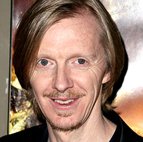
Profile image for Andrew Adamson

Andrew Adamson

Director, Writer

Andrew Adamson began as a computer animator, but blockbuster Shrek set his career on a new path. A number of special effects artists have tried to morph into movie directors, but Adamson and Brit Gareth Edwards (Godzilla, Rogue One) are among the few to have made the transition so abruptly and successfully.

Adamson was 11-years-old in east Auckland, when his family moved to Papua New Guinea. He has argued that he benefitted from his Kiwi education, especially its emphasis on creativity. “I think there’s an openness in New Zealand and a freedom, in the way I grew up anyway, that encouraged the openness of imagination.”

Plans to study architecture at Auckland University were never realised. The day before he was set to leave Papua New Guinea, "I had a car accident and broke my leg and smashed myself up. And so I had a year to kill waiting for the next year's enrolment."

Adamson began his screen career with Auckland computer animation company The Mouse that Roared. There he worked on advertisements and station logos, including graphics for music show Radio with Pictures, and a long-running ad in which a Mintie lolly wrapped itself. Adamson recalls a Telecom ad in which a face turned into a telephone being voted “one of the worst 10 commercials of the year, which I was particularly proud of.” He was also creating graphics for station logos and programme openings, including many logos for newly launched channel TV3.

After travelling to the United States for a conference, Adamson was hired by California company Pacific Data Images in 1991. The company was moving from computer graphics increasingly into visual effects. After working on his first PDI feature, ill-fated Robin Williams vehicle Toys, Adamson’s interest in working on longer stories grew. His timing was good. ILM’s Jurassic Park (1993) and Pixar’s Toy Story (1995) had demonstrated what computers could bring to the party. Adamson showed his mettle in the highly competitive world of effects, rising to become a visual effects supervisor on two of the Batman sequels.

"I never really felt like an outsider," he told The Listener in 2005, "largely because Los Angeles and Hollywood is all outsiders. It’s a strangely accepting society because there are so many people from so many different walks of life who come there."

In 1995 PDI joined forces with new studio DreamWorks SKG. The new entity proved it was a worthy rival to Pixar with their blockbuster second feature Shrek (2001). Adamson co-directed, alongside American animator Vicky Jenson. The wised-up story of a kind but ugly ogre, a smartarse donkey and a princess put a winning post-modern spin on the fairytale genre. "A lot of rules were broken, because I didn't know the rules," recalled Adamson, who was new to directing. "I really just did things out of instinct."

There were plans to concentrate on writing when Shrek came up. He "agreed to give it a three-month trial and then ended up just doing it for the next three and half years. But it really was story training." 

Although Pixar’s film Monsters Inc was the bigger box-office performer that year, Shrek made history after taking away the first Academy Award for an animated feature. Shrek’s four years in development saw it weathering multiple changes, including the death of original star Chris Farley. In 2008, it was the only non-Disney title included in an American Film Institute poll of the 10 best animated films. It also ranked second in a poll of the greatest family films by British broadcaster Channel 4.

Adamson went to co-direct the sequel;  this time he was officially part of the writing team as well. Shrek 2 broke multiple box office records, including for its Kiwi opening, and became 2004's highest grossing film globally. It's many nominations included for Best Animated Picture at the Oscars, and competing for the Palme d’Or at Cannes (as did the first Shrek movie). Adamson served as an executive producer on further films in the franchise, including two Puss in Boots movies; he provided story input into Shrek the Third.

The success of the second Shrek movie proved helpful during negotiations over the budget of Adamson's live-action debut: fantasy classic The Lion, The Witch and the Wardrobe. The success of recent adaptations of the first Harry Potter book and The Lord of the Rings trilogy helped persuade financiers that the film should stay loyal to its British characters. Adamson argued that Rings director Peter Jackson had shown that "being faithful to a classic piece of English literature was commercially viable, and that gave people a little bit more faith in doing that again with this film, being true to an original source".

Although Adamson was a longtime fan of the CS Lewis book, the film would be no walk in the park. Some scenes saw him directing "four kids, some adults and 150 people in rubber masks running around in the background". The multinational production shot for 110 days in the South Island, in and around Auckland, and in the Czech Republic. Before cameras rolled, Adamson's team created an animatic storyboard of the whole film, helping hone what needed to be shot. Creature effects maestro Howard Berger argued that Adamson's background "is in CGI, but also in supervising on-set special effects, so he had a magnificent understanding of what could and could not be done".

The result was the third highest grossing film of 2005. Among many enthused reviews, San Francisco Chronicle critic Mick LaSalle praised Adamson’s work with the child actors, calling the result "a movie of intelligence and power, of beauty, universality and largeness of spirit".

Battle-heavy sequel Prince Caspian (2008) saw Adamson credited as director, co-writer and co-producer. Again he made extensive use of Kiwi locations — notably Coromandel’s Cathedral Cove — despite early headlines that Walt Disney Pictures wanted to film entirely in England. Variety, The Los Angeles Times and Empire all found Caspian both darker and stronger than the first film. Although Adamson decided two episodes was enough, he stayed on to help produce third Narnia movie The Voyage of the Dawn Treader

Adamson’s follow-up projects have taken him to the circus, and the Pacific. After falling for Lloyd Jones' novel Mister Pip, he began chasing the film rights, quickly joining forces with an old friend, producer Robin Scholes. Mr Pip is set during the 1990s civil war on Bougainville Island, in Adamson's childhood home of Papua New Guinea. The book, he says, is about “the power of being able to use your imagination to overcome obstacles". Adamson shot in Bougainville and various locales across New Zealand. His stars were British actor Hugh Laurie (House) and untried Bougainville teen Xzannjah. The two picked up acting awards at the NZ Film Awards; Adamson was nominated for Best Film, Director and Screenplay.

The same year Mr Pip released (2012) saw the arrival of Cirque du Soleil: Worlds Away. Adamson wrote, directed and co-produced this 3D spectacular, which follows a girl as she joins a travelling circus and journeys to another world. The film showcases performances by circus company Cirque du Soleil.

In an earlier interview (back in 2009), Adamson mentioned his plans to move back to New Zealand, and joked about never working again — or at least making far smaller films than before. "It's hard to be experimental when your days are costing so much. You can't afford to try things out and make mistakes."

Adamson was at one point set to direct a live-action movie based on the Curious George children's books.

In 2018 he collaborated with hip hop group Death Grips, providing a spoken word introduction to their song 'Dilemma'.

Adamson was made a member of the New Zealand Order of Merit in 2006.  

Profile written by Ian Pryor, updated on 6 October 2025

Sources include
Val Aldridge, 'Oscar-winning Kiwi steals Disney’s crown.' - The Dominion, 26 March 2002, page 9
Russell Baillie, 'Andrew Adamson on Shrek 2, and The Lion, the Witch and the Wardrobe' (Interview) - The NZ Herald, 28 June 2004
Rachel Heyler Donaldson, 'Andrew Adamson Interview' - The Listener, 10 December 2005 (issue 3422)
Mike Fleming, ‘Andrew Adamson, James Cameron Team With Cirque du Soleil On 3D Feature’. Deadline website. Loaded 7 December 2010. Accessed 30 March 2015 
Jim Hill, ‘How “Shrek” went from being a train wreck to one for the record books’. Jim Hill Media website. Loaded 16 May 2004. Accessed 30 March 2015 
Dan Jolin, 'Out of the closet' - Empire 57 (Australian edition), December 2005, page 52
Mick LaSalle, ‘Children open a door and step into an enchanted world of good and evil -- the name of the place is ‘Narnia’ ’ (Review of The Lion, the Witch and the Wardrobe) - The San Francisco Chronicle, 9 December 2005
Perry Moore, The Chronicles of Narnia: The Lion, the Witch and the Wardrobe Official Illustrated Movie Companion (2005: Disney Enterprises/Harper San Francisco)
Kenneth Turan, ‘Movie Review - ‘The Chronicles of Narnia: Prince Caspian’ - The Los Angeles Times, 16 May 2008
Calum Waddell, 'Winter Wonderland - Dreamwatch, December 2005, page 48
‘Andrew Adamson gets stuck into next project’ (broken link). TVNZ website. Loaded 29 June 2010. Accessed 3 October 2011  
Unknown writer, ‘Shrek’ - Empire, June 2001, page 79
'Animation down under' - The Dominion Post (TV Week pullout), 3 August 2004, page 3 NZ Press Association writer, 'Narnia film-maker keeps promise to wife'. Stuff website. Loaded 31 January 2009. Accessed 6 October 2025