You are here:

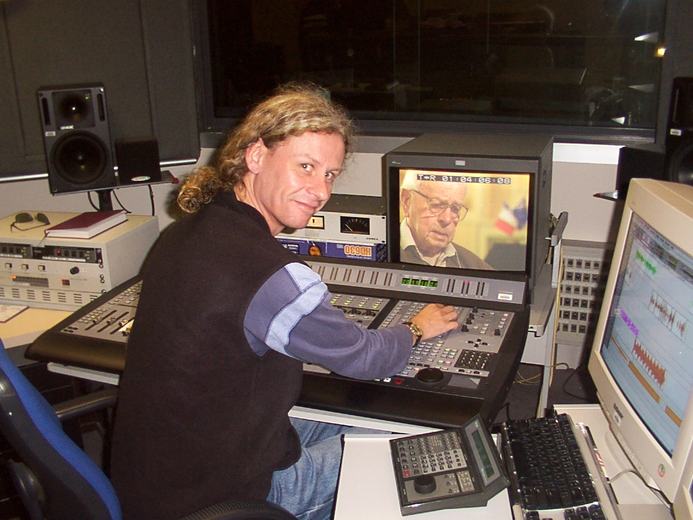
David Blyth

Director

 David Blyth

Biography

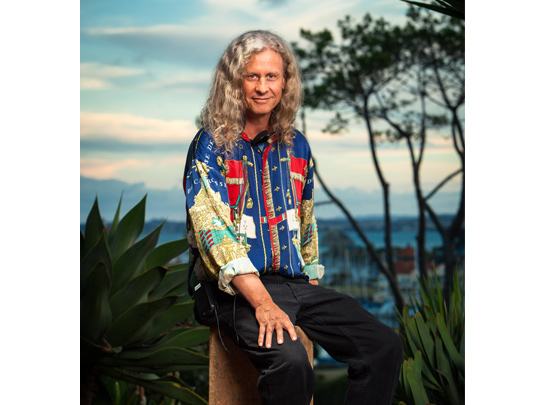
Despite occasional excursions into family friendly fare, filmmaker David Blyth has often been drawn towards the edge: whether it be explorations of horror, sexuality or the unconscious.

The first film Blyth can remember seeing is The Red Balloon. But it was Luis Buñuel's surrealist classic The Discreet Charm of the Bourgeoisie that hooked Blyth into a life in movies. Blyth was impressed by Buñuel's gift for incorporating experimentation and social satire into commercial cinema. The young Auckland arts student went on to train himself in moviemaking by watching "lots and lots of films".

Blyth viewed Buñuel and Dali's classic short Un Chien Andalou repeatedly, trying to unlock its magic. Collaborating with actor and scriptwriter Richard Von Sturmer, they made their own black and white short Circadian Rhythms (1976) for $750, using outdated film stock. The short attempts to "slip past the conscious mind" as it explores what goes through the head of a man who has had a car crash. Circadian Rhythms screened at film festivals in New Zealand and Sydney.

Blyth went onto his first paid film job, working as third assistant director on romance Solo. The following year, aged only 22, he made one of New Zealand's more noteworthy feature film debuts: writing and directing Angel Mine, which combined Blyth's interests in dreamlike imagery, social satire and pushing the boundaries. Based around the life - fantastical and otherwise - of a young suburban couple, the film explored Blyth's concerns that people's dreams and fantasy lives were being tainted by a "headlong dive into materialism".

The entire film was completed for $39,000 - just under half of it coming from the Interim Film Commission, who funded post-production. The Kiwi censor invented a new warning to go with the film's R18 certificate: "contains Punk Cult Material". Morals campaigner Patricia Bartlett expressed annoyance that the Commission and the Arts Council had "squandered" money on it at all. Arts Council chairman Hamish Keith hit back, arguing that Angel Mine's black comic portrait of suburban New Zealand was "genuinely original".

In 1980, Blyth left for Europe, partly thanks to a Film Commission grant. There he spent time with three filmmakers known for pursuing their own vision: Derek Jarman, Rocky Horror Picture Show director Jim Sharman, and cult director Alejandro Jodorowsky, who would later praise Blyth's atmosphere and vision.

Blyth had been impressed by a script by Brit Elizabeth Gowans: a "not-so-golden story of life for a young woman in early New Zealand". On returning home he turned it into the hour-long tele-movie A Woman of Good Character, which won a Feltex award for star Sarah Pierse. Extending the film by 20 minutes under a new title, to up foreign sales, was not Blyth's idea. He also directed 12 episodes of longrunning soap Close to Home, including the wedding of key characters Gail and Gavin.

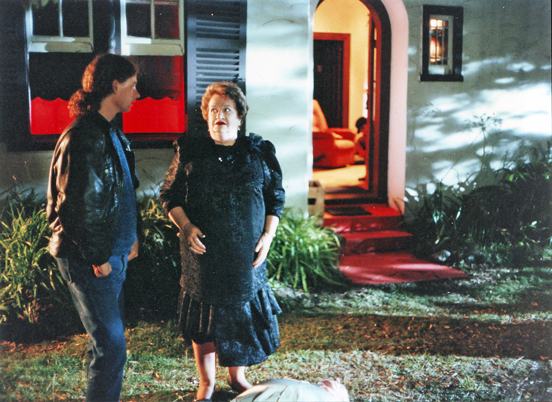
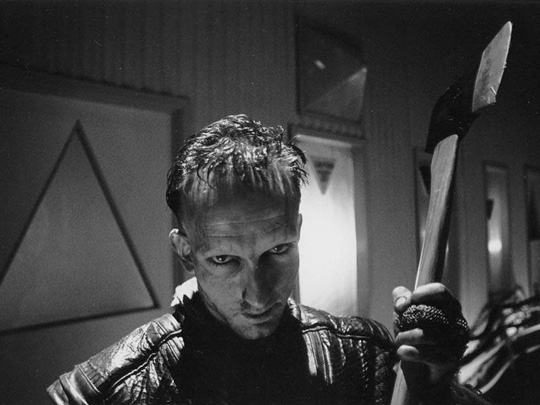
In 1984, Blyth landed back in cinemas with New Zealand's first horror movie, splatter piece Death Warmed Up. This gleeful celebration of mutants, mad scientists, and motorcycle chases won the Grand Prix at a fantasy film festival in Paris. Death Warmed Up marked the big-screen debut of Kiwi actor Michael Hurst; it was also the first of many collaborations between Blyth and scriptwriter Michael Heath.

One local critic famously wrote that Death Warmed Up had not been released; it had escaped. The film sold to 20 plus countries and won a 40-print release in France. It also won Blyth an American agent, and an offer to direct Canadian vampire movie Red-Blooded American Girl (and later a sequel). Christopher Plummer (The Sound of Music) co-starred.

Excited by the idea of putting vampire mythology into a New Zealand context, Blyth then worked with Michael Heath on adapting Heath's radio play Moonrise into the movie Grampire.

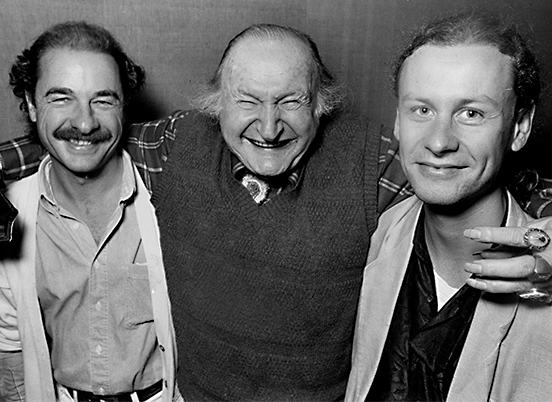
The film centres around a boy who suspects that his grandfather is a vampire. The grandfather in question is played by American veteran Al Lewis, who had won fame on cult 60s show The Munsters. Reviews crossed the gamut; Grampire was nominated for best international fantasy film at 1991's Fantasporto festival in Portugal.

After Grampire (also known as Moonrise), Blyth returned to television work, including episodes of White Fang and the Power Rangers franchise. In 1994 he directed Cliff Curtis in the little seen relationship drama Kahu & Maia, and the following year made Sunday Theatre piece The Call Up, which follows events in the lives of three New Zealand soldiers before they leave to serve in Bosnia. The drama's powerhouse cast included Joel Tobeck, Rena Owen, Marton Csokas and Danielle Cormack.

By the time Blyth had completed American-funded tele-movie Exposure in 2000, he felt in need of reinvention. Worried he "had lost touch with my own personal view of the world", Blyth turned to documentary as a way to reconnect with projects that really mattered. One of the first to emerge was Our Oldest Soldier, based around interviews with his grandfather Lawrence Blyth, who had fought in WWI.

Blyth does reinvention like no one else. In 2002 he explored his interests in desire and the unconscious with a documentary on dominatrices, Bound for Pleasure. It played on TV3 and was released in a variety of lengths, to accommodate various international markets.  He followed it with Fish Tank Telly, which sets ambient music by collaborator Jed Town to images of aquarium fish, and Transfigured Nights, a doco about the world of web cam mask performers.

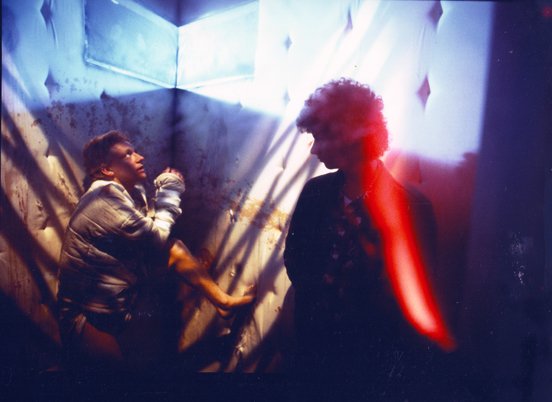
Blyth's latest feature is Wound, which plays in the 2010 round of Film Festivals. Billed by programmer Ant Timpson as "a shockingly supernatural tale of mental illness, bondage, incest, revenge and explicit graphic violence", the low-fi movie stars Kate O'Rourke as a vengeful daughter hunting for her mother.

Sources include:
David Blyth Website - Accessed April 2009
Nick Grant, 'Blyth Spirit' (Interview) - Onfilm, May 2008
Roger Horrocks, 'New Zealand Film Makers at the Auckland City Art Gallery: David Blyth' (Catalogue) 1985
Helen Martin and Sam Edwards, New Zealand Film 1912 - 1996 (Auckland: Oxford University Press, 1997)
Diana Ward, 'David Blyth's new film Angel Mine' - Art New Zealand, Spring 1978 (No 11, page 31)