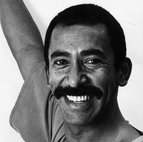
Veteran actor George Henare has been seen on stage, film, and television, and heard on radio and talking book. In 1988, he was awarded an OBE for services to theatre; two decades later he was made an Arts Foundation laureate and received Te Waka Toi, Te Tohu Toi Ke, Award for his outstanding contribution to Māori theatre.
"Because my career is all about human behaviour and interaction, it is for me an endless journey of discovery, fascination and enlightenment, a journey I hope to continue on until that ‘other' big spotlight shows the way to another dimension."
George Henare grew up as the third youngest in a family of ten children. Until the age of twelve he lived on a farm on the East Coast of the North Island.
Henare became involved in theatre after stints as a postman and trainee teacher. He abandoned his teaching career after a successful audition with the New Zealand Opera Company, kickstarting a prolific career on stage.
In 1976 Henare won a key role in the television play The Park Terrace Murder, based on a Christchurch murder case from the 1870s. Henare played Cedeno, a part Spanish butler who was accused of killing a cook in the house of wealthy Canterbury landowner William Robinson.
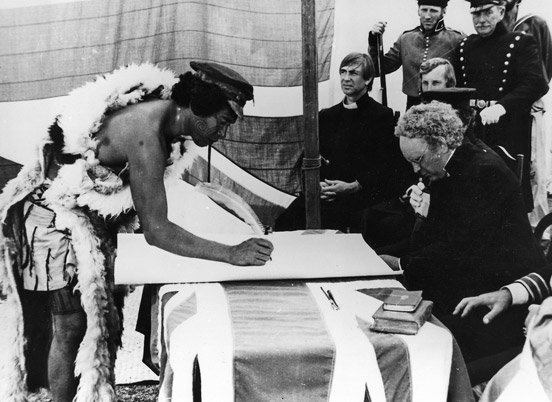
Henare followed it with another provocative piece centered around history and race. The high-rating historical drama The Governor remains one of the most ambitious television programmes yet made on New Zealand soil. Henare appeared in the first episode in the plum role of Māori chief Hone Heke.
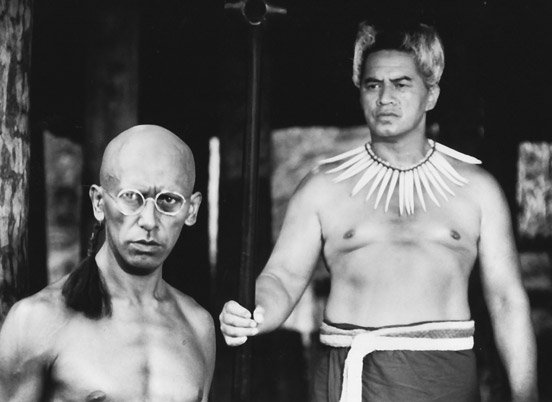
The eighties was a lean decade for Henare on screen, with one notable exception. Hospital comedy Porters failed to fly, despite a talent-heavy creative team and an imported director, drafted in to show how television comedy is done. There were a couple of minor villain roles, including Queen City Rocker. The exception was Henare's role in The Silent One (1984), an adaptation of Joy Cowley's myth-like novel about an outcast Rarotongan village boy and a mythical white turtle. Henare won praise as the scheming, narrow-minded tohunga, Paui Te Po.
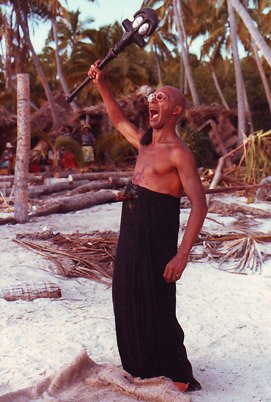
A decade later, Henare found himself spending four and a half months on Easter Island, playing another power-monger - this time on Kevin Costner-produced epic Rapa Nui. Henare has admitted he loves playing villians, partly for the satisfaction audiences get from seeing their come-uppance.
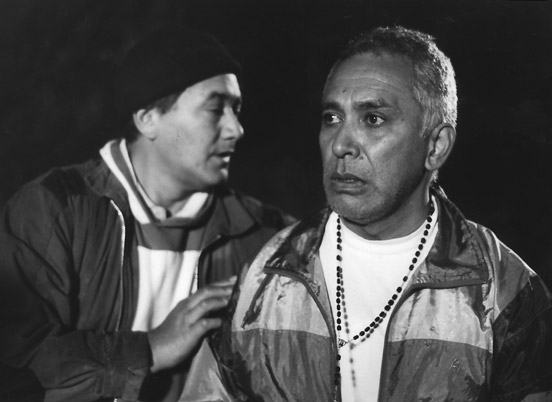
1994 also saw Henare appearing in a small but important role in the classic Once Were Warriors: as Bennett, the imposing social welfare officer who compels young Boogie to take pride in his culture. Apart from Warriors, Rapa Nui and a brief role in the short film Mananui, the nineties saw Henare appearing most often on television, including guest roles in episodes of Shortland Street, City Life, and the Xena/Hercules double act.
As the century came to a close, he was also seen in historical series Greenstone, playing Chief Te Manahau, and worked on award-winning docu-drama Nga Tohu: Signatures. The programme explored the Treaty of Waitangi, the document which overseas funders had tried to remove all mention of from Greenstone. Jumping between past and present, Signatures tells the story of a fictional New Zealand town facing the consequences of a treaty claim. Signatures won acting awards at the 2000 Television Awards for Henare and Nancy Brunning, who each had double roles.
Henare worked with Brunning again soon after, when he took a small role in 2001 big-screen drama Crooked Earth. He also joined the cast of Love Mussel - an acclaimed one off satire for television by playwright Stephen Sinclair - and appeared in the first two seasons of rural relationship drama Mercy Peak.
Made with American and Tahitian money, the little-seen Pacific-themed family comedy The Legend of Johnny Lingo (2003) sees Henare playing the title role. The cast includes Rawiri Paratene and Sima Urale.
Henare has also starred on two series of Maori Television series Kai Korero, a multi-cultural sitcom about two families who periodically share a meal. The series co-stars Annie Whittle and Ruby and Rata star Vanessa Rare, with Henare playing the aging father with a fondness for Brylcreem.