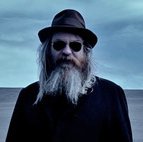
Auckland-based Mark Beesley has directed many episodes of the long-running series Outrageous Fortune, and in 2000 wrote and directed drama/comedy Savage Honeymoon.
Born and raised in Auckland, Beesley was converted to movies after witnessing 2001: A Space Odyssey. After time as a business journalist, he joined production house Communicado, where he worked on reality-based shows Heroes and the rugby-themed Mud and Glory.
Then he moved into drama, directing episodes of Shortland Steet and the acclaimed but shortlived ensemble drama Homeward Bound.
In the mid-90s Beesley met American producer Steve Sachs, who was working in New Zealand on docu-drama series True Life Stories. Said Sachs: "Mark directed three episodes and we just clicked." Beesley and Sachs would collaborate again on Montana Sunday Theatre drama Highwater, which starred Michael Hurst as a big city advertising man reappraising his life.
Sachs would also produce Beesley's pet project, the long-in-gestation dramatic comedy, Savage Honeymoon. The film's origins lay in a character that Beesley had developed for rock band he played in: Dean Savage (also the name of the band) a passionate New Zealand male who can't always express what he is feeling.
In Beesley's words, Savage Honeymoon is "about working-class West Aucklanders [who are] into loud music and motorbikes and sex and alcohol". The film is also about a father worrying that his teenage children are growing up exactly like him.
Savage Honeymoon won controversy after the Office of Film and Literature Classification gave it an R18 rating, thanks to scenes of drunkedness and a gas cylinder being placed on a bonfire. After an appeal, the rating was downgraded to an R15. Said Beesley: "The chief censor, bless his heart, has given us free publicity. We didn't have a marketing budget to match Titanic."
On release in March 2000, New Zealand Herald reviewer Peter Calder wrote that Savage Honeymoon was "a film with such a self-confident swagger that it gets under our skin". The Evening Post's Philip Wakefield praised the film's Kiwi characters and "infectious exuberance". The film would win five NZ Film and TV Awards, including best supporting actress (Elizabeth Hawthorne) and best music (Dean Savage).
Beesley would go on to work on another story about a rule-breaking West Auckland family: the top-rating Outrageous Fortune, which ranks as one of New Zealand's most decorated drama shows to date. Beesley worked on the first four series of Outrageous Fortune, including the award-winning Christmas special, and the opening episodes of the third and fourth seasons. He has also won Qantas TV awards for best dramatic director for episodes in series one and series three.
For Beesley, creative life continued to exist beyond the environs of West Auckland. He has also directed episodes of the award-winning The Insiders Guide to Happiness, fantasy series P.E.T Detective, Mercy Peak and another awardwinner, one-off stag night comedy Double Booking.
Beesley's 1997 documentary Back from the Dead: The Saga of the Rose Noelle told the story of four men trapped for 119 days on the wreckage of a trimaran. In 1997 it won the award for best documentary at the NZ Film and TV Awards.
Separate from these New Zealand stories, Beesley has also directed extensively for a number of internationally-funded fantasy shows that were filmed down under. The first was a 1995 adaptation of Jules Verne's Pacific Islands adventure Mysterious Island, for which Beesley directed two episodes.
Beesley followed it by working on a number of episodes of Pacific Renaissance hits Xena: Warrior Princess and Hercules: The Legendary Journeys (including time-travelling two-parter ‘Armageddon Now'). Beesley's resume of work for Renaissance began with the 1997 Xena episode ‘A Necessary Evil', and includes season six opener ‘Coming Home'. He has gone on to work on the latest Renaissance fantasy series Legend of the Seeker, based on the Sword of Truth books by Terry Goodkind. Beesley has also worked extensively on the Power Rangers franchise of television shows.