You are here:

Mike Hardcastle

Cameraman, Editor

 Mike Hardcastle

Biography

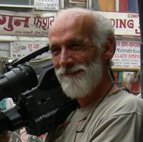
Mike Hardcastle's career is one of many which owes much to indie production house Pacific Films- although he actually began in the business after winning over Auckland producer Harry Reynolds with some of his own 8mm films. In 1971 Hardcastle joined Reynolds Television, where he spent time learning to cut film, and as a camera assistant. Hardcastle left the company the following year, keen to get a job at Wellington's Pacific Films as an assistant editor.

Pacific boss John O'Shea had all the editors he needed, so instead took Hardcastle on as an assistant cameraman, changing the course of his career. He was one of the large crew capturing ambitious documentary Rally, and assistant cameraman on much of ground-breaking Māori series Tangata Whenua, directed by Barry Barclay.

After a year at Pacific, he set off on his O.E, ending up working for veteran British negative cutter Mike Fraser. At the time he was unaware that the laborious process of trying to get union membership in England could have been shortened by a couple of years if he had arranged to give the boss of the union a crate of champagne.

The following year, while living in Holland, he joined a troupe of expat Kiwis to shoot Tony Williams Cannes Film Festival doco Lost in the Garden of the World. The film, which included interviews with Steven Spielberg (who had just released Jaws), Martin Scorsese, and Werner Herzog, captured the energy and expectant hopes of a new generation of filmmakers, some of them Kiwi.

Arriving home in 1975, Hardcastle was just in time to take part in the explosion of Kiwi feature film production. After another year at Pacific, he was focus-puller and clapper loader on Solo, the first feature directed by ex Pacific talent Williams. He went on to be either cameraman or focus puller on a string of iconic early feature films, including blockbuster Goodbye Pork Pie, Middle Age Spread, Bad Blood, and Pictures.

By the late-70s Hardcastle had gained a reputation as one of the best focus-pullers in the country. With no particular desire to take on the head job of director of photography, he found himself increasingly in demand for his skills as a camera operator. Alongside local filmmakers, he worked closely with soon-to-be-famous international visitors: people like Chris Menges (Oscar-winning cinematographer for The Killing Fields) and Mike Newell (director of Kiwi murder tale Bad Blood, and later Four Weddings and a Funeral).

When a clampdown on advantageous tax breaks threatened a dramatic cutback in local movie production, Hardcastle took a complete break from film to become an oyster farmer. He returned to the industry as director and cameraman of award-winner When a Warrior Dies (1991), produced by fellow Pacific Films alumni Warrick Attewell. The documentary examined the circumstances behind the sinking of the Rainbow Warrior, alongside efforts to create a sculpture marking the boat's final resting place.

The success of When a Warrior Dies led to more work as a cameraman, including 1993 documentary Kupe: Voyaging by the Stars and drama series Nga Puna, executive produced by the late Don Selwyn. Hardcastle then honed his skills as a director, writer and non-linear editor, in the process winning an ITVA Editing Award for a 2000 Courierpost corporate video.

In 2006 he was cameraman and editor on Out of Darkness, Out of India, a tale of ethnic dislocation directed by Owen Hughes for the Artsville series. He also edited The Chosen Ones - a series of eight 50-minute documentaries for Sky Sport - and worked on TV commercials and corporate videos as director, cameraman and editor.

Sources include
Mike Hardcastle