You are here:

Barry Barclay

Filmmaker [Ngāti Apa]

 Barry Barclay

Biography

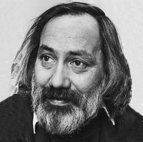
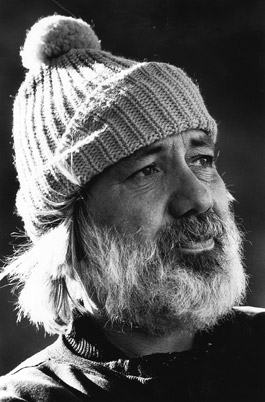
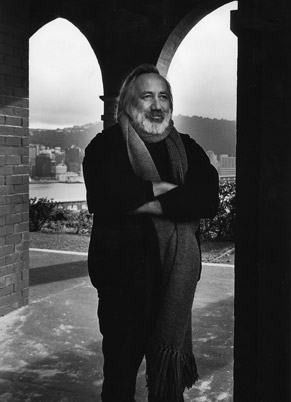
When Barry Barclay died in 2008, MP Pita Sharples wrote that the director's work had "given voice to the voiceless, and helped people tell their own stories". NZ Herald writer Peter Calder called him "indisputably our greatest documentarian". Barclay's eloquence went beyond celluloid: his 2005 book Manu Tuturu won praise for its exploration of indigenous rights.

Barclay grew up in the Wairarapa. His Pākehā father managed sheep stations, and his mother was one of the only Māori faces he remembered seeing in his childhood.

Barclay's upbringing gave him a "deep respect for rural people". Later he would make it a creative yardstick to imagine how his films might play, if he took them back to his hometown.  

Aged 15 Barclay joined an Australian Roman Catholic order, where he spent the next seven years. He was especially inspired by the group's dedication to the values of poverty and community. Afterwards Barclay dabbled in writing, acting and painting. "But for some crazy reason I could not put my finger on, all I wanted to do was to make films."

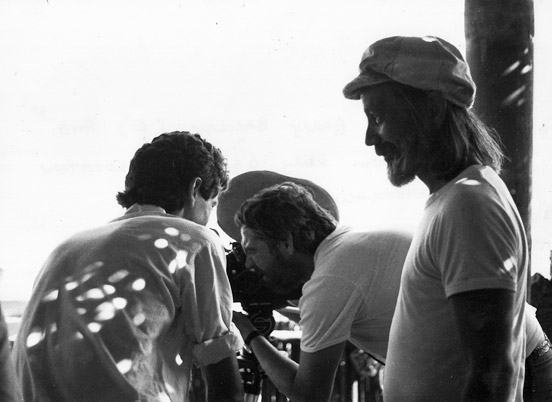
Barclay was advised to get into television via radio. After time as a radio programmer in Masterton, he joined a company making trade films. Over four years, Barclay became a skilled cameraman. "It was an invaluable experience. It taught me to look."

Around 1970 Barclay moved to independent filmmaking outfit Pacific Films, kickstarting a long collaboration with Pacific boss John O'Shea. Barclay found O'Shea uncharacteristically enthusiastic about putting matters Māori on film.

Commercial work aside, one of Barclay's earliest Pacific films was half-hour TV short The Town that Lost a Miracle, a remembrance of Opo the dolphin visiting Hokianga harbour.

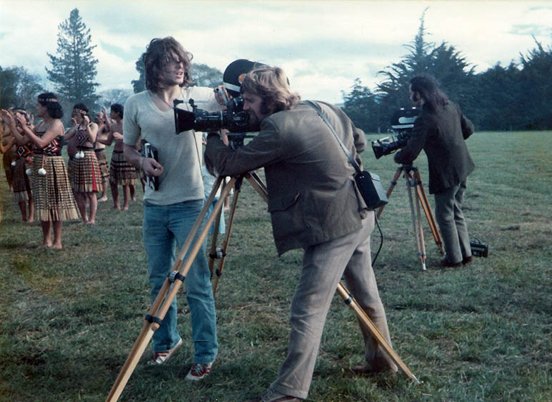
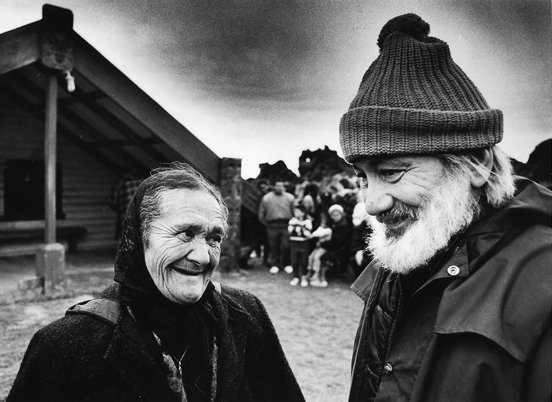
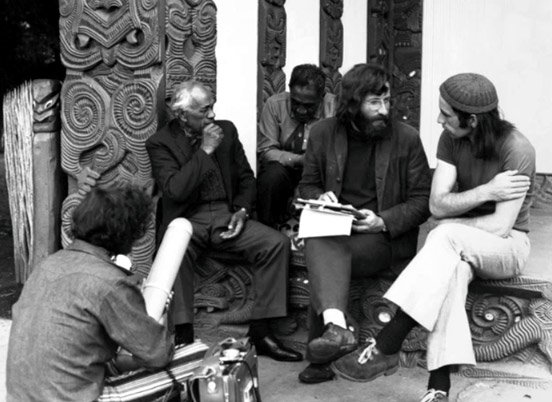
But the first big milestone - for Barclay, and arguably for representations of Māori on screen - was the 1974 documentary series Tangata Whenua.  As the show's originator Michael King later argued, Tangata Whenua broke the monocultural mode, giving Māori "an opportunity to speak for themselves about their lives".

Making the show taught Barclay much about Māori culture - and about how technology (for example long lenses) could be used to soften the impact of the camera´s gaze during interviews.

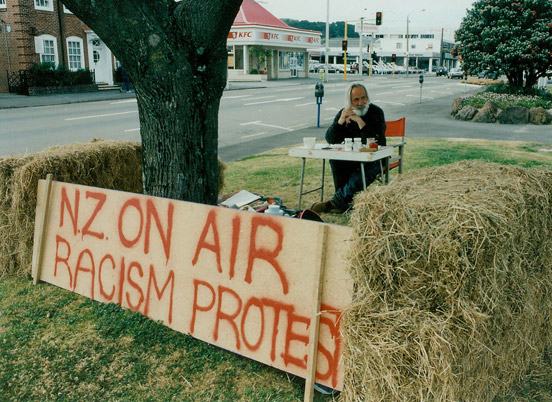
Barclay kept quiet that he was a member of Māori activist group Nga Tamatoa, worried that 'breaking cover' might compromise the programme's funding. After Tangata Whenua's success, Barclay turned to Pākehā projects, wary of hogging Māori funding. Apart from a rare doco on two master cloak-weavers (Aku Mahi Whatu), there were films on ex-soldier James Bertram (Hunting Horns) and Indira Gandhi, plus the impressionistic short Ashes, featuring an early performance by Sam Neill as a conflicted priest.

Barclay returned home in the early 80s, after extended time overseas. Much of it had been spent working on the controversial and prescient documentary The Neglected Miracle, which examined ownership of plant genetics.

Barclay decided to tell this story of crops and corporations trying to control them, by using the marae approach developed on Tangata Whenua: his hope was that everyone from scientists to third world farmers would get a chance to speak. MP Tariana Turia later argued that the film proved influential in encouraging a Waitangi claim involving the protection of indigenous flora and fauna, and Māori traditional knowledge.

In the mid-80s, saddened by a lack of Māori filmmaking, Barclay became a core member of Māori collective Te Manu Aute. Their constitution begins: "every culture has a right and a responsibility to present its own culture to its own people". In 1987 the organisation successfully pressured TVNZ to support landmark Māori anthology series E Tipu, E Rea.

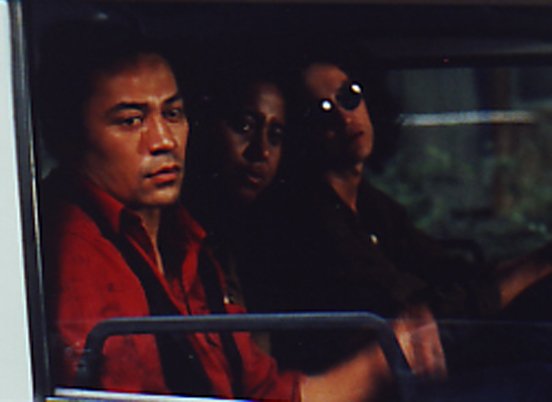
That year, working from a script by Tama Poata, Barclay released his first dramatic feature: the multi-award-winning Ngati, set in a Māori-dominated coastal town in the 1940s. He described it as "the first film made by an indigenous people, if you take indigenous to mean an indigenous minority living within a majority culture".

Writer Cushla Parakowhai argued that Ngati celebrates the values of community, "despite the persistent imperatives of technology and social change".

Wanting to show cultural sensitivity to the mainly Māori cast, Barclay abandoned the tradition of using first assistant directors to keep the film on schedule; instead a team of inexperienced young Māori took on the job. Ngati was shot in just five weeks. Having trained up Māori crew members for the film, Barclay made similar training a condition for agreeing to direct Te Urewera, part of a series on New Zealand's national parks.

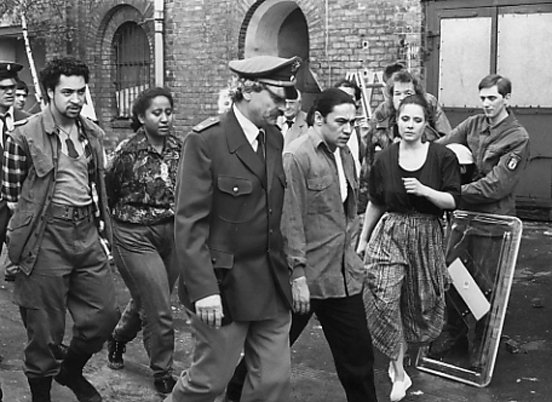
Barclay's second feature Te Rua (1991) told of efforts by Māori activists to return indigenous carvings from a European museum. The movie had a troubled run, from a last minute cancellation by a worried German museum where filming was set to take place, to reviewers uncomfortable with its politics. Later a Mohawk tribe in Canada spoke of how the film had helped heal their spiritual wounds, after recent battles over land rights.

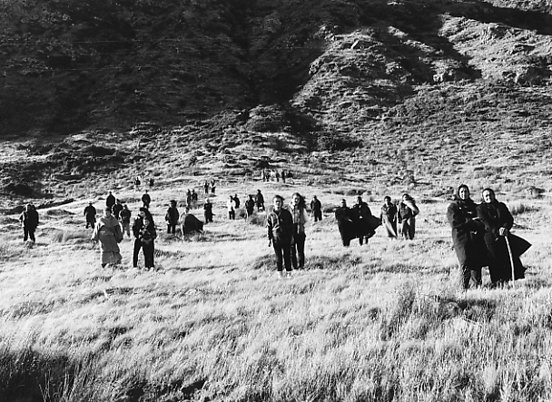
In 2000, inspired partly by a Michael King book on the Moriori, Barclay made The Feathers of Peace. The film applied the groundbreaking fake-newsreel approach of 60s classic Culloden, to Chatham Islands Moriori. Critic Peter Calder found it "intelligent, dramatic, intensely absorbing".

In the 90s Barclay returned to the Hokianga. There he made his final documentary The Kaipara Affair, which examines a divided community uniting to halt the depletion of its fisheries (the film exists in both a 70 minute TV, and 133 minute film festival cut). Hokianga was also the place Barclay finished writing his book Mana Tuturu: Maori Treasures and Intellectual Property Rights.

Calder called Mana Tuturu the book that Barclay had been writing all his life, and it showed in "the meditative, almost tender, and conversational tone".

The book expands on ideas advanced in the earlier Barclay volume, Our Own Image.  Barclay argues that indigenous perspectives and words should be incorporated into the legal documents that structure copyright, ownership, and accessibility - whether they involve land, nature, or the arts.

Barclay also played a hand in helping create film fund Te Paepae Ataata, a panel of Māori encouraging the development of Māori films.

Barry Barclay passed away in February 2008.

Graeme Tuckett's documentary Barry Barclay - The Camera on the Shore debuted as part of the International Film Festival in July 2009.  

Barclay wrote in Mana Tuturu that having made films in both Māori and Pākehā worlds, he felt that with Pākeha film the main period of glory occurs when a film is initially released - but with Māori work, the film increases "in vigour and relevance" as the decades pass. It is a provocative statement, but perhaps a fitting end to Barry Barclay's rich career as an activist and filmmaker. 

Moe mai e te rangatira, moe mai.