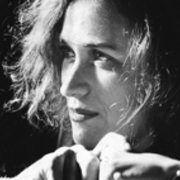
Jane Campion
Jane Campion is one of the most acclaimed filmmakers to emerge from Australasia. Her depiction of strong (usually female) lead characters rebelling against stereotypical roles has attracted singular praise, as have her storytelling techniques: original and striking visual compositions, a non-linear editing style and moments of narrative ambiguity.
After winning film festival glory with An Angel at My Table, Campion's dark romance The Piano proved a sizable hit in Europe, and she became the first woman director to win the top award at the Cannes Film Festival. The film is now listed in the US National Society of Film Critics' list of '100 Essential Films' of all time, joining classics like The Godfather and Casablanca.
Jane Campion was born in Wellington, daughter of theatre doyens Richard and Edith Campion (Jane would later act alongside Edith, in her sister Anna's film The Audition). After studying anthropology at Victoria University — having deciding against acting — she felt the need to travel. Following time in Europe Campion ended up in Sydney, doing a diploma in arts. There she made her first film Tissues, which helped win her a place at the Australian School of Film, Radio and Television in the early 1980s.
At the 1986 Cannes Film Festival in France, surreal and acclaimed film school shorts Passionless Moments and A Girl's Own Story screened in the Un Certain Regard section. Campion talks about these early films in this documentary. Colleagues confirm that her AFTRS tutors showed little enthusiasm for Peel (1982), a study of a fractured family on a road trip; some of them told her not to bother finishing it. Peel went on to take the Cannes prize for Best Short Film.
Partly in an effort to demonstrate she was employable, Campion directed 1986 telemovie Two Friends, a portrait of the complex friendship between two teenage girls. Written by Australian novelist Helen Garner (Monkey Grip), it also screened at Cannes.
Campion made her feature film debut in 1989, with off-kilter drama Sweetie. The film follows two sisters, one unassuming, the other noisy and self-centred. Many of the cast and crew were new to features, including Campion's film school collaborator Sally Bongers (Talkback), who became the first woman in Australia to shoot a feature on 35mm film. Sweetie won both applause and walkouts when it debuted at Cannes.
An Angel at My Table, Campion's biopic of writer Janet Frame (1990) was originally produced as a miniseries for television. The story was divided into three sections, adapted from the author's three-part autobiography. NZ Film Commission marketing veteran Lindsay Shelton ultimately persuaded Campion that Angel might also be a film. It went on to win numerous awards, including second prize at the Venice Film Festival, where it won lavish praise, extended standing ovations, and yells of protest after it narrowly failed to take top prize. Guardian critic Derek Malcolm called it "one of the very best films of the year"; Variety found it "totally absorbing", while The Sydney Morning Herald went for "visionary" and "deeply moving". The breakout critical success established Jane Campion as a director to watch, and launched the career of lead actor Kerry Fox.
The Piano (1993) marked the point where Campion truly found mainstream success. A brooding drama about 19th century colonists in the emotional scenery of the New Zealand forest and coastline, the film inspired rave reviews and box office success — especially in Europe, where it broke records in France for a foreign film (ironic, considering the US $7 million movie was funded by a French industrial magnate).
Campion became the first woman director to win the award for Best Feature at Cannes (she shared the Palme d'Or with Chinese entry Farewell My Concubine) — and only the second woman nominated for Best Director at the Academy Awards. The Piano scored Oscars for actors Holly Hunter and Anna Paquin, and for Campion's screenplay.
Next Campion directed Nicole Kidman, John Malkovich and Barbara Hershey in an adaptation of Henry James classic A Portrait of a Lady. Campion felt that the book was "one of the most extraordinary written portraits of a woman". Then she collaborated with her sister Anna on escaping from a cult tale Holy Smoke, starring Kate Winslet and Harvey Keitel. Reviews for both films crossed the gamut.
Campion has won praise for an allusive style: using ambiguity, and hinting at what is unseen or unsaid in an scene. Her romance is often romance with a rotten apple. In the Cut (2003) is a darkly erotic exploration of the relationship between a hardened cop (Mark Ruffalo) and a withdrawn writing professor (Meg Ryan). It also got a polarised reception, with the LA Times wondering whether it might be the most imperfect "great movie of the year ... unquestionably the most ambitious and important film to come along in months".
After contributing drought tale The Water Diary to anthology movie 8, Campion debuted her next feature in 2009. Written and directed by Campion, Bright Star portrayed poet John Keats' ill-fated romance with neighbour Fanny Brawne. The Guardian's Peter Bradshaw gave it four stars, finding it "almost certainly" the best of Campion's career. Bradshaw wrote that this "heartfelt film has a nobility of its own; it draws you irresistibly into its world".
When Bright Star opened in America in September 2009, veteran New York Times critic AO Scott added to the acclaim, calling Campion "one of modern cinema's great explorers of female sexuality". Scott argued that the film's "passages of extraordinary lyricism" were "balanced by a rough, energetic worldliness".
In early 2012 Campion began filming mini-series Top of the Lake in Queenstown and nearby Glenorchy. The acclaimed six-hour drama marked her first project on Kiwi soil since The Piano, two decades before. Campion wrote the script with Sweetie collaborator Gerard Lee and directed three of the episodes, alongside rising Australian talent Garth Davis (Lion). American Elisabeth Moss (Mad Men) won a Golden Globe, as the detective investigating the disappearance of a pregnant 12-year-old. The cast also included David Wenham, Kiwi Jay Ryan (Go Girls) and Scot Peter Mullan (My Name is Joe). Campion was a triple Emmy-nominee, and the series won awards on both sides of the Tasman.
The second series of Top of the Lake marked one of the first times a small screen production had debuted as part of the Cannes Film Festival programme. This time Campion shared directing duties with rising Australian director Ariel Kleiman (Partisan). Set in Sydney and Hong Kong, it featured some scenes in Queenstown.
In 2021 Campion was named Best Director at the Venice Film Festival, for her first feature in over a decade: The Power of the Dog. The Netflix production began filming in Otago in early 2020, a few months before New Zealand went into Covid-19 lockdown. It is based on an acclaimed but little known Thomas Savage novel about two very different brothers, who own a ranch in Montana. Benedict Cumberbatch plays a man "who declares war on his brother's new wife and her teenage son". Kirsten Dunst co-stars. Among an impressive awards haul, the film was named Best Motion Picture at the BAFTA Awards and in the drama category of the Golden Globes, and Campion became the first woman to be nominated twice for Best Director at the Oscars. She won on her second turn.
Back in 2013, Campion was presented with a prestigious New Zealand Arts Foundaton Laureate Award. The same year, she was awarded the Carrosse d'Or at Cannes, given by the French Film Directors' Society to recognise "innovative qualities, courage and independent-mindedness in directing". In 2016 she became a Dame Companion of the New Zealand Order of Merit.
Campion is the subject of at least seven books, including 1999's Jane Campion: Interviews — plus a collection of writings on The Piano, compiled by Harriet Margolis.
Profile updated on 28 March 2022
Sources include
Jane Campion, 'In search of Janet Frame' - The Guardian, 19 January 2008
Peter Bradshaw, 'Cannes film festival review: Bright Star is Jane Campion at her best' (Review) - The Guardian, 15 May 2009
Peter Bradshaw, 'Bright Star' (Review) - The Guardian, 5 November 2009
Roger Ebert, 'The Piano' (Review). Roger Ebert website. First published November 19 1993. Accessed 13 January 2020
Justin Kroll, 'Benedict Cumberbatch, Elisabeth Moss to Star in Jane Campion's New Film (EXCLUSIVE)' - Variety, 6 May 2019
Ian Pryor, 'Piano lessons' (Interview) - Onfilm, October 1993
AO Scott, 'Keats and his Beloved in an Ode to Hot English Chastity' (Review of Bright Star) - The New York Times, 15 September 2009
Jane Campion: Interviews. Editor Virginia Wright Wexman (Jackson: University Press of Mississippi, 1999)
New Zealand Movie Wins Eight Awards - NZfilm No 41, October 1991, page 2
'Sundance Channel signs on to co-produce Jane Campion's Top of the Lake' (Press Release - broken link). BBC Worldwide website. Loaded 4 November 2011. Accessed 11 November 2011
Australian Associated Press writer, 'Jane Campion gets top award at Cannes' (Broken link) - The NZ Herald, 14 May 2013