Registering with NZ On Screen means you can:
We won't share your data with anyone (see our Privacy Policy) and we won't spam you. It's that simple.
Most directors concentrate on television or film - John Laing has worked prolifically in both. Aside from helming seven features, Laing has worked on a run of New Zealand television programmes, including: Marlin Bay, Jackson's Wharf, Mercy Peak, Cover Story and Street Legal.
Laing studied english and history in his hometown Dunedin, then began working at a local newspaper. His heart was already in film, and two months later he was accepted as a production trainee at the National Film Unit. Laing was directing shorts within six months, including fishing doco Kariotahi Beach, which he successfully fought to make without voiceover narration. 1972 saw Laing directing Mick Stimson, an adaptation of a poem by Denis Glover, and riding a unicycle for a Paul Maunder theatre production of Hamlet.
At that point making feature films in Godzone did not seem a realistic proposition, so Laing and partner (and future producer) Robin Laing left New Zealand for England. John edited at the then "depressing" BBC and elsewhere, then in 1975 got work in Canada at the National Film Board. It was the first time Laing had been "in an environment where I was genuinely encouraged to do good work".
In Canada he edited a run of shorts, and co-directed award-winning doco If Brains Were Dynamite You Wouldn't Have Enough to Blow Your Nose, made in collaboration with his future Lost Tribe cinematographer, Thomas Burstyn. Laing also helped patch together and write extra scenes for cult 1976 feature The Rubber Gun, about a bunch of Montreal junkies with robbery in mind. The film would have echoes in a later Laing-directed film, junkie black comedy The Shirt (2000).
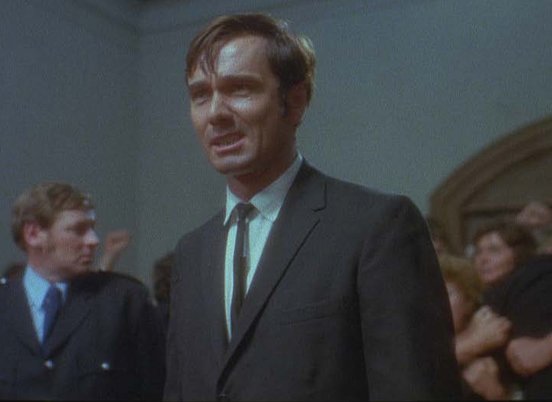
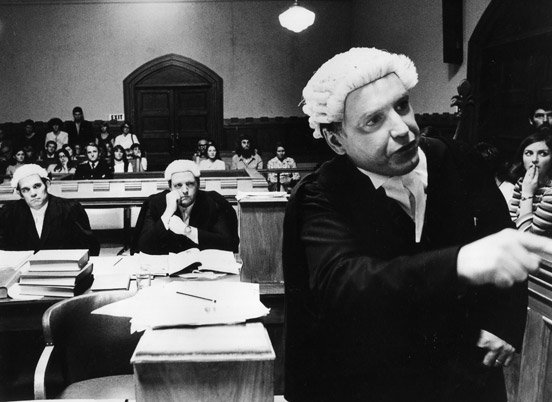
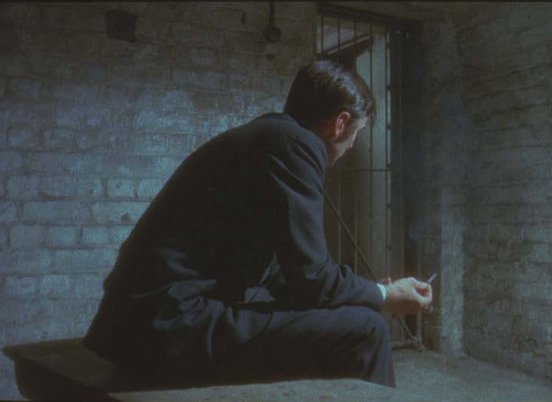
Laing returned to New Zealand after John Barnett gave him the chance to direct his first feature: Beyond Reasonable Doubt, based on the Arthur Allan Thomas case. Laing had to contend with a large cast, and the complexity of a story which continued to develop even during production (Thomas was released a few weeks before filming began). Beyond Reasonable Doubt became - in terms of local box office - the most successful Kiwi film yet made - at least until the yellow mini of Goodbye Pork Pie spun into view.
Laing next edited chase movie Race for the Yankee Zephyr, and worked on the script for his dark, stylish and sometimes muddled second feature, The Lost Tribe. Laing has described the latter as "a bizarre tale of a brother searching for his twin who was lost in a wild area of Fiordland".
John Bach, who played both twins, praised Laing's skills as a director. "One day I changed characters five times, and he enabled me to do it." The Lost Tribe won the international critics prize at the Sitges fantasy film festival in Spain.
Laing followed The Lost Tribe with the more widely-seen Other Halves, based on "a superb screenplay" by Sue McCauley, working from her award-winning autobiographical novel. Other Halves tells the story of a 30-something Pākehā woman (Lisa Harrow) who falls for a 16-year-old Polynesian with a criminal record (Mark Pilisi).
The early 80s proved especially busy for Laing. Aside from completing The Lost Tribe, Other Halves and his third feature, low-budget thriller Dangerous Orphans, he was also making his first ventures into directing and producing for television.
Laing directed episodes of light drama Inside Straight, plus what would become the penultimate episode of working class trucking drama, Roche. Laing and Chris Hampson were contracted to produce a second series, but despite excellent reviews the plans never came to fruition.
In the same period, Laing began directing the first of a long series of foreign-funded television shows, most of them horror, thriller, or fantasy based. Some took him to locations in Vancouver and Paris, while others were made in New Zealand, under the wing of Xena-impresario Rob Tapert. Laing also directed two films for the New Zealand pavillion at Expo 88.
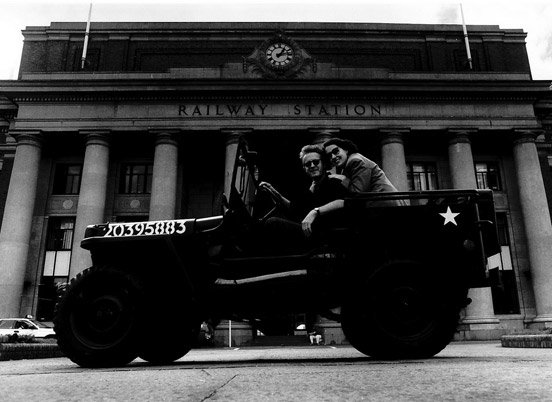
In 1992 Laing directed road movie-romance Absent without Leave (1993). Starring Katrina Hobbs and Australian Craig McLachlan, the film is based on the real-life war-time experiences of Kiwi Jim Edwards.
Since then television has been Laing's main base. The remainder of the 90s saw him directing for the acclaimed behind-the-scenes-of-a-current-affairs-show series Cover Story, Tom Scott tele-movie Tiger Country, and historical drama Greenstone. He also reunited with Lost Tribe/Roche actor John Bach for episodes of detective series Duggan.
He also found time to direct Ross Bevan's black comic addiction tale The Shirt. Of the low-budget movie, which played at the 2000 Wellington Film Festival, Laing told writer Ian Conrich: "I learnt more from that than just about anything else I have done."
In 2001 Laing produced 60 episodes of small town drama series Mercy Peak, before transferring to an extended stint on the even more successful Outrageous Fortune.
Alongside helming a run of family tele-movies, Laing has found time to direct episodes of border security series Orange Roughies, and hit show Go Girls.