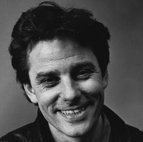
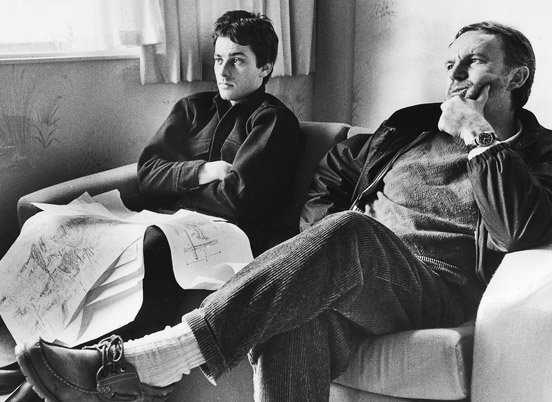
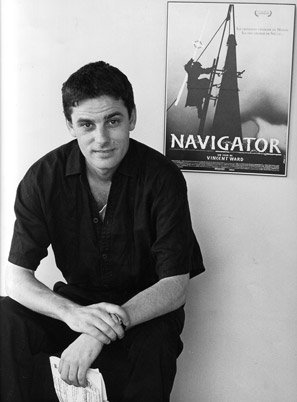
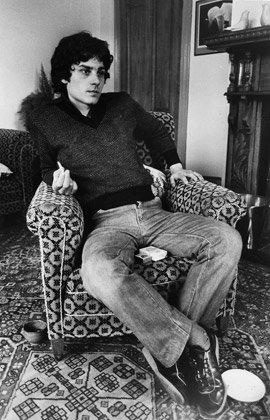
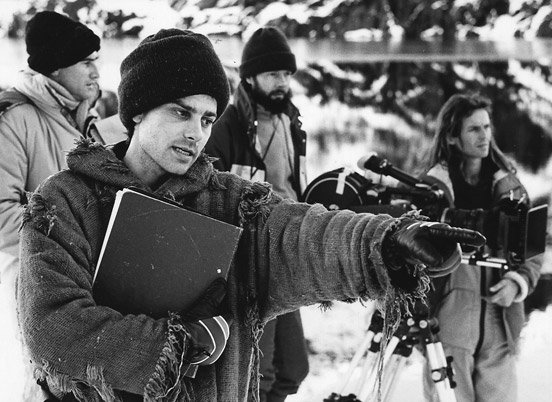
Vincent Ward, OBE, is one of our most acclaimed movie directors. His films have regularly won praise overseas for their originality, atmosphere and imagery. In films like Vigil and The Navigator haunting images of characters alone in wild landscapes have become part of NZ screen iconography.
Ward's debut feature Vigil marked the first time a New Zealand film had been invited into the competition section of the Cannes Film Festival, one of the world's key festivals. His follow-up The Navigator won rave reviews from Newsweek, Rolling Stone, and the New York Times.
With successive Cannes' successes Ward did for New Zealand film what Keri Hulme did for New Zealand literature with The Bone People; prove that our stories could be a critical success on a global scale.
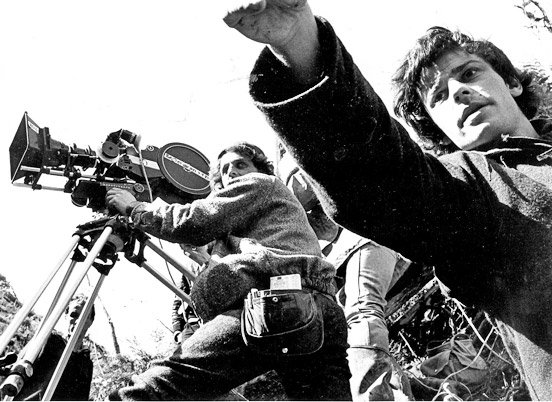
The characters in Ward's films are often isolated, and/or caught between cultures. Ward's hour long adaptation of Janet Frame's A State of Siege (1977), demonstrates his ability to get inside a character's mind - skillfully using the tools of sound and image to convey how someone perceives the world around them. Reviewer and Frame fan Michael Heath called it "a landmark in New Zealand film making".
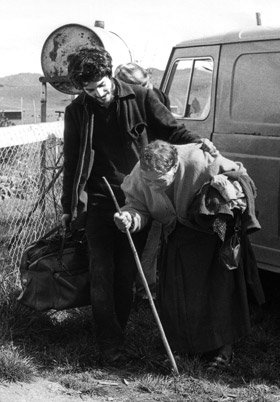
The following year - not for the last time - Ward went travelling, in search of inspiration. Keen to learn more about Māori traditions, he ended up at the house of an old Māori woman named Puhi, and her mentally-ill son. Ward stayed on and off for two years. The result of his commitment: the award-winning documentary, In Spring One Plants Alone.
Vigil (1984), Ward's first feature length movie, is a tale of "a solitary child who imagines, fantasizes and dreams". Partly inspired by Ward's rural upbringing in the Wairarapa, it remains among the most acclaimed New Zealand films yet made.
"Utterly unique, a stunning achievement" (The Boston Herald); "an extraordinary visual and psychological experience" (Los Angeles Times); "a work of astonishing and original force" (The Guardian); "timeless...striking" (Sydney Sun-Herald).
The plan was to follow Vigil with The Navigator, an ambitious adventure about a group of 14th century Cumbrian villagers who tunnel through the earth, and find themselves in modern day Auckland. But six weeks before filming, a key investor withdrew. Ward and his producing partner John Maynard moved to Australia; the project was reborn in 1987 as the first official trans-Tasman film. The Navigator would win Ward a wider audience, a stack of awards, and more raves.
Landscape features strongly in Ward's work, and he has won a reputation for liking difficult locations. His actors have performed in caves, rivers, muddy Taranaki valleys, and on Arctic ice floes.
The ice floes were first visited by Ward on the way to his third feature, Map of the Human Heart. A multi-cultural love story, which ranges from the Arctic to Germany, the movie is masterful or flawed, depending on whom you trust.
While working in Hollywood, Ward was offered the Robin Williams afterlife fantasy What Dreams May Come. Ward came on board after injecting the plot idea that gives the film its distinctive painterly look. Released in America on 2600 screens, the film won mixed reviews, solid returns and a 1999 Academy award for special effects. Earlier Ward had been offered Alien 3; he retains a story credit.
In the 1990s, Ward began developing twin stories about Westerners encountering other cultures. One became the epic The Last Samurai, which Ward executive produced. The other became Ward's 19th Century historical epic River Queen, starring Samantha Morton. River Queen won respectable audiences at home, but reviews were less than stellar and stories of the troubled production process dominated the film's release.
Ward's Rain of the Children premiered at the Sydney Film Festival in 2008. Pat documentary, part recreation, the film unravels the tragic and complex history of Puhi, the woman he first filmed for In Spring One Plants Alone. Variety praised the film for being respectful, emotionally rewarding and imaginative.
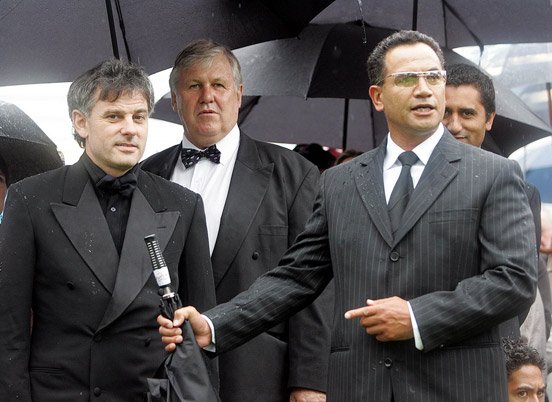
Vincent Ward was awarded an Order of New Zealand Merit in 2007, for his contribution to filmmaking. Ward can claim to be our most consistently successful ‘auteur' filmmaker.
It is vital, says Ward, to bring New Zealand stories and characters to the screen, "Otherwise you end up a country without a voice, a country that can't look at itself in the mirror."
His book Edge of the Earth - Stories and Images from the Antipodes, combines autobiographical material with background on Vigil, The Navigator and In Spring One Plants Alone. (Heinemann Reed, 1990)