Registering with NZ On Screen means you can:
We won't share your data with anyone (see our Privacy Policy) and we won't spam you. It's that simple.
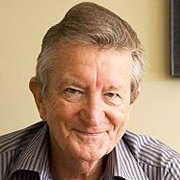
Asked once what makes a good interviewer, Brian Edwards answer is "wide experience of life - its highest peaks and lowest troughs - and the human sympathy that goes with it...The great interviewers are rarely young."
Edwards has done time as a television interviewer, radio talkback host, media advisor and author. In the late 60s he made his name on television with his hard-hitting style of interrogating public figures, which polarised viewers and won him awards. His style contrasted with the orthodox interviewing manner of the time, which was reserved, non-confronting and spoken in ‘correct' BBC English.
Edwards was born in Northern Ireland. His father abandoned him after an argument with his mother when he was two years old. Edwards chronicled his first 25 years - and the search for the truth about his mysterious father - in 2008 book Daddy was a German Spy and other scandals.
The book recounts how during a return trip to Northern Ireland as an adult, Edwards ran into an old teacher, who asked how he had been doing all those years.
Edwards' reply began "well... went to Queen's University (in Belfast), then to Edinburgh for my doctorate, emigrated to New Zealand, taught at Canterbury University, got into TV, became famous, wrote a book about my experiences, stood unsuccessfully for parliament, became a media adviser to a couple of Labour prime ministers, wrote a book about the '72 general election, worked for a trade union, found myself unemployable, went relief teaching at a local high school, became a radio talkback host, was tried for contempt of court for revealing the suppressed names of three SIS agents in a famous New Zealand spy trial..."
Having completed a PhD on Franz Kafka, Edwards made his TV debut as a reporter on the Christchurch edition of 60s magazine show Town and Around. In 1968 producer Des Monaghan called Edwards to Auckland, to join the reporting team on the oft-controversial current affairs programme Compass. There he quickly began attracting the attention of both audiences and critics.
In 1969 Edwards was one of a trio drafted to interview American evangelist Billy Graham, for a show called Point of View. Although Graham later told journalists that he had enjoyed talking to the group of "devil's advocates", many viewers complained about the supposedly impolite style of the interview.
Such probing interviews had been seen in overseas shows, but were new to Kiwi television. When Edwards brought this more confrontational style on current affairs show Gallery in 1969, it helped make his name. There were controversial interviews with SIS head William Gilbert, who demanded (unsuccessfully) that his interview not be broadcast, and heart transplant surgeon Christian Barnard. The latter won Gallery a Feltex award, and more complaints from the public.
The conversation which would win Edwards lasting fame occurred in September 1970. Post office workers were on a go-slow in a bid for higher wages, and communication between unions and managers had completely broken down. Gallery got representatives of both sides into the studio, and as the interview neared its end, Edwards managed to get both men to agree to go back into negotiation. The go-slow was called off that night. This time Edwards himself won a Feltex Award.
A few months after the post office interview, the pilot episode of The Brian Edwards Show was recorded. The show included music, satire and a dramatic conversation between then Finance Minister Robert Muldoon and three young critics (including Tim Shadbolt). Reporter David Beatson called it "the finest television programme you never saw". Possibly fearing pending decisions involving a possible second channel, the NZBC administration later canned plans for a series, arguing the pilot wasn't good enough.
Edwards left Gallery soon after. His 1971 book The Public Eye details many of the interviews he had done up until that time.
In 1972 Edwards "nailed my colours to the mast", by making a failed attempt to win election as a Labour candidate. From then on political interviews would be the exception, rather than the rule.
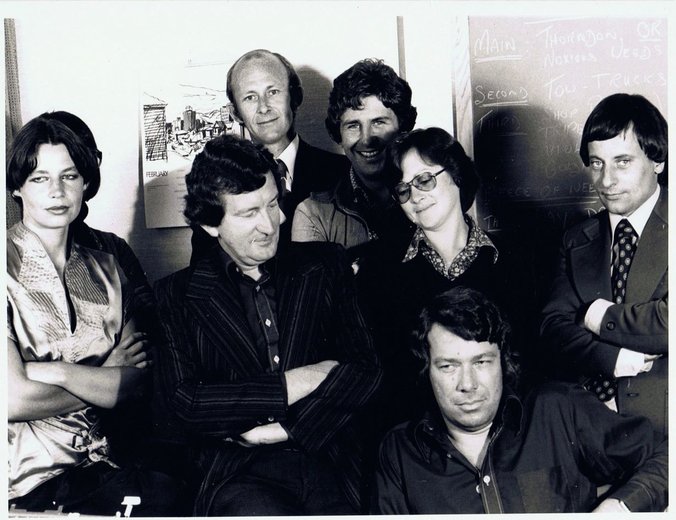
He returned to television in 1975 with the provocative and short-lived Edwards on Saturday. Two years later he played a key part in the launch of consumer rights programme Fair Go, which would become one of the longest running shows in the history of New Zealand television. Edwards was a Fair Go presenter until 1984. He also hosted 1979 programme Sons and Daughters, in which he interviewed children of famous New Zealanders.
Edwards began running media training courses in the early 70s. Between them, he and third wife Judy Callingham have been advisors to four Prime Ministers, including Helen Clark (who Edwards has written a book about). He has also spent time as a columnist and radio host, including a five year stint in the 90s, hosting high rating National Radio show Top of the Morning.
In the 90s Edwards hosted a run of one-off documentaries (including Scorched Memories and Life Sentence - The Crewe Murders), and had a regular interview slot on magazine show Sunday.
Edwards returned once more to television interviewing in 2003 with Edwards at Large, a show which included controversial interviews with Rodney Hide and author Lynley Hood. He argued at the time that "if you're really interested in what makes people tick, what shapes their personalities, this is just the best job in the world".
In 1999 he was made a Companion of the New Zealand Order of Merit (CNZM), for services to Broadcasting and Journalism. These days he continues to offer media training through company Brian Edwards Media.
Sources include
Brian Edwards, Daddy was a German Spy - and Other Scandals (Auckland: Penguin Books, 2008)
'Brian Edwards - TV Current Affairs Legend' (Video Interview), NZ On Screen Website. Director Andrew Whiteside (Uploaded 26 July 2011). Accessed 26 July 2011
Brian
'Format energises Edwards' - Dominion Post (TV Week liftout), 6 July 2003, Page 15
Robert Boyd-Bell, New Zealand Television - The First 25 Years (Auckland: Reed Methuen Publishers, 1985)
Brian Edwards Media website. Accessed 18 July 2011