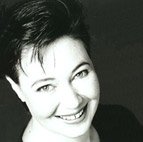
Fiona Samuel began her career as an actor, and filled the down time with some writing. Since then she has scripted, directed, and acted in an impressive run of stories for television and film.
Samuel was born in Scotland, though her parents were New Zealanders. The family relocated to Christchurch when Samuel was six.
In 1980 Samuel graduated from drama school Toi Whakaari. Afterwards she acted in plays, including touring New Zealand with Miranda Harcourt in hit sisters tale Oracles and Miracles.
Samuel's screen career began in 1981 with a scene in yokels comedy Carry Me Back. She followed it with father and son TV play Casualties of Peace, soap Close to Home, and a credit as ‘Casey's Girl', after playing girlfriend to hearthrob Leif Garrett in car chase romp Shaker Run. In 1986 Samuel supplied two voices for the big-screen version of cartoon Footrot Flats, including that of Wal's hairdresser paramour ‘Cheeky' Hobson.
Bored by the extended breaks that an acting career can involve, Samuel took up a friend's suggestion and wrote a radio script. Following some scripts for children, her first adult radio play Blonde Bombshell won a 1985 Mobil Award.
The prevous year at a TV industry conference, Samuel had presented research indicating a 70/30 male/female imbalance in local acting roles. Fresh from guesting in testosterone-heavy drama Roche, Samuel lamented. "If I saw ‘giggle' once more as a script direction, or had to roll around on a bed again, or lick my lips suggestively, I felt I was going to be sick."
The idea for The Marching Girls - a rare Kiwi show in which women took centre stage - was presented to TVNZ in 1985, as part of a job application.
The job went elsewhere: but Samuel was commissioned to create The Marching Girls, and took a small cameo in the first episode. The series follows the lives of a group of marching girls as they train for the North Island championships. The show made Samuel keenly aware of the power the director has in shaping a piece, as she watched her words journey from page to screen.
The Marching Girls' debut in 1987 marked the year Samuel began moving into film. She started by taking on the role of casting director (and occasional composer) on madcap comedy Send a Gorilla, helmed by Marching Girls director Melanie Read.
Samuel was also working on celebrated play The Wedding Party. Samuel wrote and directed, after collaboration with Auckland theatre company Tantrum. The Wedding Party recreated a drama-filled wedding in which the theatre audience found themselves playing guests.
Intriguingly TVNZ's drama department part-funded The Wedding Party's creation, in an open-ended arrangement that left the Tantrum team free to shape their own material. They also documented the creative process for an episode of Kaleidoscope, but with the break-up of the drama department, Samuel's script for a proposed television adaptation was never used.
More disappointment would follow. Her script for part-musical TV satire Where's Kilroy Now? got placed on "indefinite hold", and in the early 1990s, Samuel lost the race to create a feature film based on the Parker Hulme murder, when Peter Jackson and Fran Walsh got the job. If it had been first to the screen, Samuel's script would have marked the directorial debut of Niki Caro.
Samuel then concentrated on short films. She starred in Christine Jeffs' Stroke, a no dialogue mini-epic of one woman and a swimming pool, which won invitation to 18 international film festivals, including Cannes and Sundance. She also appeared in the equally high-profile Lemming Aid, Grant Lahood's tale of bickering Kiwis on a Norwegian cliffside.
In 1994 she finished writing Face Value, a trilogy of one-off solo pieces for television, in which a woman tells a story directly to camera. The pieces featured actors Ginette McDonald, Davina Whitehouse and Carol Smith. The McDonald piece went on to become a finalist at both the Banff and New York TV Festivals.
Samuel made her screen debut directing Smith's episode, 'A Real Dog'. The same year she worked with Smith again when Samuel wrote and directed offbeat relationship drama Bitch. The short film was an attempt to explore the complexities of female friendships and "the murky underlying emotions in them".
Samuel's second short as writer/director followed in 1997, plus a much longer work. The stylish Song of the Siren starred Janet Roddick as a stifled woman who dreams of glamour and freedom. It won one of the major awards at the Bilbao International Festival of Documentary and Short Film.
The longer work was tele-movie Home Movie, in which Samuel moved on from the rituals and dramas of weddings, to those of a family christening. Home Movie would win NZ Film and TV Awards for best actor (Ian Mune), actress (Geraldine Brophy) and single TV drama. She has also entered the world of documentary, as director of Virginity, in which women talk about their first sexual experiences.
Since Home Movie, Samuel has written episodes for television series Outrageous Fortune, Rude Awakenings and police drama Interrogation. Her script for Interrogation episode Girl in Woods would win her a 2006 NZ Screen Award, beating episodes of Outrageous Fortune and The Insiders Guide to Love.
In 2009 Samuel debuted a film she had nurtured for 10 years: Sunday Theatre tele-feature Piece of My Heart, whose cast includes Annie Whittle, Rena Owen, Emily Barclay and Keisha Castle-Hughes. Adapted by Samuel from the Renee novel Does this Make Sense to You?, the then-and-now tale is based on the emotional fallout affecting a young unmarried mother in the 1960s. The NZ Herald's Michele Hewitson called it "a beautifully produced, moving piece of drama, with terrific performances from all four leads".
Samuel's latest TV project is Bliss, which will dramatise the story of writer Katherine Mansfield during the period she left New Zealand in her 20s.