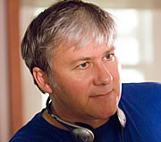
Garth Maxwell got his first taste of professional filmmaking on 1984 feature Other Halves. After waiting at Auckland Airport for the latest footage to arrive from a lab in Sydney, he would hurry to synch up pictures and sound for the waiting film crew. Sometimes the rush was so desperate, there was blood running down the edge of the film. The explosion in local screen production in thie 1980s provided many opportunities for Maxwell to "saturate" himself in filmmaking — including working 20 hour days on the soundtrack of Came a Hot Friday, and helping edit Peter Wells and Stewart Main's pioneering AIDS drama A Death in the Family.
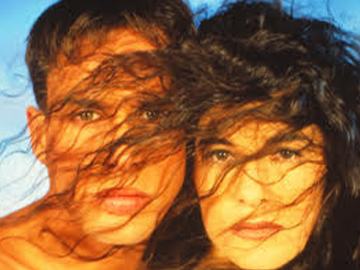
Maxwell had begun making Super 8 films while studying English Literature at Auckland University. His third short, the fantastical, music-heavy Tandem, was shot in 16mm. It won a GOFTA award for New Zealand's Best Short in 1987. The following year, thanks partly to funding from TVNZ, he directed 48-minute Beyond Gravity, a love story between an astronomy-obsessed Kiwi and a part-Italian. "I wanted to show, without compromising too much, a relationship between two men," he told magazine Preview. "I made it for gay people, but at the same time I tried to make it for everybody . . . if you can make people laugh it makes your job a lot easier."
In 1988 Maxwell and co-writer Graham Adams won $13,000, after Beyond Gravity took out the Best Screenplay prize at a festival in France. The pair followed it with Red Delicious, a comical reimagining of the Adam and Eve story.
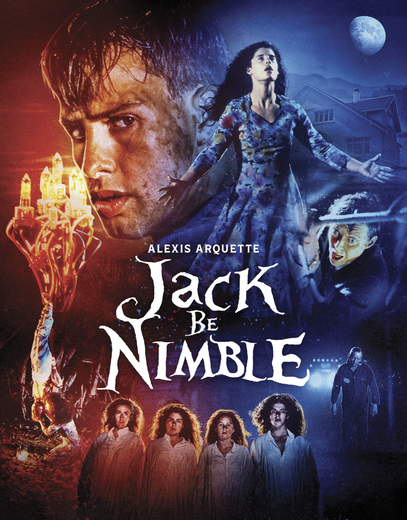
Maxwell made his feature debut in 1993 with the darkly-stylish revenge drama Jack Be Nimble, which was awarded Best Screenplay at Portuguese fantasy festival Fantasporto. Sarah Smuts-Kennedy and American actor Alexis Arquette star as traumatised and dangerously gifted siblings who reunite to find their parents, years after they were separated at birth. The cast also includes Bruno Lawrence and Elizabeth Hawthorne.
Maxwell's aim was to create something dreamlike and elemental, that took no prisoners. The film's visions were fuelled by his view of New Zealand as a place where males were "terrified of showing gentleness or affection", and examples of parental cruelty he had heard about. British horror expert Kim Newman described the outsider tale as John Irving meets Stephen King; he praised Maxwell for making it "at once affecting, funny and horrifying". New York Times reviewer Stephen Holden noted the film's "hallucinatory power and psychological refinement". In 2022, after Jack Be Nimble was restored, it won screenings at New York's Museum of Modern Art.
In the mid 90s, Maxwell was one of the more prolific local directors on Pacific Renaissance shows Xena: Warrior Princess and Hercules: The Legendary Journeys. The shows made for a wild ride: "Handling big departments. Stunts, horses, explosions, digital effects —the scale was really breathtaking."
Maxwell was gratified that both on and off-screen, Pacific Renaissance acknowledged "that people have a range of sexualities". As he told Titan mag in 2001, the company "encourage you to be yourself. So we have a wide range of different kinds of people in very important production positions." Maxwell has fond memories of pulling off an epic crane shot on Xena which featured "hordes of weeping Amazons, while Danielle Cormack's character burned on a funeral pyre".
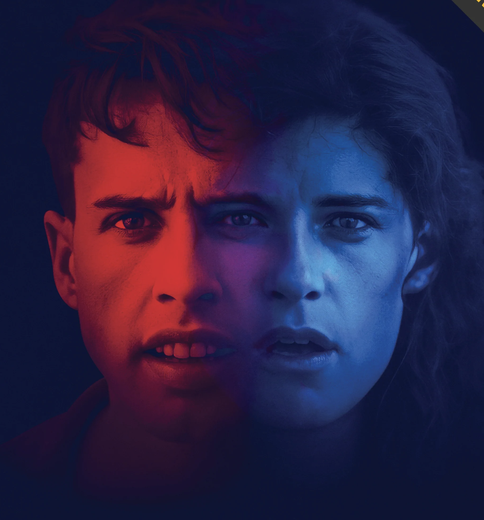
Halfway through Xena's run, Maxwell directed and co-wrote his second feature, When Love Comes (aka When Love Comes Along). As with Jack Be Nimble, the film may have suffered commercially for its refusal to slot into simplistic marketing categories. The film riffs on the relationships, parties and musical ambitions of six characters, young and not so young. Rena Owen played a former singing star returning home, alongside early screen appearances by Dean O’Gorman, Nancy Brunning and Sophia Hawthorne.
When Love Comes won comparatively little attention at home. Overseas, it was invited to 11 festivals, including Sundance and Toronto, picking up praise en route. The Hollywood Reporter noted "colourful performances, energetic direction" and vibrant imagery. Canadian reviewer Katrina Onstad saw "a kick-ass punk rock spirit" alongside the sweetness, while The Los Angeles Times praised nominal leads Owen and Simon Prast for possessing "a wit and depth that lend gravity to a film intent on capturing the skittishness and tentativeness that so often accompany matters of the heart".
Since 2000, Maxwell has directed nine episodes of Kiwi-shot fantasy Legend of the Seeker, and roughly 20 one-hour slices of Australian television, including legal drama Crownies, multi-platform teen drama SLiDE and paramedic show Rescue: Special Ops. His main memory of working in Australia is the high calibre of the actors — and that a higher budget provides no guarantee of being given any more time to shoot an episode.
In 2007 Maxwell created Kiwi dramedy Rude Awakenings. It followed two warring families with contrasting income levels, who become neighbours in Ponsonby. Maxwell cowrote the first six episodes with author Stephanie Johnson before he got busy producing, alongside his When Love Comes colleague Michele Fantl. He also directed the final two episodes. A proposed second season failed to get funding.
In 2024 New York's Museum of Modern Art acquired two of Maxwell's films for their permanent collection — his first feature Jack Be Nimble, and Naughty Little Peeptoe (2000), a half-hour short he directed with Peter Wells. The film took six years to complete, as Maxwell and Wells looked for a way to turn a "candid, emotionally-laden" interview with shoe designer Doug George into a film, after his death from AIDS.
The double MoMA announcement proved creatively invigorating. The same year, Maxwell announced the launch of an annual prize for Auckland University arts students at Masters or PhD level.
Profile updated on 24 September 2025
Sources include
Garth Maxwell
Harvey Clark, ‘The Kiwi myth’ (Interview) The NZ Herald, 1988
Dominic Corry, 'Dominic Corry: Kiwi cinema at its twisted best' (Interview) - The NZ Herald, 22 May 2014
Kim Newman, ‘Jack Be Nimble’ (Review) Empire Online website. Loaded 1 January 2000. Accessed 24 September 2025
Katrina Onstad, Review of When Love Comes, National Post, 2000
Kevin Thomas, Review of When Love Comes, The Los Angeles Times, 20 August 1999
Unknown writer, 'US release begins’ - NZfilm, October 1999 (Issue 63), page 18
When Love Comes press kit
Unknown writer, ‘Interview - Garth Maxwell’ - Preview, January 1988 (Issue 11), page 18
Unknown writer, 'Director Garth Maxwell interviewed' - Titan 18, March 2001
Unknown writer, 'New Garth Maxwell Prize on offer to creative talents' (Interview) University of Auckland website. Loaded 18 March 2024. Accessed 24 September 2025
Log in
×