You are here:

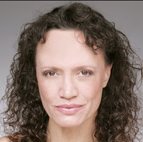
Rena Owen

[Ngāti Hine, Ngā Puhi]

 Rena Owen

 Biography

When Once Were Warriors made Rena Owen's name in 1994, many imagined it was another case of overnight success. In reality Owen had eight years acting experience behind her, including a run of plays, and appearances in Māori TV series E Tipu E Rea. Since Warriors, Owen has gone on to memorable roles in Garth Maxwell's When Love Comes, thriller Nemesis Game, and Vincent Ward's Rain of the Children

Owen grew up in the Northland freezing works town of Moerewa, amidst a family of nine children. Her father was Māori, her mother Pākēha. While at high school she participated in kapa haka groups and starred in school musicals. But on leaving school, career options for women felt limited. Owen trained as a nurse, and spent four years nursing before leaving for England.

In London Owen's life fell apart, then began anew. After spending eight months in prison on a drugs-related charge, she won a chance to audition for Inside Out, a play about women in prison. She got the part. Then a freak coincidence led her to her mentor, actor/director Ann Mitchell (Widows). Mitchell helped hone her talent, and provided encouragement as Owen reworked the script of her first play Te Awa I Tahutu, "about a young Māori girl reclaiming her heritage".

Owen returned to New Zealand in 1988, and the following year appeared in two roles in landmark Māori television series E Tipu E Rea. Roimata, the bigger role, saw Owen playing the extroverted city-sister of the title character. Roimata was written and directed by future Once Were Warriors scriptwriter Riwia Brown, who in a game of creative musical chairs, would also direct Owen's second stage-play, Daddy's Girl.

Owen auditioned for Once Were Warriors early on, realising the part of strongwilled wife Beth Heke was a once in a lifetime role. Director Lee Tamahori said Owen was the only person he'd ever had in mind for the part. "She's a classically trained actor and she has a kind of method approach so she throws herself into it with enormous gusto".

Circumstance gave Owen extended period to prepare for the film, which was shot in six exhausting weeks: before Warriors began, she spent six months on Easter Island, making her big screen debut in a "small but juicy" role in American-funded epic Rapa Nui.

Once Were Warriors won Owen best actress awards at festivals in Montreal, San Diego and Oporto. Critical acclaim was thick on the ground: "an electric performance" (Vogue); "Owen burns up the screen...now, if only the roles can live up to the actress" (Elle);  "riveting" (Wall Street Journal); "Owen plays Beth with a deft mix of vulnerability and strength" (Newsday); "It is a tribute to Rena Owen's fine, grief-racked acting that she almost succeeds in making us understand the battered-wife syndrome" (Sydney Morning Herald).

Newsweek, The New York Times, and Premiere all compared Owen to French acting legend Jeanne Moreau. Others speculated about Academy Award nominations. 

Playing Beth reawakened memories of Owen's childhood, when she had witnessed gang violence at a pub near her home. "I can relate to the spirit in her, that wants something better for not just herself and her children, but also her people". Owen later hosted a documentary about domestic abuse, Beth's Story.

In the period after Warriors, Owen turned down a number of international offers in order to fulfill obligations to star in a film directed by Stewart Main. The movie was delayed a number of times, then later abandoned.

As if to make up for the gap, the last half of the 90s proved especially busy on the acting front. Owen reprised her Warriors role in a few short but important scenes of What Becomes of the Broken Hearted, played a prostitute in low-budget romp I'll Make You Happy, and guest-starred in the second to last episode of Cover Story's first series, playing a woman working with disruptive teenagers.

Across the Tasman, Owen did 48 episodes of hospital drama Medivac. She was nominated at the Australian Film Institute Awards for her work in Rolf de Heer's Dance me to my Song, the tale of a cerebral palsy sufferer, a manipulative carer, and the man between them.

Owen's performance as a famous singer on the slide in Garth Maxwell's When Love Comes won good notices, despite a minor dust-up when a Variety reviewer seemingly become confused between the film, and another in which Owen was to have played a transvestite.

In 2000, Owen moved to Los Angeles. Since then, alongside a walk on role in Spielberg epic A.I., she has played mother earth, a psychiatrist, a troubled nun, and donned hydraulic wings to guest star as a demi-goddess in cult series Angel. Small roles in the second and third Starwars prequels launched a new run of fan mail, and invites to many science fiction conventions. 

In 2004 Owen played the warrior role model to a young Fijian girl in The Land has Eyes, the first feature film directed by a Fijian. She was a psychotic killer facing off against Ian McShane in Kiwi/Anglo/Canadian thriller Nemesis Game, and an eccentric villager who befriends an undersea creature in children's fantasy Mee-Shee: The Water Giant (also partially shot in New Zealand).   

In 2008 Rena Owen returned downunder to appear in Vincent Ward's acclaimed Rain of the Children, as one of the actors playing Puhi. The following year she made a rare Kiwi TV appearance in Fiona Samuel's tele-movie Piece of My Heart, playing a mother forced to adopt out her child. Owen continues to work on her own dream project: a movie adaptation of Heretaunga Pat Baker's historical novel, Behind The Tattooed Face.