You are here:

Synopsis

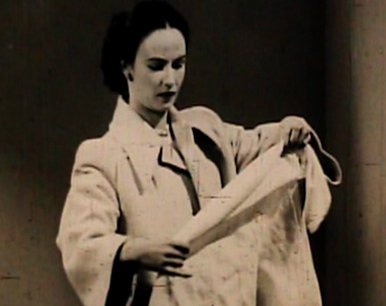
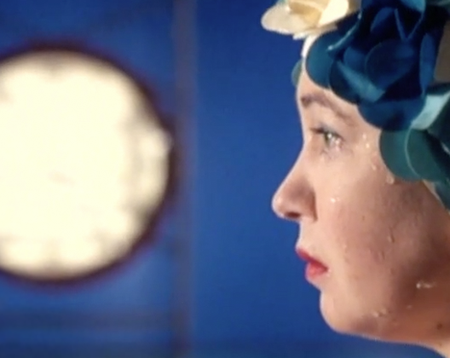
This short profiles the work of Gisa Taglicht. A pioneer of women's rhythmical gymnastics, Taglicht advocated the benefits of physical exercise for women. Risqué at the time for the women’s skimpy outfits and partial nudity, the film sees women escaping machine and washing line oppression to prance pīwakawaka-like against a stark sky. The National Film Unit's post-war Weekly Reviews became less overtly patriotic, and some, like this one, were unabashedly experimental. The score was composed by Douglas Lilburn.
Credits (10)

 Michael Forlong
 Stanhope Andrews
 Edith Sipos

Post a comment

   
I am:
 

Please keep your comments relevant to this title. Email addresses are never displayed, but they are required to confirm your comments.

Comments (3)

 Neil Hornick

Neil Hornick

Apologies - I was wrong to attribute a German accent to the trainer.

 Raewyn Whyte

Raewyn Whyte

The women in this film include members of a YMCA morning class taught by Gisa Taglicht and members of a private class she also taught for the wives of diplomat. These were classes for women. The film clip is composed of footage from several different locations, including the Wellington Botanical Gardens.

 Neil Hornick

Neil Hornick

Recent reacquaintance with Michael Forlong’s Three on a Journey led me to this earlier, shorter film, in which the benefits of ‘rhythmical gymnastics’ – a forerunner of aerobics, it would seem – are illustrated by a troupe of lissom, lightly clad young women from the YWCA. The photography is still sharp after all these years. The exercises are rather pleasingly choreographed in wave-like undulations. And God knows, I enjoy the sight of slim, bra-less nymphs displaying their legs (as well as one rather startling naked back) as much as the next red-blooded hetero bloke.

Somehow, though, reservations creep in. For instance, where are the chaps? Was it feared that similar shots of male youths might arouse the wrong sort of feelings? I’m also a touch uneasy at resemblances to the sort of low-angle ‘Strength through Joy’ viewpoint favoured by Nazi sympathizer Leni Riefenstahl in her celebration of Aryan athleticism in Olympia (1938) – especially as the girls’ gong-striking trainer, who ‘trained in Vienna’, has a pronounced German accent.

And speaking of accents, how come the male and female commentators speak in plummy BBC tones? After all, this is New Zealand, isn’t it? Was this intended to endow the film with a veneer of class? Or perhaps it reflected the fact that the 1948 Olympic Games – the first to be staged after the war – were hosted by England. At any rate, these mere 7 minutes of film are richly suggestive in more ways than one.

Neil Hornick (London)
February 2011

Favourite:

You need to be logged in to add to your favourites.

Related Titles (11)

 Railway Worker (Weekly Review 355)

Short Film, 1948 (Full Length)

Part of the Weekly Review series

 Coal from Westland (Weekly Review 97)

Short Film, 1943 (Full Length)

Part of the Weekly Review series

 The Coaster (Weekly Review 374)

Short Film, 1948 (Full Length)

Part of the Weekly Review series

 The Legend of the Wanganui River

Short Film, 1952 (Full Length)

Part of the Weekly Review series

 Wildlife of the Mountains

Short Film, 1958 (Full Length)

Part of the Weekly Review series

 Haunting Douglas

Television, 2003 (Excerpts)

Features contemporary dance

 Weekly Review

Short Film, 1942

Part of the Weekly Review series

 Weekly Review No. 401

Short Film, 1949 (Full Length)

Another Weekly Review film

 Country Lads

Short Film, 1941 (Full Length)

Another film in the Weekly Review series

 Stroke

Short Film, 1994 (Full Length)

A short film with aggressive aqua-gymnastics

 Weekly Review No. 347

Short Film, 1948 (Full Length)

Another Weekly Review from 1948

Collections.   See all collections ›  

Included in:

 National Film Unit Collection