00:00
/
00:00
The Piano
Film (Trailer and Excerpts) – 1993
A Perspective

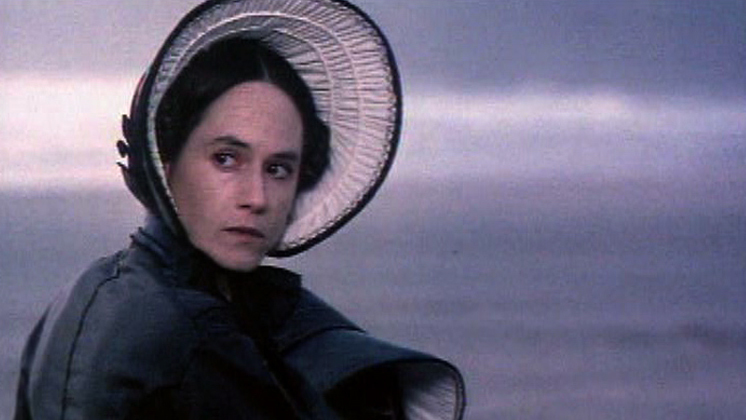
They are instantly recognisable images: a grand piano sitting on a wild New Zealand beach; a pale-skinned and windswept mother and daughter in black bonnets; a piano tumbling off a waka and descending into the Pacific, its owner tethered to it. And who can forget the finger chopping; the corseted yet graceful collapse of Holly Hunter's Ada into the copious mud of 19th century New Zealand?
The opening shot of The Piano establishes a strong point of view, with Ada looking through her fingers in a child-like game. Her internal voice narrates: "I have not spoken since I was six years old. Nobody knows why, least of all myself." The fiercely strong-willed protagonist's father is sending her across the world, from Scotland to an unknown New Zealand. There she is to marry Stewart (Sam Neill), a man she has never met.
Critic Roger Ebert describes The Piano as "one of those rare movies that is not just about a story, or some characters, but about a whole universe of feeling." Vincent Canby's New York Times' review echoed Ebert: "Ms. Campion somehow suggests states of mind you've never before recognized on the screen." On website Rotten Tomatoes, The Piano scored 100% in its summary of top critics' reviews.
The Piano's combination of sexual awakening, music (the renowned score, by Michael Nyman, figures as Ada's surrogate voice), and an isolated colonial New Zealand bush setting proved a killer combination. And not just with the critics; Jane Campion became the first female director, and only New Zealander (to date) to clinch Cannes' prestigious Palme d'Or award (shared with Chen Kaige's Farewell My Concubine).
Campion was also awarded Best Original Screenplay at the Oscars, and Hunter's performance as Ada won for Best Actress. The most memorable Oscar The Piano collected went to Anna Paquin, who was awarded Best Supporting Actress for her portrayal of Flora, Ada's equally wilful and spirited daughter; 11-years-old and fresh from Lower Hutt, Paquin was beamed out to millions, sweetly gasping as she accepted the award.
Cinematographer Stuart Dryburgh, who had collaborated with Campion on An Angel at My Table, was also nominated for an Oscar for his Piano work. Other staples of the Kiwi screen industry involved in the film included Alun Bollinger (renowned as a cinematographer in his own right) operating the camera, a young Cliff Curtis in a minor role, and the casting agent with the magic touch, Diana Rowan (who also discovered Keisha Castle-Hughes for Whale Rider).
The Piano grossed US $34 million in its first five months of international release. In his book Selling New Zealand Movies, Lindsay Shelton describes how this was "ten times as much as any earlier New Zealand feature had earned in the United States." The film was especially successful in Europe, and in France it broke records for a foreign release. The Piano was an art film that was also internationally commercial; an achievement that is almost exceptional in local film (arguably Once Were Warriors straddles the same divide).
Indeed The Piano was acquired by American production and distribution company Miramax and, along with Pulp Fiction (1994), was key in establishing that company's reputation for being able to mix box office success with indie distinction. Locally The Piano's success added to ongoing 'culture wars' debates about the sorts of movies that New Zealand's small industry 'ought' to be producing. Prescriptions were broadly divided into two camps: 'idyosyncratic arthouse', and 'mainstream genre', with The Piano defiantly pegging its tent in the former.
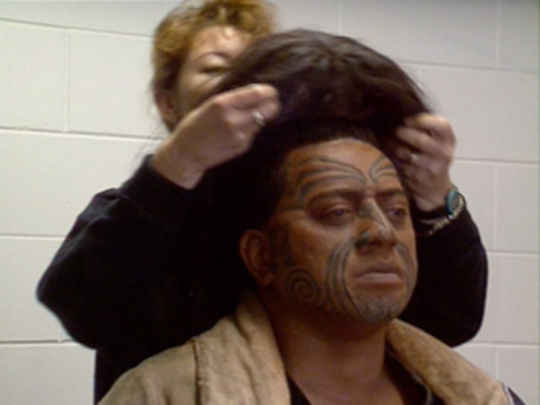
With success comes controversy. Some people found the similarities between The Piano and Jane Mander's novel Story of a New Zealand River (1920) too close for comfort. Others, such as Leonie Pihama, were critical of the way Māori were represented in the film's final cut, with their presence — as maids and man-servants or the source of an exotic ta moko for Keitel's Baines — described as being little more than ‘blackground'.
Financed by French construction magnate Francis Bouygues' CiBy 2000, and produced by Australian Jan Chapman (Campion was also living in Australia by this point), the customary trans-Tasman Phar Lap-ian battle also ensued. New Zealand arguably came out on top, with Campion commenting in an interview with The Herald, "[i]t's a film made in New Zealand by New Zealanders and it's very obviously a New Zealand film."
Certainly The Piano captured a palpable sense of Pākehā experience in 19th Century New Zealand. The landscape on which Ada's melodrama plays out is one with which the settlers are unfamiliar. They are aliens in the rain-soaked bush, amongst giant looming trees; Sam Neill's Stewart struggles to discipline it with his axe and English manners.
The details evoke what Campion called the "subconscious" of the land: strange bird sounds (kōkako, ruru, kiwi) peal through the forest persistently, underscoring the piano. It is a place in which Ada wrestles for identity.
Production designer Andrew McAlpine recalls: "we often altered the landscape to heighten the feeling of a particular scene, as in the scene where Stewart attacks Ada [see third clip], where the setting was too open so we gave it a web of supplejack, an anarchical tough black-branched creeper which we devised into a web, a huge net, like a tentacled nightmare in which Ada and Stewart struggle."
The Piano raised New Zealand's profile abroad. People were intrigued by the representation of New Zealand as a primeval brooding landscape — "at one point we are staring at a vast, virgin beach, as it might have looked at the beginning of time" (Vincent Canby in The New York Times). That attention was satirised in Topless Women Talk About Their Lives when a lost German tourist looking for the black sand west coast beach on which Flora pirouettes, becomes a key part of the film's plot.
Following its success, Paquin, Campion, Dryburgh and others have forged highly successful international careers. Back home The Piano is etched in our cinematic consciousness.
- Catherine Bisley is a Wellington-based director, writer and photographer.
Sources include
Peter Calder, 'Playing from the Heart' (Interview with Jane Campion) - The NZ Herald, 16 September 1993, Section 3, page 1
Jane Campion, The Piano (Andrew McAlpine quote) (New York: Hyperion, 1993)
Vincent Canby, 'The Piano (1993)' (Review) - The New York Times, 16 October 1993
Roger Ebert, 'The Piano' (Review) - The Chicago Sun-Times, 19 November 1993
Lindsay Shelton, The Selling of New Zealand Movies (Wellington: Awa Press, 2005)

If you liked this, you might also like...
The Sam Neill Collection
Actor, director, makes the odd bottle of pinot noir: a...
Top 10 NZ Feature Films
NZ On Screen has selected an all-time NZ feature film Top...
Best of the 90s
This collection celebrates the best of 1990s television,...
Kiwi Oscar Heroes
A collection of films that have seen Kiwis winning glory...
Marae - The Piano Story
Behind the scenes on The Piano
The Edge - Holly Hunter interview
Holly Hunter briefly discusses her role in the film
The Edge - Jane Campion interview
Jane Campion interviewed in 1993
The Heart Dances - The Journey of The Piano: the Ballet
Trailer of a ballet adaptation of The Piano
The Power of the Dog
Another Jane Campion feature shot in New Zealand

Peel
Another Cannes winner directed by Jane Campion
Ashkenazy in Concert
A performance by a famous pianist
Mesmerized
Jodie Foster plays a woman in an arranged marriage
Closer
A short film featuring a deaf teenage boy
New Zealand Centenary of Cinema - Greg Page
This short film pays tribute to The Piano
Under the Covers - Episode Three
More on the novel that some say helped inspire The Piano
An Angel at My Table
Also directed by Jane Campion
Winners & Losers: The Woman at the Store
Another dark tale of NZ colonial life
Cinema of Unease - A Personal Journey by Sam Neill
Sam Neill's take on the history of NZ film
An Immigrant Nation - Hoots Mon, The Scots in New Zealand
Documentary about Scottish immigrants
The Luminaries (promo)
Another moody period drama
Careful with that Axe
Another infamous encounter with an axe
The Grass is Greener - Sam Neill
Documentary about Sam Neill's Australian acting career
Topless Women Talk about Their Lives
Includes Germans visiting Karekare seeking Piano scenery
The Grass is Greener - Jane Campion
Early interview with director Jane Campion
Savage Play - Full Series
Another problematic 19th century relationship
Taua - War Party
More portage in the Waitakere mud
The Leading Edge
Stuart Dryburgh also shot this
Do No Harm
Another mother and daughter tale
Passionless Moments
A Cannes-selected short film directed by Jane Campion
The Living Room - Series One, Episode Eight
Featuring cameraman Alun Bollinger
The Wall
Short film from Piano casting director Diana Rowan
Merry Christmas Mr Lawrence
Another film about imprisoned desire
The Life and Times of Te Tutu - Series One
Another beach arrival
Perfect Strangers
Sam Neill also stars in this
One Network News - 2004 Cannes Film Festival
More films that nabbed funding in Europe
In Passing
Another drama featuring Karekare beach
Dream Catchers - Full Series
Production designer Andrew McAlpine appears in episode 7
The Moon is Upside Down
Another drama with a mail order bride