
Deep Blue - Series One
Television (Full Length Episodes) – 1995
After a long ocean passage, you can smell land — and the smell of the tropics is intoxicating. Any landfall is welcome, but to arrive in the tropics is heavenly, and we're hungry for a taste of Tonga.
– Peta Carey on arriving in Tonga, in episode six
Evohe — Song of The Wind — will carry the team on a journey of discovery from stormy southern oceans to tropical atolls. But she begins in Fiordland, a unique land sculptured by incessant water. Fiordland is one of the wettest places on earth, and exploring its remarkable nature from the top of its mountains to the depths of its sheer-sided fjords will be a real challenge.
– Narrator John Callen, introduces Fiordland's landscapes, in episode one
The thing that strikes us as we travel down this wild and lonely coast is that we really do feel like the original explorers. Around every headland, there's another surprise.
– Peta Carey on sailing around the subantarctic Auckland Islands, in episode two
The archways are the richest places of the Poor Knights, they funnel a soup of nutrients along the cliff faces. So the cliffs are smothered in life forms, all hungry for that passing food, like this finger sponge reaching out for the plankton in the current. The walls are a colourful patchwork of encrusting life, and though they look like plants, most of these are animals.
– Peta Carey on diving in the Poor Knights Islands, in episode five
It's one thing to bring them up to the boat, but Craig takes it one step further: he swims with the mako sharks — fast, scary, major predators, whose closest relatives are the great whites. Craig is armed with a plastic pole and a dead fish. You know what the sharks are armed with... Craig is the first person to hand-feed the notorious mako shark.
– Narrator John Callen, on researcher Craig Thorburn diving with mako sharks, in episode four
This has been the darkest, coldest, most dangerous dive I've ever done, but it's the most rewarding. We've pushed our limits and survived. I will never forget this.
– Ole Maiava on cave diving in the source of the Pearse River in Tasman, in episode three
The islanders love fishing ... As they eat almost every kind of fish, no one species is depleted. They live in harmony with the lagoon. Intensive fishing using modern techniques would wipe out the lagoon, and the village.
– Ole Maiava on fishing in Ontong Java Atoll in the Solomon Islands, in episode 10
This place is spectacular. The top of the reefs are covered with flamboyant gardens of staghorn and plate corals. There are 10 times as many species of coral here as in the whole of the Atlantic Ocean.
– Mike deGruy on Australia's Great Barrier Reef, in episode 11
Mangroves are important to protect the coastline, as a nursery, and as a feeding ground for fish from the open sea. They're so rich, my eyes have been opened to this fantastic forest between the tides.
– Ole Maiava describes the mangrove forests at the mouth of Australia's Daintree River, in episode 12
Wow! Unbelievable! Unbelievable! She did not care, just came right up to you, looked at you, rolled over, so slowly, just drifted off. Ah, what a sight!
– Mike deGruy recounts his dive with a southern right whale, in episode 13
If you liked this, you might also like...

Deep Blue
Setting sail across the South Pacific, Deep...
Our Big Blue Backyard - White Island
Another nature documentary looking at the oceans
The Crystal Ocean
A documentary on the freezing oceans of Antarctica
The Waterfall
Peta Carey directs this journey through Fiordland
Let the Children Know
Ole Maiava sings in this charity single for Telethon
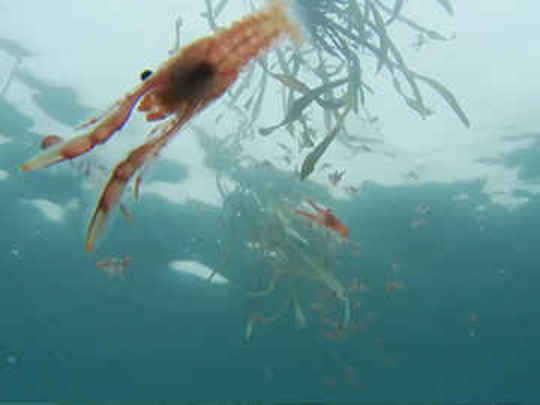
Our Big Blue Backyard - Kaikōura
Another nature documentary looking at the oceans
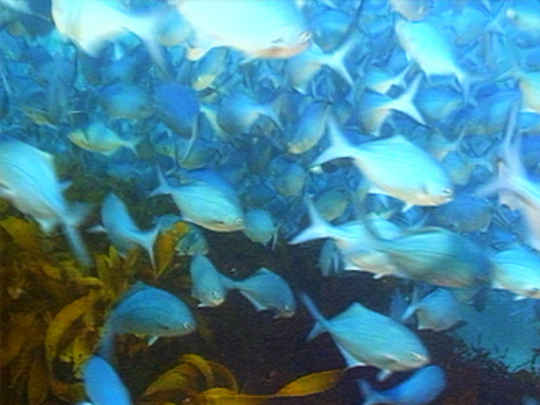
Masters of Inner Space
More of Wade and Jan Doak in the Poor Knights Islands
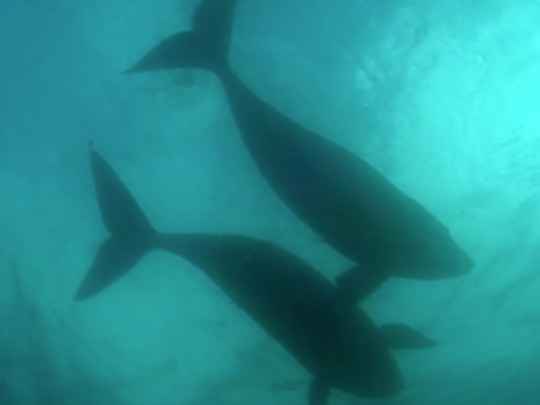
The Lost Whales
Another ocean nature doco featuring southern right whales
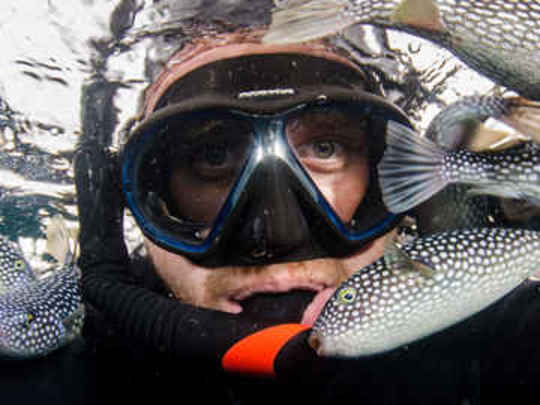
Loading Docs 2021 - The Weedfish
More scuba diving in this short documentary
Single on Ice
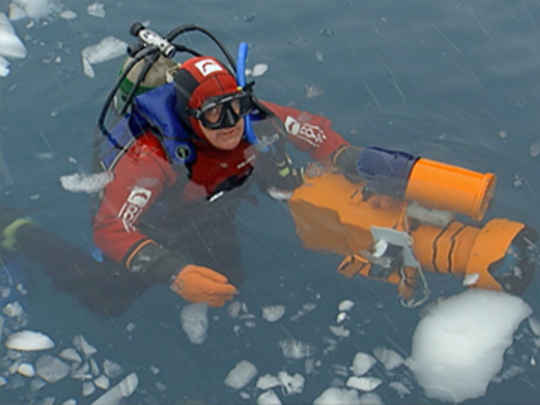
Director and cameraman Mike Single features in this doco
Freshwater Dive
More scuba diving in Te Waikoropupū Springs

The Octopus's Garden
A documentary series about more marine life