00:00
/
00:00
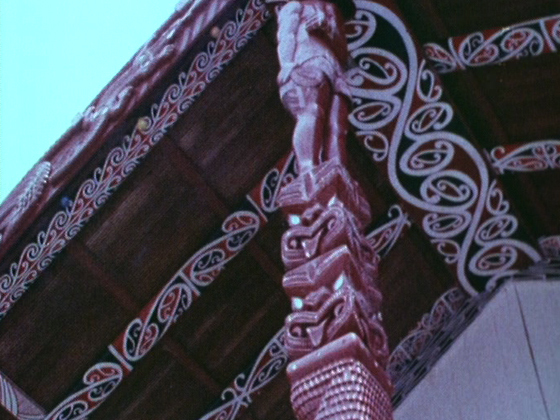
Tangata Whenua - Waikato
Television (Full Length) – 1974
Tangata Whenua broke the monocultural mould of New Zealand television. It gave Māori an opportunity to speak for themselves about their lives. It went some way to informing Pākehā New Zealanders about Māori attitudes and values, it whetted a Māori audience's appetite for more documentaries reflecting Māori viewpoints, and it opened the way for later programmes, such as Koha and Te Karere, produced by Māori.
– Tangata Whenua interviewer and co-writer Michael King, in his 1999 book Being Pākehā Now
Like Broken Barrier, the series broke new ground: it put Māori perspectives on the small screen, in most cases without Pākehā interpretation. It was hoped by Māori all over the country that this series would be a forerunner to a greater Māori presence on TV, but it was not going to be that easy.
– Filmmaker Merata Mita on Tangata Whenua, in 1992 book Film in Aotearoa New Zealand,page 46
The Tangata Whenua series was a major milestone for me, both personally and professionally. It took me back to one part of my roots. It also disciplined us to search for ways to make the technology of filmmaking subordinate to what people had an urgency to say.
– Excerpt of an article written by Barry Barclay for Tu Tangata, 1977
There have been changes. When we were making Tangata Whenua we had a hard enough battle getting Māori expressed on screen in any form. Now television runs items in Māori without a voice-over translation or subtitles. Yet since Tangata Whenua no Maori (Merata Mita excepted) has been given an opportunity to make a 50 minute film. The chisels may again be in the hands of the carvers. Māoris are using brush and canvas, but the camera remains hidden.
– Barry Barclay on changes in the standing of te ao Māori on television in the 1970s, in Tu Tangata (1977)
I think it’s natural for them to want to know something about Māori:, after all they are Māori. The difficulty is to decide whether it should be taught at home by the elders, or taught at school in a Pākehā timing. But the point is this, if the parents aren’t going to teach them, well, what are the kids going to do?
– A teacher of Māori studies at Morrinsville College
Waikato river is very similar to the Ganges, because it’s tapu, and it's more than tapu to us becase its our cleansing water, and used for everything that we know.
– Offscreen voice, early in this documentary
The Waikato River is the bloodstream for the life of the Waikato people. They take their name from it. it was a source of food earlier days. It was a means of rapid transport, travel and communications. It is also a resting place of spirits
– Narrator Michael King, early in this documentary
There is a proverb about the river: "Waikato taniwha rau, he piko he taniwha; Waikato; river of a thousand bends, and on every bend, a taniwha.”
– Narrator Michael King recites a poignant proverb
Watching the Waikato episode, marae in varying forms dominate as settings. The story of the construction of Tūrangawaeawae Marae at Ngāruawāhia is threaded through the programme, and we see a poukai (annual Kīngitanga hui held on different marae in the Waikato tribal area) at Tauranganui Marae at the mouth of the Waikato River.
– Paul Diamond, his backgrounder on this show
Alongside these elders are the younger generation, struggling to learn Māori at a time when the language wasn't commonly taught in schools or universities.
– Paul Diamond, his backgrounder on this show
[I approached] both television programmers and Māori leaders to effect a liaison whereby in primetime (made easier by single channel TV and the propriety of a 7 p.m. Sunday timeslot) first one and then a series of documentaries would give the Māori people themselves a voice about many issues they had been reluctant to discuss with Pākehā.
– Tangata Whenua producer John O'Shea, in his 1999 book Don't Let It Get You - Memories - Documents
If you liked this, you might also like...
Tangata Whenua
Tangata Whenua was a groundbreaking six-part...
The Matariki Collection
A selection of iconic Māori TV, film and music video for...
Best of the 70s
This collection celebrates the best of 1970s television,...
Marae - John O'Shea on Tangata Whenua
Producer John O'Shea talks about Tangata Whenua
Koha - Raupatu, The Loss of Land
Documentary about Kīngitanga and the invasion of Waikato
Lost in Translation 8 - The Waikato-Manukau and Printed Sheets (episode eight)
Mike King follows Treaty of Waitangi history up the...
The New Zealand Wars - Episode 3, The Invasion of the Waikato
Preparations for war in the Waikato in the 1860s
Great New Zealand River Journeys: The Waikato River with Lynda Topp
More Māori history from the Waikato
Tāhere Tikitiki - The Making of a Māori Canoe
More on master carver Piri Poutapu at Tūrangawaewae Marae
Barry Barclay: The Camera on the Shore
Documentary about director Barry Barclay
50 Years of New Zealand Television: 7 - Taonga TV
Tangata Whenua is discussed in this
The Governor 5 - The Lame Seagull (Episode Five)
Waikato war episode of another legendary 1970s show
NZ Wars - Stories of Tainui
Documentary about the legacy of the Waikato invasion
History Man
Documentary on Tangata Whenua writer Michael King
People of the Waikato
Includes footage of Tūrangawaewae Marae
Ngāti
Barry Barclay also directed this landmark Māori drama
The Māori Today
1960 NFU film on the Māori world from a Pākehā viewpoint
50 Years of New Zealand Television: 2 - The Whole World's Watching
This episode appears in this documentary about protest
Pioneer Women - Princess Te Puea
A dramatised documentary on Princess Te Puea
New Zealand Mirror No. 3
A 50s Ngāuruwāhia regatta
Heartland - Ngāruawāhia
Gary McCormick visits Ngāruawāhia
Waka Huia - First Episode
Groundbreaking magazine series about Te Ao Māori
Journeys in National Parks: Te Urewera
Also directed by Barry Barclay
Te Marae - A Journey of Discovery
Film on the history and preservation of marae
Uenuku
Early te reo TV drama on the story of Uenuku
Whare Taonga - First Episode
More Māori telling stories about their people
The Neglected Miracle
Barry Barclay used similar filming techniques on this
The New Zealand Wars
Acclaimed series on the New Zealand Wars
Ngā Morehu - End of An Era (First Episode)
Later interview with a Māori kaumātua
Māori
Short NFU survey of Māoridom from 1981
Survey - The Town that Lost a Miracle
Barry Barclay-directed film on Opo the dolphin
Women in Power - Indira Gandhi
Also directed by Barry Barclay
Ashes
Directed by Barry Barclay in the same period

Hongi To Hāngī: And Everything in Between - Excerpt
A beginner's guide to the marae

Nationwide - News in Te Reo Māori
Report on first te reo news bulletin
The New Zealand Wars - Episode 2, Kings and Empires
For more about Waikato and the Kiingitanga

Māhoe me Patatē
King Tawhiao inspired this waiata