00:00
/
00:00
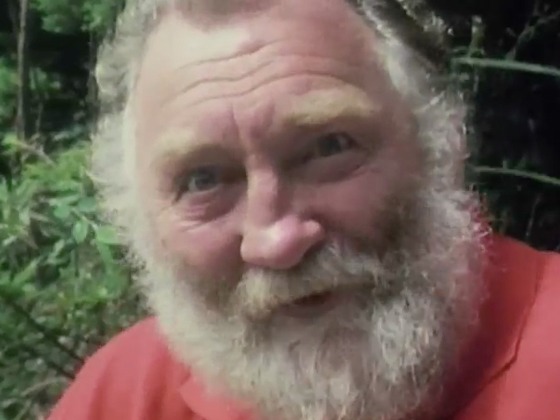
Moa's Ark : Invaders of the Last Ark
Television (Full Length) – 1990
New Zealand, too, has cathedrals of world heritage class, but these are green and growing. Their pillars are the trunks of massive trees, and their choristers are of the feathered kind.
– David Bellamy on New Zealand's forests in part one
When New Zealand set sail all around a hundred million years ago, it was an ark, a place of survival, and carried with it many plants and animals which today occur nowhere else on earth.
– David Bellamy on New Zealand’s unique biodiversity in part one
In the terrestrial environment, there weren’t any other game species which Māori could hunt that were anything like the size of moas to deflect their attention from the hunting of moas. And furthermore, moas were extremely slow-breeding. They probably only had one or two chicks per year and perhaps didn’t breed every year. I think that was a fatal combination of factors which set them on the downward slide to extinction.
– Archaeologist on the extinction of the moa in part two
Now, I bought two things that were very important to the early Polynesians here in New Zealand. First, they brought it with them — sweet potato, or as they called it, kūmara. The other was flax, and they found it growing here. The plant is used to make many things, apart from the bag which holds the sweet potato.
– David Bellamy on plants important to early Aotearoa inhabitants in part two
This is truly one of the great wonders of the world. I'm immensely lucky to be here, and if you want proof that giant birds roamed the land of New Zealand, well, there it is — the moa's graveyard.
– David Bellamy on the discovery of moa bones in a cave in part four
You see, at the beginning of this century, the forests of New Zealand were being knocked down to make way for sheep almost as fast as the tropical rainforests are being cleared today, and sometimes with just as catastrophic results.
– David Bellamy on deforestation in New Zealand in part five
If you liked this, you might also like...
Moa's Ark
Why is New Zealand's landscape and flora and fauna so...
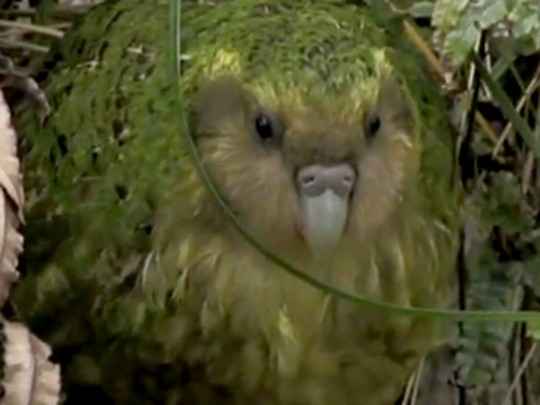
The Unnatural History of the Kākāpō
The story of the kākāpō
Goodnight Kiwi
A famous Kiwi
Who's Killing the Kiwi
Documentary on the plight of the kiwi
The Mighty Moa
Documentary on the extinct giant moa
Pavlova Paradise Revisited - Episode Two
Also features Tipene O'Regan
Seven Black Robins
Another classic from TVNZ's Natural History Unit
Weekly Review No. 446
NFU newsreel featuring the moa
Wildlife of the Mountains
Earlier nature doco style from NFU
Castles of the Underworld
A documentary on NZ’s unique limestone geology
Who Was Here Before Us?
Another look at human settlement in NZ
Loading Docs 2017 - Luckie Strike
Two men explore the Waitomo Caves
Kākāpō - Night Parrot
A 1982 doco on kākāpō