Anzac Day Collection
Anzac Day Collection
This collection has three backgrounds:
Of Sorrow and of Pride

Anzac on screen

Ian Johnstone reflects on Anzac Day

Of Sorrow and of Pride
By Jock Phillips 21 Apr 2010
Is Anzac Day primarily a day of mourning for men struck down in their prime, or is it a day for talking about our national character and expressing a pride in the achievements of our armed forces? This is the question which is raised by the powerful collection of Anzac Day films on NZ On Screen.
The issue was sparked for me when I recently had occasion to read all the Anzac Day addresses given at the Palmerston North show-grounds between 1920 and 1925. Between these two dates there was a striking difference in tone. In 1920, when the Great War was still a very painful memory, the speakers at the service addressed the parents, sisters, girl-friends and wives of men who had fallen and had not returned.
The ceremony was a collective funeral service for people who could not visit their loved one’s grave and had never had the chance to attend their funeral. Wreaths were laid, the bands played the ‘Dead March’, a bugler sounded the ‘Last Post’ (used for burial services on the battlefield), and the Padre described the day as one “of common sorrow”. The focus was very much on the horrors of the western front.
By 1925 the speakers were no longer addressing relatives of the fallen. They talked instead to the “rising generation”, school children who had not been fully aware when the original Anzac Day had occurred. This time the speeches were less about death, and far more about the heroism of the New Zealanders. They described in detail what had actually happened at Gallipoli and the New Zealanders’ contribution there. The previous focus on the western front (where the vast majority of the New Zealanders had died) had disappeared. The Palmerston North newspaper commented that the new theme for Anzac Day was “the birth of a national spirit”.
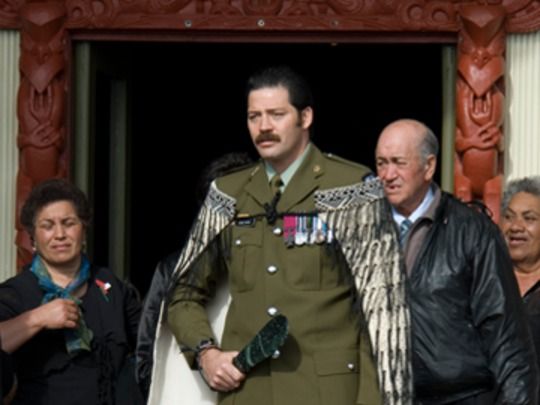
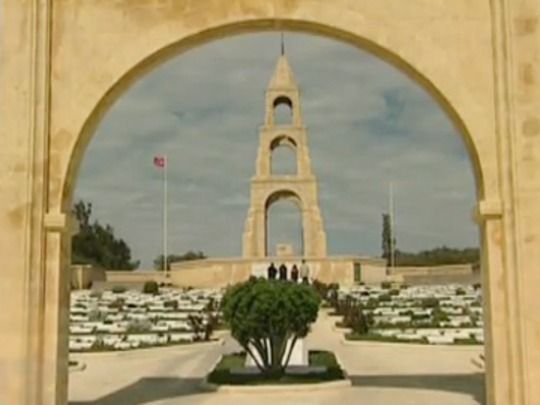
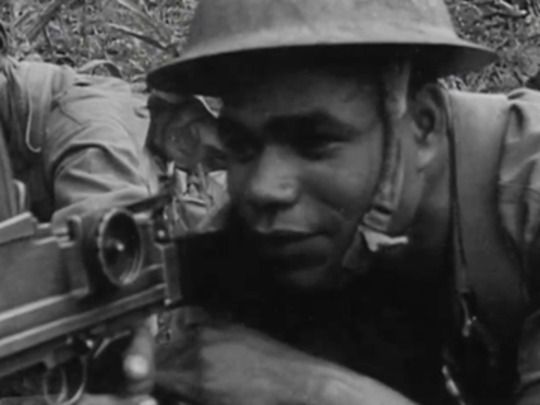
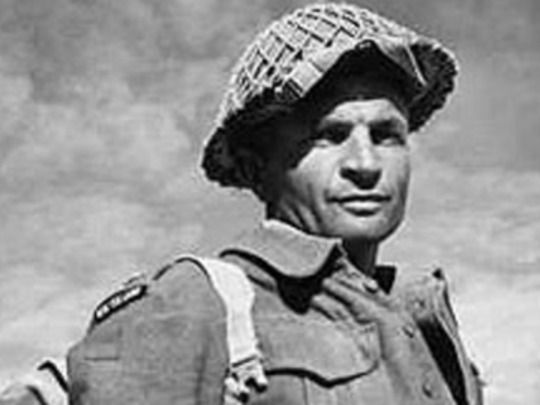
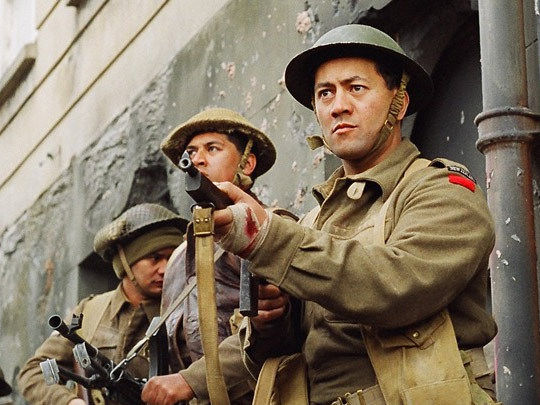
Within this spectrum where do the NZ On Screen films lie (all but two of which have appeared within the last 20 years)? There are only two Gallipoli films, and only the 1984 documentary is primarily a detailed account of New Zealand’s achievement there. There are seven films about WWII, and three about the Vietnam War, so we have clearly moved beyond the original story of ANZAC and Gallipoli to capture the wider experience of war to New Zealanders. There are plenty of expressions of pride in New Zealand at war, and there are a couple of movies which try to evoke the particular spirit of the Kiwi soldiers – most brilliantly in Taika Waititi’s short film, Tama Tū.
Yet the most striking feature of these films is how often they tell the story of New Zealanders at war by using the dramatic device of a descendant or a loving relative. Sometimes it is descendants returning to the battlefield:
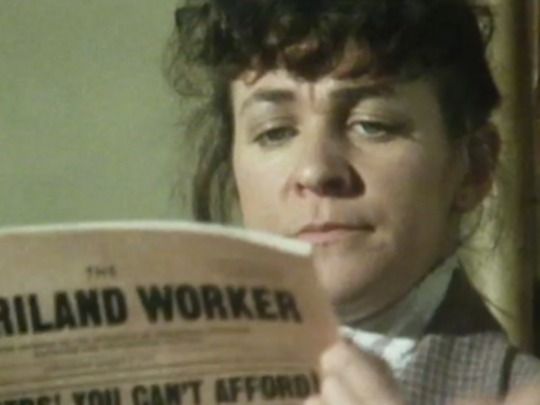
In Children of Gallipoli two young New Zealanders and two young Turks describe their ancestors’ experiences. In Our Lost War actor Robyn Malcolm follows her great-uncle into the muddy soupy graveyard of Passchendaele. In Our Oldest Soldier David Blyth tells us about his grandfather, Curly Blyth, who was at the time New Zealand’s oldest Great War veteran.
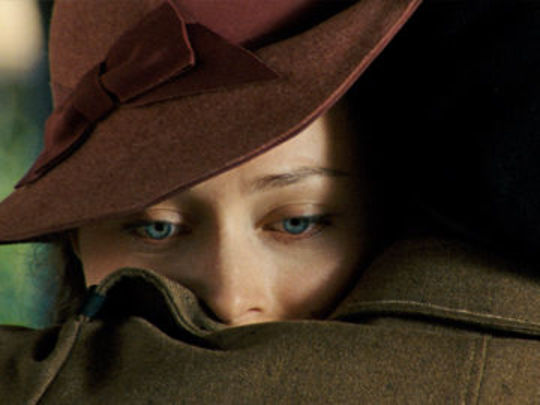
There are two films which both include the phrase ‘My Father’s War’ in their titles – one on WWII Italy and one on Vietnam. There are also three which focus on the relationship of families and soldiers – Gaylene Preston’s powerful War Stories, Peter Burger’s Turangawaewae which tells of a Vietnam War veteran who finds his place to stand through his daughter, and Paolo Rotondo’s Dead Letters which points up the crucial role of letters in linking soldiers with their family and friends back home.
What these films tell us is that New Zealanders continue to explore the meaning of war for individuals. In the end no matter how often Anzac Day speeches trumpet about a national coming of age, Anzac Day continues to have the meaning it had in 1920. It is still about young men, and a few women, who lost their lives because they believed it was worth fighting for some higher purpose.
They were on the whole very young people – usually in their early 20s. Their future was all ahead of them, and they were cut off in their prime. Mothers, siblings and lovers were left bereft; and today sons and widows and grandchildren continue to remember them. Anzac Day is a nation’s day – but as these films remind us, it is also about individual New Zealanders mourning a family loss.
– Jock Phillips, ONZM, spent 13 years as New Zealand's Chief Historian before initiating Te Ara: the Encyclopedia of New Zealand, where he was editor for 12 years. His television work includes leading the team of historians behind series Frontier of Dreams. His website is here.
Anzac on screen
By Chris Pugsley 22 Apr 2009
An Anzac Day collection on NZ On Screen raises more questions than it answers, and so it should.
It is sobering to think that in the first half of the 20th Century the big OE for most New Zealanders was by going to war. 6,500 New Zealanders volunteered for the Boer War from 1899-1902; 103,000 New Zealanders (including 550 nurses) served in World War I out of a population of just over one million, and some 140,000 in World War II. The cost escalated accordingly, 228 dead in the Boer War, 18,500 dead in 1914-1918, and 11,625 deaths in 1939-1945.
In the two world wars no country of the British Empire paid so high a price in casualties per head of population. New Zealand’s military commitments also provided an avenue for thousands of New Zealanders to see the world in the 1950s and 1960s in Malaya, Borneo and Vietnam. Even today our country still ‘punches above its weight’ in its commitment to multinational peacekeeping operations around the world.
“King Dick” Seddon’s commitment of New Zealand volunteers to the Boer War in South Africa led to the first film that captured New Zealanders preparing to go to war. The Departure of the Second Contingent is New Zealand’s oldest surviving film: a brief clip showing New Zealand Mounted Riflemen at Newtown Park. Its producer, Alfred Whitehouse, was the first to shoot film in New Zealand, and his film of the Second Contingent is the only one to have survived.
Our first Government-commissioned film was of the royal visit of the Duke and Duchess of York who came south to thank New Zealand for its efforts in the Boer War in 1901. This film was taken by the Salvation Army. Fragments survive, some of which show Boer War veterans filing forward to receive their medals: a one-armed veteran is evident, giving us our first glimpse on film of the cost of war.
We had official cameramen in both world wars filming New Zealanders overseas in the United Kingdom, France and Belgium, Egypt, North Africa, Italy and the Pacific. Film enables us to access the spirit of these times, wondering at the contemporary BBC-New Zealand-English of the Pictorial Parades and Weekly Reviews and what it says about our sense of identity.
How do we make sense of this commitment today?
For many years it was Gallipoli that was the focus of film and documentary attention, but more recently there has been a shift to the Western Front. One catalyst for this has been the return of the Unknown Warrior and the recent 90th anniversaries have seen a stream of documentaries that have survived the grim battle against all odds to gain finance and airtime to tell New Zealand’s war stories.
Māori television is the leader in this with its brilliant Anzac Day programmes and the documentaries that this has inspired. As a result the epic of the 28th Battalion on film overshadows the rest of the Second New Zealand Division in the stories that are told of Greece, Crete, North Africa and Italy.
In the true New Zealand Number-8 wire fashion, most of what we see is driven by a passion to tell a personal story (particularly as descendents of veterans connect with the stories of their relatives): a great uncle who died in the mud at Passchendaele, a grandfather who served with the New Zealand tunnellers under Arras, or the first New Zealand Māori pilot to fly bombers over Germany with the RAF who ended up being murdered in the aftermath of the Great Escape.
All inventive, trying to overcome the cost of using archival film with a balance of photographs, walking the ground, and re-enactment. All having something to tell, even if the need to tell the story and fill in the background as quickly as possible, cements such mythologies as Māori influence on military tactics and of kiwi ingenuity and military brilliance, without paying equal attention to where we failed and the sometimes minor role we played.
There are great successes, Gaylene Preston’s documentary War Stories Our Mothers Never Told Us, enriching our understanding of the effects of war, and fictional efforts such as Taika Waititi’s Tama Tū immersing us in the moments of fighting, and also some failures where a burning desire to put it on film could not compensate for lack of funding, Chunuk Bair being the notable example.
But regardless of argument over relative merits of films in this collection, each is a document of New Zealanders at war, and poses a question about the identity of New Zealand and New Zealanders that one film alone cannot answer. And that’s why it‘s so important to view this Anzac collection.
– Dr Christopher Pugsley was a senior Lecturer in War Studies at the Royal Military Academy Sandhurst in the UK from 2000 to 2012. A former New Zealand Army officer, he is an authority on New Zealanders at war. His books include Gallipoli: The New Zealand Story; The Anzac Experience; Te Hokowhitu A Tu: The Māori Pioneer Battalion in the First World War; and Kiwis in Conflict: 200 Years of New Zealand at War.
Ian Johnstone reflects on Anzac Day
By Ian Johnstone 22 Apr 2009
For 93 years we've marked Anzac Day, and I have the impression that for the first 50 or 60 of those years, servicemen who'd fought overseas saw it as "their" day.
A day when, of course, they'd remember fallen comrades and reminisce with old mates, and remind the rest of us about the service they'd given before they'd become, many of them, influential citizens - farmers, businessmen, cabinet ministers. Grateful and impressed, the rest of us supported welfare work for ex-servicemen and women, paid attention to RSA presidential cold war sabre-rattling, and turned out on Anzac Day to buy a poppy and pay our respects.
But by the 1970s such dutiful observance had become rather stale - even divisive. Some younger people disrupted parades and speeches which they saw as glorifying the unpopular Vietnam War; and fewer older folk bothered to turn up at dawn to support the returned men on "their" Anzac Day.
As its members aged and became less of a force in the land, the RSA realised it had to become a more genuinely national institution. Reaching out to women and men who'd served at home, it started to change itself into the Royal NZ Returned And Services Association and handed control of Anzac Day to Government and Councils. It was an acknowledgement that the memories and significance of wartime didn't belong only to those who had fought and served, but to the entire nation.
That understanding got a big thump forward on the day when the homecoming parade of Kiwi troops who'd fought in Vietnam was booed and disrupted by people angry about our commitment to what they saw as an unjust war. For the first time, we were not all proud of what our armed forces had done on our behalf. But blaming them was, of course, foolish and unfair. We had been reminded that the responsibility for asking people to serve and fight, and perhaps die, belongs to all of us.
And now Anzac Day belongs to all of us too. We've shown it with big April 25 turnouts, Gallipoli pilgrimages and strong support for important national statements like the Canberra and London War Memorials, and the return of the Unknown Warrior to a Wellington tomb.
But to see how the ownership of Anzac Day has been most powerfully charted, animated and encouraged among us, sample the stories offered (often, and appropriately, by women) in this NZ On Screen collection. You'll see our grief, joy, ceremonies, and memories proud and painful being explored, opened up and passed down. It is these films and programmes, and the books that support and inspire them, which guarantee we'll be able to deliver on our Anzac Day promise - "we will remember them".
- Ian Johnstone was the first NZ television journalist to report from South Africa. He has presented or co-presented live coverage of a succession of Anzac Day wreath-laying ceremonies, and co-presented the 2004 procession ceremony for the Tomb of the Unknown Warrior, one of the largest outside broadcasts undertaken by TVNZ.