Registering with NZ On Screen means you can:
We won't share your data with anyone (see our Privacy Policy) and we won't spam you. It's that simple.
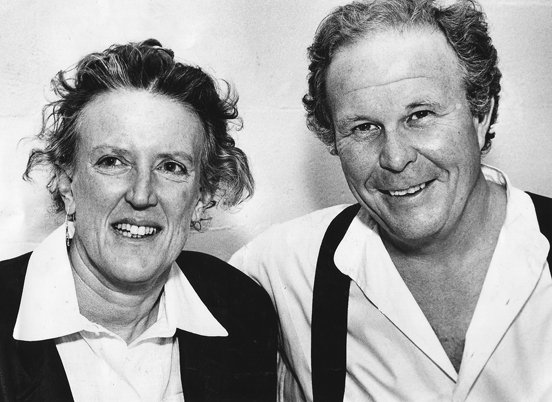
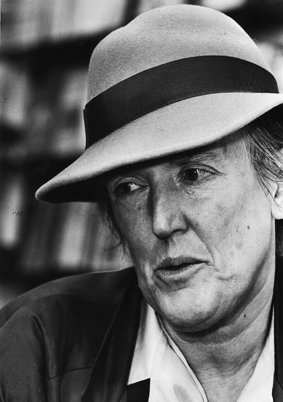
Children's author Margaret Mahy was born in 1936. She grew up with English classics like Winnie the Pooh and Beatrix Potter, and her father read ballads and boys' stories to her. Another influence were the Westerns she used to see at the local cinema on Saturday mornings, as a member of The Young New Zealanders' Club - some of which even featured females in adventurous roles. Mahy, an avid reader, wrote her first story aged seven.
After graduating from university and library school, she worked for the School Library Service. Mahy was later appointed Children's Librarian at Christchurch Library.
She began writing stories for the School Journal while raising two young children on her own, and working at the School Library Service. In 1969 her first book, A Lion in the Meadow, was published. Mahy took up full-time writing in 1980. Her work has been translated into 15 languages and won numerous national and international awards.
Mahy tells simple tales about complex ideas. Everyday things are made magical, and a strong theme in her work is the transformative power of fantasy. She has written many books for young adults, often with supernatural themes.
Mahy writes in a very visual way and her books have regularly been adapted for the screen. The Haunting became one-off tele-film, The Haunting of Barney Palmer. The Magical World of Margaret Mahy compiled five of Mahy's best selling children's books, as animated by Euan Frizzell. Post-apocalyptic tale Maddigan's Fantasia was made into big-budget television series Maddigan's Quest, which sold well internationally and won four New Zealand Screen Awards (including best children's programme).
Mahy's first foray into screenwriting came in 1981, when she contributed to puppet series Woolly Valley. In 1986 she collaborated with director Yvonne Mackay on the first of many projects - fantasy series series Cuckoo Land, which won a gold medal at the 1986 New York Film Festival. Set in an alternate reality created almost entirely through miniatures and special effects, the show's impressive cast included Grant Tilly and Jennifer Ludlam.
Mahy and MacKay would work together again on The Haunting of Barney Palmer (1986), mini-series thriller Typhon's People (1993), and fantasy series Kaitangata Twitch (2010). Mahy's book Aliens in the Family also inspired an eponymous 1987 BBC TV series.
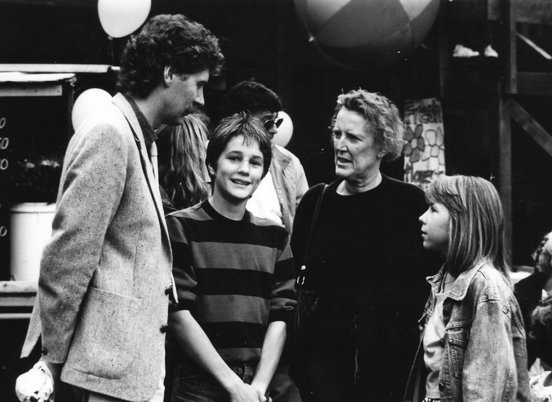
In 1988 Television New Zealand approached Mahy to come up with an idea for a children's series. Starting from the idea of a family that becomes aware someone is observing it, Mahy wrote Strangers, the tale of four youngsters playing detective. Directed by Peter Sharp, the show's impressive cast included teen actors Joel Tobeck, Navigator star Hamish McFarlane in a rare performance, and Martin Henderson in his screen debut.
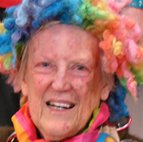
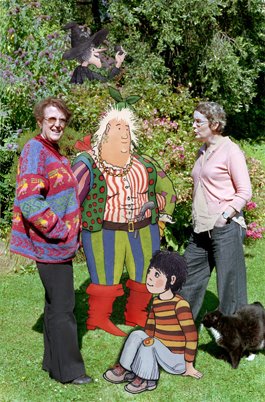
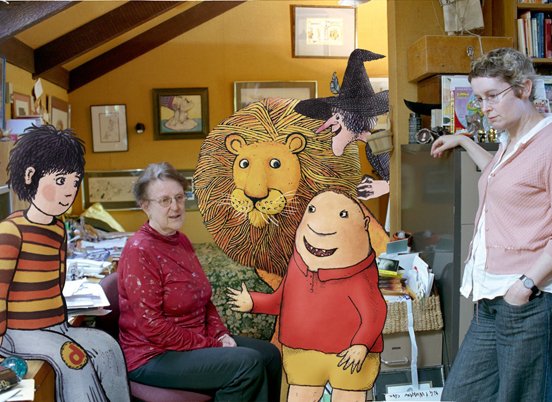
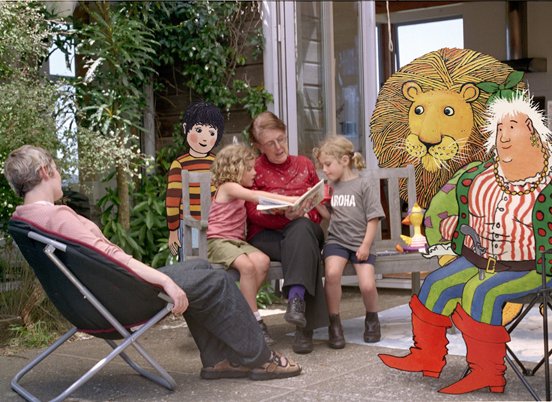
Mahy has found herself in the camera's gaze in documentaries Made in New Zealand and Yvonne MacKay's quirky A Tall, Long Faced Tale (2007), which saw her being interviewed by fellow writer Elizabeth Knox. The latter doco also features more of Euan Frizzell's animation.
Kaitangata Twitch, the latest Mahy novel to come to television, began playing on Māori Television in May 2010. Based around an island with a dark history and a life of its own, the Yvonne Mackay-directed series was shot largely in Governors Bay near Christchurch, the environment where Mahy had "imagined the story taking place".
Mahy cameos in a scene in a library, in the first episode. Kaitangata Twitch has been nominated for international children's television competition the Prix Jeunese, and for another prize in a festival in Houston.
Mahy's novel The Haunting won the Carnegie Medal of the British Library Association, an honour conferred on her three times. Other awards include the Young Observer Fiction Prize (1986); the Italian Premier Grafico Award (1976) and the Dutch Silver Pencil Award (1977).
Mahy has been awarded the Esther Glen Medal of the New Zealand Library Association six times, and the pinnacle of children's literature awards, the Hans Christian Andersen Award (2006).