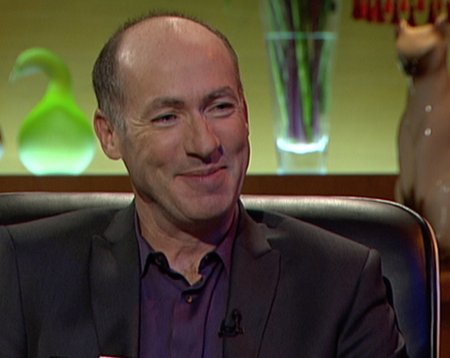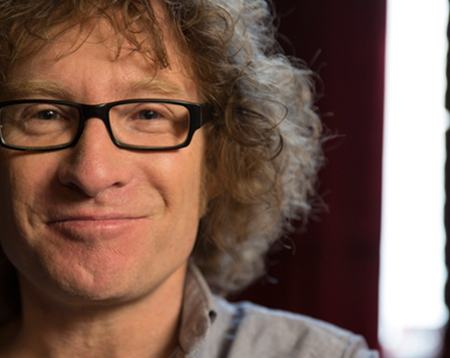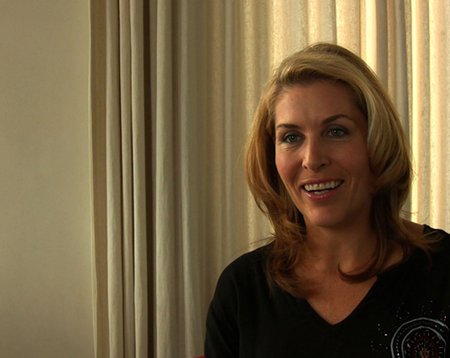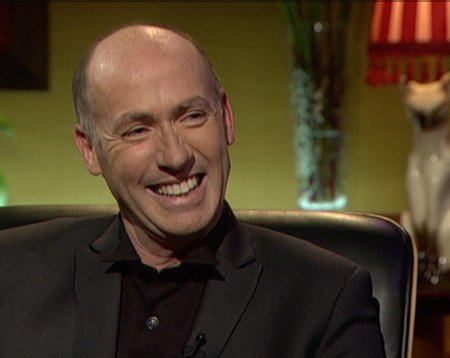
He writes quite a lot about science, but he looks at science with the kind of wonder and reverence that a writer can bring but . . . . when he's just writing about relationships and people and events, he brings the kind of precision that a chemist would have in their daily life...
– Guest Don McGlashan praises Italian author and chemist Primo Levi's short story collection The Periodic Table, in episode two
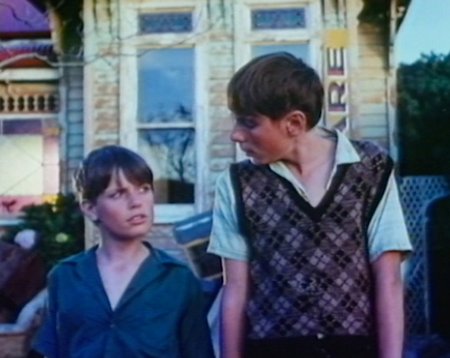
...it's interesting that it still holds young audiences. People at school are made to read Man Alone — especially boys. I think it surprises them to get this view of New Zealand, to see that someone as far back as . . . 70 years ago, nearly 80 years ago, had a view of New Zealand that is stripped completely of the kind of sentimentality most of us still bring to our talking about New Zealand.
– Academic and author Vincent O'Sullivan on John Mulgan's classic novel Man Alone, in episode two
...this is an incredibly timely book to remind us that dodgy real estate developers have been around since, you know, God knows. They essentially founded Auckland, and it seems that we haven't really learnt anything in the last 150 years . . . in many ways the story of Auckland is the story of bad property deals and shonky finances...
– Panelist Te Radar on Gordon McLauchlan's historical essay slash memoir the Life and Times of Auckland, early in episode three
"Short day's journey into night" is the way I'describe it. It doesn't take long to read,and before you know it, he's suffering...
– Steve Braunias on the downward slide of legendary footballer George Best as explored in a book by Michael Parkinson, in episode three
Ron and Hawera are inextricable. He represents a version of Hawera which a lot of people who live there wouldn't necessarily like or agree with, but he epitomises an aspect of Hawera society in this extraordinary way, which he then turns into a fabulous work of fiction.
– Biographer Julia Millen on Taranaki author Ronald Hugh Morrieson, in episode four
...I had a fever which lasted for about four days, and that meant that I was never fully awake or fully asleep, and I had a dream during that time. And in the dream I met an angel on an island off the coast of California, and the angel told me the story of the most important relationship of his life. And then it turned into the story, and I dreamed the first hundred pages of the book...
– Elizabeth Knox on the birth of her novel The Vintner's Luck while taking antibiotics for pneumonia, in episode five
I think he's very good with just a few words, of setting up a location or a scene, and Burning Boy you know it's Nelson; Going West you know it's West Auckland.
– Flying Nun Records founder Roger Shepherd on the vivid locations in Maurice Gee's novels, in episode five
There's a discipline involved in being able to read a comic successfully and he tries to make it as easy as humanly possible. He takes things down to real simple forms; you know, circles and ovals and stuff. He doesn't have a lot of detail in his people, he has lots of detail in his backgrounds.
– Musician and cartoonist Chris Knox on the art of Chris Ware's graphic novels, in episode six
...after I'd given a talk and done a reading from the book, as people were filing out afterwards a little woman — very short woman with grey hair — walked past me, and just patted me on the arm and she said 'Why didn't you write it 20 years ago dear when I needed it?'
– Author Barbara Else on reaction to her 1995 novel The Warrior Queen, in episode six
We should look at The Godwits Fly as perhaps one of the greatest pieces of literature to come out of the interwar period in New Zealand. Her artistic aims with the novel were to show a person living in a real society that was the New Zealand of her time. It hadn't been done before. She believed that New Zealanders were cut off from the country they lived in. They looked away from it to other times and other places, to other conventions of living.
– Researcher Pat Sandbrook on Robin Hyde's The Godwits Fly as a novel of national identity, in episode seven
It's New Zealand's most successful homegrown title, with more than three million copies sold in the hundred years it's been in print.
– Finlay Macdonald introduces the Edmonds Cookery Book, in episode eight
I normally think of poetry as an art form somewhere below macrame, and slightly above making motorcycles out of the tear off tabs of soda cans . . . I found this really accessible.
– Panelist Te Radar expresses surprise at enjoying the book James K. Baxter Poems - Selected and Introduced by Sam Hunt, early in episode nine
This is an astonishingly audacious book from somebody of any age, let alone of 22.
– Panelist Guy Somerset describes Eleanor Catton's debut novel The Rehearsal, early in episode 10
I think that most of us who write for children tend to think like children still. I had a very strong feel for the rhythm in my own books when I was a child, and it's what I keep wanting now. And I suppose it also goes back to dealing with my own children and reading to them, and being aware of what appealed to them. I think children like Hairy Maclary because he gets up to mischief...
– Children's author Lynley Dodd on writing for young audiences, late in episode 12
A lot of people after the novel came out said it was some kind of prediction or forecast [of] where New Zealand was going. But I saw it just as an exercise of 'what If? Let's imagine there was that kind of divide in New Zealand that turned into a civil war, where would you stand? What would you do? How would you feel?
– Author CK Stead on his 1971 dystopian novel Smith's Dream, in episode 11
Ngaio Marsh wrote her last murder at the age of 85, and she'll forever be one of the queens of the genre. But strangely, she was slightly embarrassed by her books and their success.
– Presenter Finlay Macdonald on crime author Ngaio Marsh, late in episode one
I think everyone has a book that cracks it for them, you know? This one, it was almost a religous experience for me.
– Chief Censor Bill Hastings on his love of Victor Hugo's novel Les Misérables, in episode 13
Log in
×