00:00
/
00:00
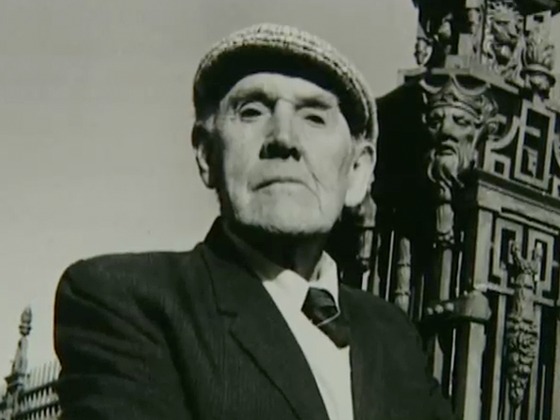
The first of six parts of this full length documentary.
The second of 6 parts of this full length documentary.
The third of 6 parts of this full length documentary.
The fourth of 6 parts of this full length documentary.
The fifth of 6 parts of this full length documentary.
The sixth of 6 parts of this full length documentary.
The credits from this documentary.
1951
Television (Full Length) – 2001
A perspective

Director/producer John Bates has said that the 50th anniversary of the events of 1951 inspired the production of this documentary. A comparatively enlightened commissioning regime recognised the historic significance of the subject, and the anniversary provided an opening for a rare television ‘event'.
"We got to it just in time", comments Bates, referring to the film's timeliness as an historical document. Many of the key figures who were interviewed passed away shortly afterwards. The documentary screened on TV One.
The waterfront dispute of 1951 was the biggest industrial confrontation in New Zealand’s history. It lasted 151 days, from February to July 1951. At its peak, 22,000 waterside workers (wharfies) and other unionists were off the job (out of the country's population of just under two million). The confrontation was the culmination of decades of unrest on the wharves; it polarised politics and split the union movement, families and friendships.
The point of view of the film is clear from the outset. Its sympathies on the waterfront lie with the workers — those who were on the ‘losing' side of the dispute. As is made clear, these people had their stories repressed at the time, and their experience has been ignored or misrepresented ever since.
A sympathetic feature article about the documentary in The NZ Herald by Michelle Hewitson attracted a great deal of vitriolic correspondence. The headline ‘Old Wounds' proved apt. Conservative readers were outraged at what they saw as the glorification of ‘commie stirrers'.
Actually, 1951 cannot be fairly labeled a unionist polemic. Nor is it a dry plod through the biographies of a few major players. The fortunes of Waterside Union leaders Jock Barnes and Toby Hill, Prime Minister Sid Holland, and the sinister Fintan Patrick Walsh ebb and flow through the story, but Bates keeps an eye on the ordinary details of life during the strike too. This is where the heart of the documentary lies. It articulates the human face of history.
Editor Bryan Shaw has been a key collaborator with John Bates on several projects. Their processing of the complex material shows a high level of skill and artistry. The film's many strands are expertly woven into a compelling narrative.
A great deal of primary material is incorporated — not only official radio broadcasts and film, but precious scraps of footage shot by amateur cameramen. The effect of actually seeing the ‘Battle of Myers Park', rather than simply hearing about it, is profound. Throughout, one is also conscious that the integrity of archival film is being respected. Nothing is taken out of context to suit an editing solution. This is a principle of historical filmmaking which has tended to be overlooked in this country.
In the end, 1951 not only stands up as a fascinating piece of television; it is also an important contribution to the historical record of the nation.
- The work of writer and filmmaker Costa Botes includes a run of documentaries, among them Angie, Struggle No More and The Last Dogs of Winter.

If you liked this, you might also like...
Labour Day Collection
Curated to mark Labour Day, this collection features...
The Protest Collection
A collection which spans decades of public protest in...
The Years Back - 13, The State of the Nation (Episode 13)
Includes more on the 1951 dispute
The Green Chain
More workers’ rights activism
Country GP - Tim's Commie Dad
Drama about a unionist, set a year before the lockout
Ken Douglas: Traitor or Visionary?
Documentary on unionist Ken Douglas
Assignment - Back to the Future
More on workers' rights
Heartland - Lyttelton
More port stories

Patu!
A film about protests during the 1981 Springbok Tour
Gallery - Ending the Post Office Go-Slow
Show that impacted on a Post Office dispute
In a Land of Plenty
Documentary on the “story of unemployment in New Zealand”
Intrepid Journeys - Kenya (Peter Elliott)
Narrator Peter Elliott also features in this travel show
New Faces Old Fears
Another documentary directed by John Bates
Someone Else's Country
Documentary on big economic & social changes in the 80s
Sense of Place: Robin Morrison, Photographer
Also directed by John Bates
An Immigrant Nation - Hoots Mon, The Scots in New Zealand
Also directed by John Bates
50 Years of New Zealand Television: 4 - Winners and Losers
Also directed by John Bates
Motormania - Episode Two
Also directed by John Bates
Contemplating the Landscape - Stanley Palmer in Karamea
More from director John Bates
Making New Zealand - Shipping
Documentary on New Zealand's shipping history
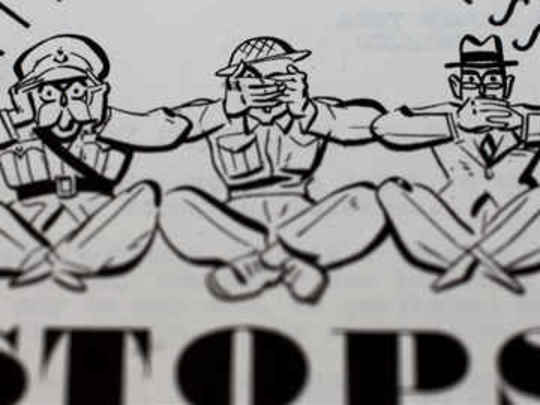
The Naughty Bits - Free Speech and Sensitive Information
More on political censorship and propaganda

Some of My Best Friends are Women
Trade unionist Flo Humphries appears in this documentary