00:00
/
00:00
Desperate Remedies
Film (Trailer and Excerpts) – 1993
A Perspective

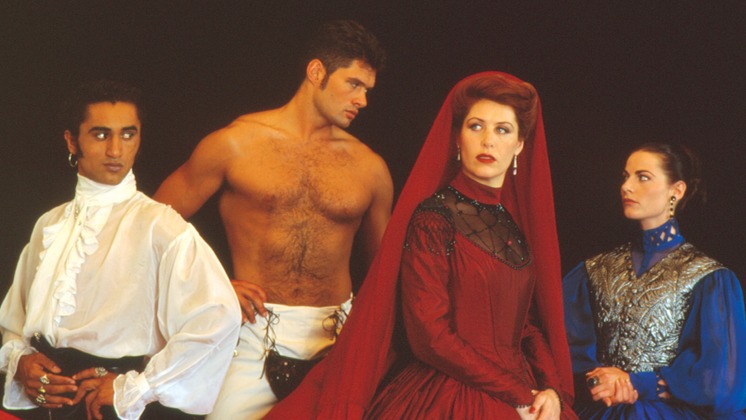
This costume drama by Peter Wells and Stewart Main makes it plain from the very first scene that The Piano (released the same year) it most certainly ain't. It was the first feature by the two filmmakers; previously they had made a number of short films and documentaries together, mostly with gay themes. A complete (and deliberate) contrast to the gritty realism of many New Zealand films being made at that time, Desperate Remedies is camp at its highest, an outrageously operatic bodice ripper, and tremendous fun.
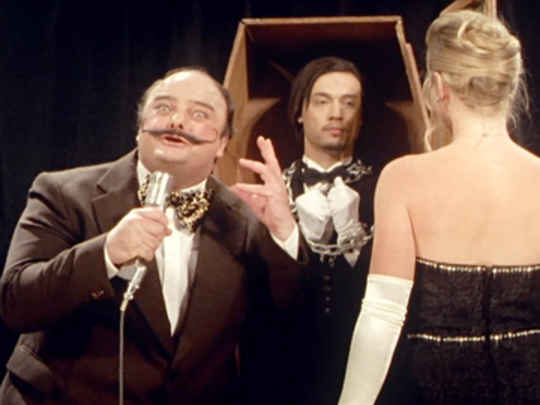
The film's style was based on Hollywood melodramas from the 1930s and 40s featuring strong female characters. Wells asked Jennifer Ward-Lealand to study Joan Crawford in Grand Hotel, and Bette Davis in Jezebel to get ideas for her performance. To ramp up the staginess, techniques from silent films were used, such as exaggerated facial expressions and hand movements, billowing curtains and deep shadows. Lealand's character's name was Dorothea Brooks, her surname a nod to silent star Louise Brooks.
The directors chose to shoot on Fuji stock, known for its heightened — almost garish — colour. Thanks to opulent art direction, sumptuous costumes and theatrical lighting, the film belies its modest budget of around $2 million. Virtually everything of this alternative history of colonial New Zealand was shot in an Auckland harbourside shed, with the port setting resembling that in Werner Rainer Fassbinder's Querelle. To save money on extras, a ‘chorus' was employed (much like in opera) with cast members playing multiple roles.
Music is an integral part of the film, and few scenes are without it. The soundtrack was written by composer Peter Scholes, with excerpts from classical works by composers such as Verdi; the dramatic main theme is from his opera La Forza del Destino.
Producer James Wallace has been a generous benefactor of the arts in New Zealand, and a supporter of many of Wells' and Main's early films. The luscious cinematography is by Leon Narbey, whose many New Zealand features include Whale Rider and No. 2.
Jennifer Ward-Lealand as Dorothea won Best Actress at the Sitges Fantastic Film Festival in Spain. Kevin Smith, who plays the handsome male lead Lawrence, died tragically in 2002, soon after completing a film in China.
Cliff Curtis, who won a NZ Film and TV Award for best supporting actor for his performance as Fraser, acted in Once Were Warriors the following year, and has gone on to a number of big-budget Hollywood films. Marc Savlov in an Austin Chronicle review praised Curtis for realising "a powerfully squirmy role that makes one hunger for several hours in the bath." The cast also features Ward-Lealand's partner Michael Hurst, Lisa Chappell and Geeling Ng (both from Gloss), and Bridget Armstrong.
Desperate Remedies was released in the United States by Miramax, which had reputation its reputation on turning arthouse films into box office successes. The melodramatic medley of Victorian gothic, Peter Greenaway and glam received a range of reviews from US critics. Stephen Holden at The New York Times called it "gorgeous but silly" [...] a hybrid of Ken Russell and a Calvin Klein Obsession perfume ad", but added that as "an allusive post-modern spoof of movie history, Desperate Remedies has its charms". Village Voice praised the film as "luscious flamboyant and wonderfully over-wrought!" Los Angeles Times reviewer Kevin Thomas called it artistically risky, where "a single misstep in tone and control" could cause total collapse. "Happily, Wells and Main never stumble, and their film emerges as a glittery triumph", with a cast that "never falters".
The English press, perhaps better attuned to the film's irony, extolled Desperate's blend of "sex, drugs and classical music" (Vox magazine) and Dickensian depravity. The NME raved that it was "gloriously overblown, shamelessly camp and utterly wonderful...like Pedro Almodovar's best work; it is explosively erotic throughout." The Sunday Times described the film as, "deliciously dotty".
With its florid flourishes, Desperate Remedies appropriately premiered at the Miami Film Festival. The film was an official selection at the Cannes Film Festival (in the Un Certain Regard section), won Best Film and Best Design at the Kiev International Film Festival, and the audience prize at the Turin Lesbian and Gay Film Festival. At the 1994 NZ Film and Television Awards, there were further gongs for Best Cinematography (Leon Narbey), Design (Mike Kane) and Costume Design (Glenis Foster).
Sources include
Stephen Holden, 'Desperate Remedies (1993)' (Review) - The New York Times, 23 May 1994
Marc Savlov, 'Desperate Remedies' (Review) - Austin Chronicle, 8 July 1994
'New York praise for Desperate Remedies' - NZfilm No 50, October 1993, Page 8
'British release for NZ melodrama' - NZfilm No 51, May 1994, Page 9
Desperate Remedies Press Kit

If you liked this, you might also like...
A Tribute to Kevin Smith
Kevin Smith was a versatile actor, who was successful...
The Rainbow Collection
This collection showcases New Zealand lesbian, gay,...

NZ Fashion On Screen
This collection celebrates Kiwi fashion on screen, from...
A Game with No Rules
More stylish complications with actor Jennifer Ward-Lealand

Gloss - First Episode
More melodrama and colourful costume designs
Mesmerized
More desperate relationships in colonial New Zealand
Dangerous Orphans
Also stars Michael Hurst and Jennifer Ward-Lealand
Liebesträume
Another offbeat love story
About Face - My First Suit
Stewart Main & Peter Wells also made this
When Love Comes
Another ensemble romance co-written by Peter Wells
Angel Mine
Another stylish taboo-breaker

Guess Who's Coming to Dinner? - Kevin Smith episode
Kevin Smith comes to dinner
The Governor 1 - The Reverend Traitor (First Episode)
A historical drama series on colonial Governor George Grey
Here to Stay - The English
English settler stories presented by Michael Hurst
Footage
An offbeat film about clothing fetishes
Expressions of Sexuality - Singles
1980s expressions of sexuality
The Edge - Series One, Episode 13
Actor Michael Hurst directing Rome and Juliet in 1993
About Face - Jewel's Darl
Also directed by Peter Wells
Gone up North for a While
Jennifer Ward-Lealand's first screen role
A Double Standard
A documentary on the NZ sex industry
Memory and Desire
Feature film based on a short story by Peter Wells
Red Blooded - Lion Red
Starring Michael Hurst
Vermilion
Also stars Jennifer Ward-Lealand
A Death in the Family
Am acclaimed drama from Peter Wells and Stewart Main
Pansy
An autobiographical film from Peter Wells
Seekers - I Hope You Know What You're Doing (First Episode)
Also stars Jennifer Ward-Lealand
About Face - Jewel's Darl
More romance from Peter Wells
The Last Magic Show
Michael Hurst also acted in this