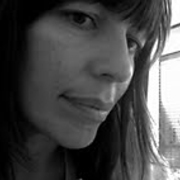
Kathleen Mantel
Kathleen Mantel has made her name with a series of documentaries, often touching on social issues (including problem gambling, parenting and smoking). Mantel has a strong belief that documentaries matter. "They give us an opportunity to see through other eyes into different worlds," she says. "Documentaries open up new ways of seeing. They bring people together."
Mantel began her screen career in the mid 1990s, after studying Film and English Literature at Victoria University. Starting as a sound recordist at TV3, she went on to work behind the scenes in a variety of roles — including as an arts reporter for Nightline — before moving into editing.
In the late 1990s Mantel found herself in New York, working in a busy Soho loft for company Pseudo Programs. Pseudo was one of the first companies to produce broadcast quality live content specifically for the web. Mantel spent three years directing shows there, including Gametime, an hour long, live daily show. Concentrating on computer and video games, Gametime was one of 50 different shows Pseudo streamed each week. Mentored by veteran director and concert lighting guru Joshua White (aka Joshua Light), she also helmed "short experimental documentaries" on everything from art to Japanese subcultures.
Back in New Zealand, Mantel directed 2002's Kids, the first of many one-off documentaries she made for Wellington company Top Shelf. Subtitled The Story of a Teenage Pregnancy, the film followed three teenagers at different stages of their pregnancy.
Mantel went on to interview problem gamblers for It's Not a Game, which won two awards at festivals in the United States. She followed it with one of her most high-profile docos to date. Narrated by Robyn Malcolm, 2005's Leaving the Exclusive Brethren included interviews with members of the separatist Raven-Taylor-Hales branch of the Exclusive Brethren (the first interviews of their kind) — plus others who argued their families had been torn apart after they left or were thrown out by the brethren. The film won Mantel another two American awards, including a silver at the Houston International Independent Film Festival.
Starting with 2008's Raising the Moko (on grandparents raising their grandchildren), Mantel has directed a number of documentaries for Māori Television. In 2010 she was one of a trio of directors who helmed child abuse special Tamariki Ora - A New Beginning. The two-night, three-hour Māori Television broadcast featured interviews with people who had confronted violence in their family and community.
Inside New Zealand doco Dying for a Smoke (2011) examined the tobacco industry in New Zealand, and the high numbers of Māori smokers. Among others, Mantel interviewed corporate whistleblower Jeffrey Wigand (played by Russell Crowe in movie The Insider), and nabbed a rare on-camera interview with representatives of multinational company Imperial Tobacco.
In August 2011 Mantel's doco The Green Chain was chosen to launch the Pakipumeka Aotearoa documentary slot on Māori Television. Winner of the 2012 NZ Television Award for Popular Documentary, it follows the fight of a sawmill worker to expose poisons at his old workplace.
She has also directed episodes of reality show The Palace, about a high profile South Auckland dance troupe, history series Making New Zealand, Pio Terei's travel show Te Araroa: Tales from the Trials, and Grand Designs New Zealand. Mantel has also helmed two seasons of The Barber. It chronicles the largely Māori and Samoan community who frequent a Hastings barbershop, and the barber who decides to move into local politics.
In 2016 Mantel won a Doc Edge award for Best TV Documentary with suicide prevention documentary Target Zero, hosted by Mike King. In 2020 her two-part documentary High School Mums was nominated for an NZ Television Award for Best Factual Series.
Taking the reins from director Kay Ellmers, Mantel directed the fourth instalment of the long-running Whānau documentary series, which followed the stories of Māori families and their children since their birth in 2000. Mantel's 2021 update revisits three of the whānau as their children, now 21, step into adulthood.
In 2022, Mantel was nominated for Best Director at the NZ Television Awards for Chatham Islanders: Tchakat Tchatam Airani. It was named Best Factual Series. The show delves into the rich history and lives of those who live on New Zealand's most remote islands. After realising that many previous insights into the islands were made by males, Mantel spent five weeks capturing the stories of local women (and men).
The following year, Mantel directed and produced Te Hokianga Mai: The Return (2023), an eight-part documentary series sharing the personal journeys of eight Māori reconnecting with their whakapapa and reclaiming their cultural identity. The series explores the lasting impact of urban migration, which left many disconnected from their ancestral roots. Mantel hopes it inspires others to reconnect with te ao Māori, saying, “Start the journey however you want, but do start it.”
In 2025 she directed and produced two-part documentary series Motuhaketanga, following the journey of three Māori women as they rebuild their live post-incarceration. Mantel called it "a documentary about trauma, intergenerational trauma, and motherhood."
Profile updated 3 September 2025
Sources include
Kathleen Mantel
Black Iris website. Accessed 3 September 2025
Top Shelf website (broken link) Accessed 29 November 2012
Scottie Productions website. Accessed 3 September 2025
Interview with Kathleen Mantel, Media Take (episode of Television Series) (Gibson Group, 2017)
Jessica Tyson, 'New TV series traces the personal journey of people reconnecting to whenua' (Interview) Te Ao Māori News, 2 November 2023. Accessed 3 September 2025
Unknown writer, 'TBI Q&I: Kathleen Mantel' (Interview) The Big Idea website (broken link). Loaded 7 May 2013. Accessed 30 November 2022