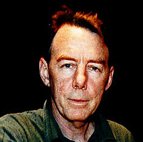
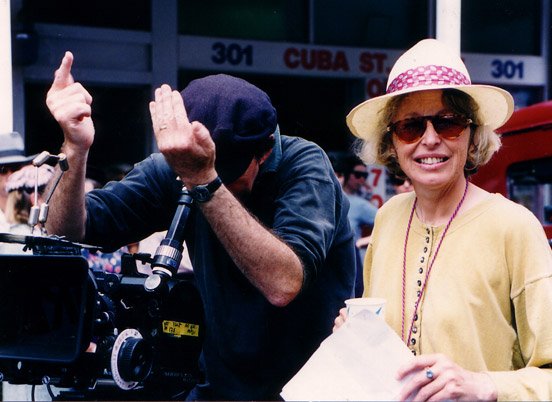
Leon Narbey is one of New Zealand's most acclaimed directors of photography, as well as the man behind classic goldmining drama Illustrious Energy.
Narbey spent his early years on a Waikato far,, in landscapes which now remind him of classic film Vigil. He began drawing from an early age. "My mother influenced me", he told the The Listener, "not that she was an artist, but just her appreciation of nature. Being aware of things. Learning to see." Narbey's interest in cinema grew during a spell as a cinema usher while he was a teen.
At Elam Art School, he specialised in sculpture, and developed an enduring interest in light and shadow. Many of his artworks were installations, using changing colours and light sources to alter the look of a room. As film historian Roger Horrocks has written, Narbey "first turned to film merely as a way of documenting his installations but found that colour and lighting needed to be rethought in film terms." One of the earliest was Room 2. Later Narbey created this film from footage of a large installation which he designed for the opening of New Plymouth's Govett-Brewster Art Gallery.
Beginning in 1972, Narbey lectured in sculpture and mixed media at Canterbury University, and helped establish the Christchurch branch of filmmaking co-op Alternative Cinema. Worrying that the audience for his experimental work "was only about half a dozen people", he then spent three years at the NZ Broadcasting Corporation as a news/current affairs cameraman. The experience allowed Narbey to hone his technical skills, and in the mid 70s he began to branch out into more political filmmaking.
Narbey and his friend, photographer/director Geoff Steven, felt that they "could use film to show injustice or present a truth that had to be revealed." In 1975 the two spent six weeks documenting the Māori land hikoi led by Whina Cooper. Te Matakite o Aotearoa provided "a crash course into things Māori, and to the values and concerns of the different iwi at that time." In 1977 he left his job in television to join Steven on a series of films for NZ Railways. He was also collaborating with Merata Mita and Gerd Pohlmann on a series of documentaries, including the seminal Bastion Point - Day 507, which he later described as "one of the most important films I've worked on". These early documentaries — covering protests, strikes, and Māori protocol — helped establish Narbey's reputation for being able to film in demanding situations.
While following the Māori land march, Narbey and Steven had been taken by the North Island town of Raetihi; its wide, bare streets reminded them of "something out of Sergio Leone's Once Upon a Time in the West". Raetihi became the setting for their first feature Skin Deep, "a story about a young woman who comes from the city ... seeking a better life". The pair were "interested in the honesty of long takes."
Narbey is a fan of films with "dreamlike" qualities, and he brought that interest to Steven's moody Strata (1983), with its arresting imagery of the volcanic plateau. The pair encountered more impressive landscapes in China, including mountains "dusted in cinnamon", while making a trio of ambitious TV documentaries, notably Gung Ho: Rewi Alley of China and The Humble Force.
In this period Narbey also shot after-dark car tale Queen Street and sleekly-shot romance Other Halves, which Narbey calls "one of the first films where we were attempting to make the city as dynamic as possible."
Narbey wanted to feel "technically confident before I ventured into directing". His first project directing solo was half-hour documentary Man of the Trees (1981). This portrait of 92-year-old English conservationist Richard St Barbe Baker sold to 10 countries. Later Narbey made TV doco Visible Evidence (1996), in which Kiwi documentary photographers discuss their work. In-between, Narbey directed his only feature films to date: Illustrious Energy (1987) and The Footstep Man (1992). He co-wrote both with Martin Edmond, who he describes as "a poet" who can "simplify, embellish and polish words and ideas".
Illustrious Energy provides a poetic evocation of the Chinese settler experience during the gold rush. The project began as a docudrama, inspired by Edmond's readings about an old Chinese man who set off "on a great journey but was arrested and put in to Seacliff Mental Hospital". Over time — and various rejections for funding — the main characters slowly transformed into a Chinese son-in-law and father-in law, mining in Central Otago — a landscape whose "amazing" man-made earthworks had long fascinated Narbey.
North and South reviewer Brian McDonnell called Illustrious Energy "faultless as a work of art". It won eight national and two international awards. But timing in with the collapse of company Mirage Entertainment, the film was taken over by the receivers, and the master negative misplaced. Later found in London, it was restored in time for the 2011 round of NZ Film Festivals (read more about Illustrious Energy here).
The ambitious Footstep Man (1992) is a film within a film, as a sound effects man (British actor Steven Grives) starts to lose touch with reality while making a movie about French painter Henri de Toulouse-Lautrec and his muse (Jennifer Ward-Lealand played the object of double obsession). Narbey's research took him to London sound studios and Paris museums. While the film won praise for its French scenes and insights into the filmmaking process, Narbey felt wounded by the reviews (cuts in the budget saw the removal of a key character, a month before the shoot). None-the-less The Footstep Man was nominated for eight NZ Film Awards, including Best Film and Best Director (it won for editing, and Allen Guilford's cinematography).
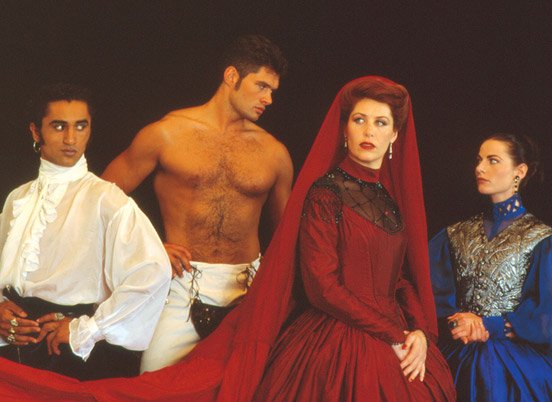
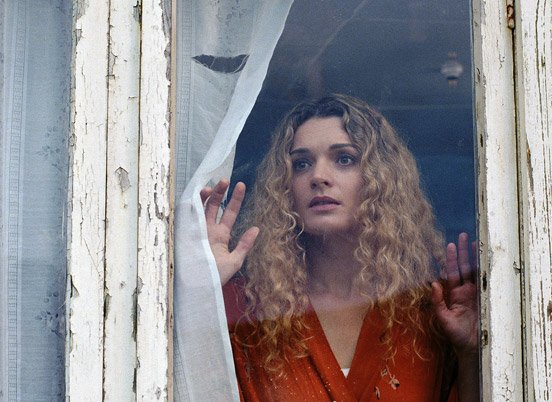
The following year it was Narbey's turn to take the cinematography award, thanks to melodrama Desperate Remedies. The first Kiwi movie to be shot entirely in a studio — in reality an Auckland wharfside warehouse — Desperate features vibrant colours, highly mobile camerawork, and sets that incorporate challenging materials like glass and mirrors. Co-director Peter Wells praised Narbey as a "poet of lighting", and spoke of how he and co-director Stewart Main pushed him beyond his inclination "toward understatement". The trio set out to the evoke intense, dramatic imagery of Hollywood movies in the 1940s. Narbey talks in this video interview about the challenges of shooting inbetween construction noises on a low budget.
After completing Desperate Remedies, Narbey concentrated on documentaries for at least a decade (although he continued to work on the occasional drama). Much of his non-fiction work involves the visual arts, and much of it has involved director Shirley Horrocks (including Len Lye documentary Flip & Two Twisters and Early Days Yet). Horrocks has praised Leon's "wonderful eye...he's meticulous, a perfectionist". Narbey's doco work also includes Colin McCahon: I Am and the multi award-winning Punitive Damage.
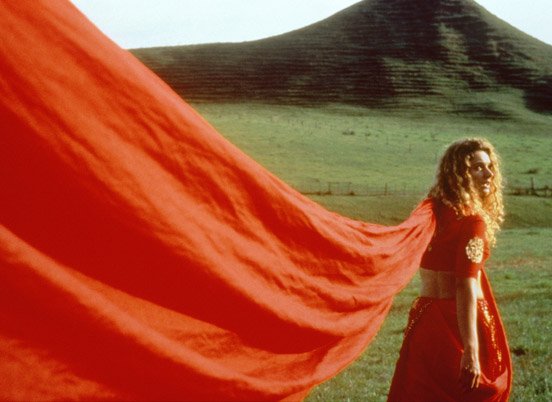
In 2000 Narbey found himself reentering the world of big screen images and dreamlike logic, with Harry Sinclair's second movie, rural romance The Price of Milk . Narbey has also shot the first four features directed by Toa Fraser: No. 2 (2006), based on Fraser's play, shaggy dog tale Dean Spanley (which was shot mostly in England), ballet Giselle and te reo action movie The Dead Lands.
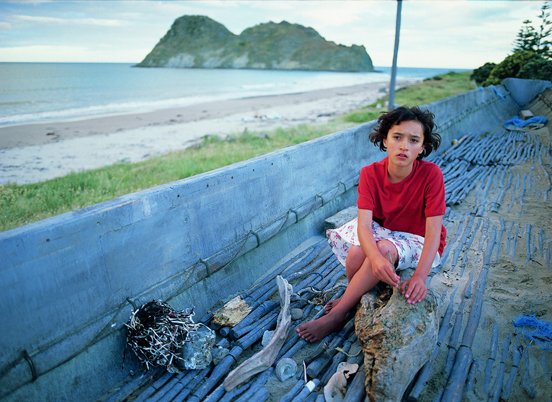
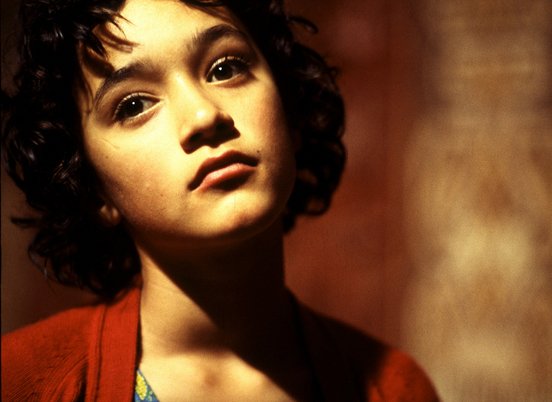
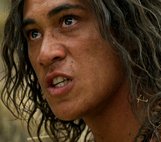
Perhaps his best-known images are those seen in 2002 box office smash Whale Rider, directed by Niki Caro. Narbey's work on the film, a kind of restrained naturalism, won him a feature in American Cinematographer, a rare event for a Kiwi working at home. Whale Rider won audience awards at multiple festivals including Toronto, Sundance, and Rotterdam, and remains one of the highest grossing New Zealand stories outside of its home country.
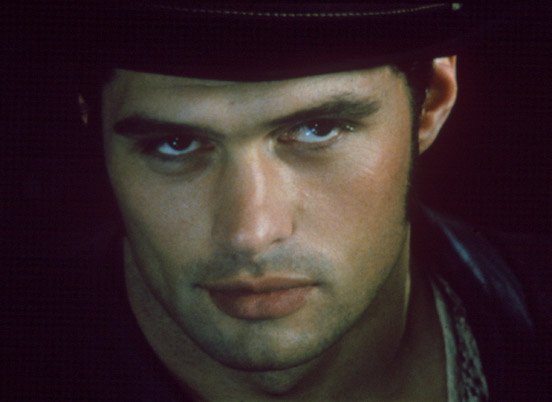
Narbey has continued to show his versatility since, with credits on noir-esque vampire epic Perfect Creature, hit Topp Twins documentary Untouchable Girls, acclaimed Samoan language feature The Orator, and this biopic of Whina Cooper.
His many short film credits include shooting Front Lawn shorts Lounge Bar and Linda's Body, Brad McGann's Possum, I'm So Lonesome I Could Cry, Snap, Peter Wells' stylish Newest City on the Globe, and Garth Maxwell's 50-minute romance Beyond Gravity. Possum won an award for its cinematography at the 1998 Athens Short Film Festival, and the 1998 NZ Film and TV Awards. In this period Narbey was also shooting Unfortunate Experiment dramatisation Clare, and a series of tele-features featuring detective John Duggan — including Duggan's first appearance, Death in Paradise.
In 2007 Helen Martin wrote a perceptive chapter on Narbey's work as both a director and cinematographer for the book New Zealand Filmmakers. In December 2014 Narbey was presented with a special NZ Film Award for Services to Cinema.
- This profile is partly adapted from Duncan Petrie's book, Shot in New Zealand
Updated on 9 February 2024
Sources include
Duncan Petrie, Shot in New Zealand - The art and craft of the Kiwi cinematographer (Auckland: Random House, 2007)
Peter Calder, 'Movie strikes it rich on the goldfields' (Interview) - NZ Herald, 10 June 1988, Section 3, Page 6
Roger Horrocks, ‘New Zealand Film Makers at the Auckland City Art Gallery: Leon Narbey' (Catalogue) 1984
Douglas Jenkin, 'A Rare Energy' (Interview) - NZ Listener, 22 October 1988, Page 32
Brian McDonnell, Review of Illustrious Energy - North and South, 1988
Helen Martin, ‘Leon Narbey - Art, Politics, and the Personal’ in New Zealand Filmmakers. Editors Ian Conrich and Stuart Murray (Detroit: Wayne State University Press, 2007)
Nick Grant, 'Sculptor of light' (Interview) - Onfilm, April 2009, page 12 (Volume 26, no 2)
Nick Grant, 'Sculptor of light ll' (Interview) - Onfilm, May 2009, page 25 (Volume 26, no 2)
Desperate Remedies press kit
The Price of Milk press kit
Log in
×