00:00
/
00:00
An Angel at My Table
Film (Trailer and Excerpts) – 1990
Background to An Angel at My Table
An Angel at My Table saw Jane Campion directing an adaptation of the three volumes of Janet Frame's autobiography — To the Is-Land, An Angel at My Table and The Envoy from Mirror City. Adapted by Australian screenwriter Laura Jones and starring Kerry Fox, the poetic survey of Frame's early life was initially made for television, to be screened in three parts.
Given the "intensely personal" nature of the material, both Campion and producer Bridget Ikin initially believed it as ideally suited to television. But thanks to the efforts of Lindsay Shelton, the project attracted such strong reaction from film festival programmers that it was released theatrically as a 158 minute film.
Building on her earlier success, it established Campion's international reputation (later it became the first New Zealand title selected for the Criterion Collection) and won numerous awards.
Frame's autobiographical articulation of an imaginative female mind with its wings clipped by the stultifying social conformity of 1950s New Zealand was ripe material for Campion's preoccupations. The Janet Frame she puts on-screen is another of her women characters who wrestle with a narrowly prescriptive context to forge their own paths.
Jones' script follows Frame through her materially-impoverished, transient childhood; traumatised adolescence; troubled university years in Dunedin that led to a nervous breakdown, misdiagnosis of schizophrenia and electroshock therapy; through to her emerging confidence as a writer; travels to Europe; and back to New Zealand, tapping contentedly on a typewriter in a caravan in her sister's garden as an internationally successful author.
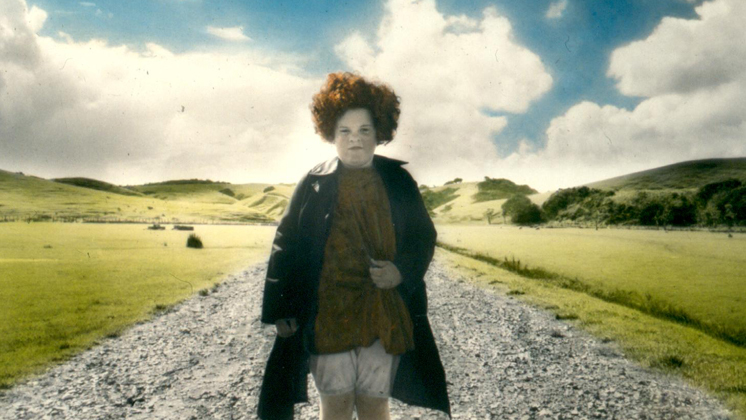
An Angel at My Table threads together key incidents from the autobiography and visualises them in memorable ways. The iconic shot of the young Frame (played by Alexis Keogh) walking down a deserted southern road — southern shadows cast across her, red hair lit like a light bulb — visually captures the charge of Frame's writing: "electricity, the peril the wind sings to in the wires on a gray day".
The cinematography is by Stuart Dryburgh (with Allen Guilford handling the Second Unit) and the resulting imagery is startlingly accomplished, an achievement more notable given the film's original intentions as a television drama.
Campion has talked about how demanding it was for the art department to find the locations, but the consideration was worth it. The scenes of Frame returning to her parents' house, climbing through wire fences into paddocks, silhouetted against the green grass and the blue sky make for an emotive landscape.
In part one the Frame girls, lying around their parents house, look straight out of a Velezquez painting. And later in part three, the images of London (grey, cold), Spain (bright, stark) and Frame's love affair there, are vivid and memorable.
"The different parts of the story had their own quality about them," said Dryburgh. "We both [Campion and I] agreed that colour is mood, so that the second episode, where she's [Frame's] incarcerated in hospital, the low point of her life, we played right down into cool colours [from the warmth of the first part]."
Set and costume details are also especially poignant. Underwear, for example, is one of the uncredited stars. The characters are seen throughout in various normal states of undress, and the underwear is so authentic and evocative, it captures the viscerality, and translates to the screen the importance of detail, in Frame's writing.
Although of course the biographical details are Frame's, Campion also talked about this project as a way to reconnect with her personal experience: "[Frame's autobiography] awakened my own memories of my childhood; her book really seemed to me to be an essay on childhood in New Zealand."
"When I read it [Owls Do Cry] at 14, the same age as Daphne is in the novel . . . her dark, eloquent song captured my heart: 'The day is early with birds beginning and the wren in a cloud piping like the child in the poem, drop thy pipe, thy happy pipe. And the place grows bean flower, pea-green lush of grass, swarm of insects dizzily hitting the high spots.' Frame gave Daphne this inner world of gorgeously imagined riches, but also affirmed it in me, and in countless other sensitive teenage girls: we had been given a voice — poetic, powerful and fated."
An Angel at My Table scooped many of the New Zealand Film and Television Awards in 1990 including Best Film, Director, Screenplay (Laura Jones), Cinematography (Stuart Dryburgh), Female Performance (Kerry Fox), and Performance in a Supporting Role (Martyn Sanderson, who played writer Frank Sargeson).
When it debuted at the Venice Film Festival in 1990, An Angel at My Table won multiple awards and an extended standing ovation. It took second prize overall, though a number of critics argued it should have taken the main award. It was the first New Zealand production to screen at the prestigious festival. At the Toronto Film Festival it won the FIPRESCI International Critics' Award. Kerry Fox was named Best Actress at Spanish festival Valladolid, for her portrayal of Frame as an adult. An Angel at My Table won cinema release in more than 30 countries.
Following on from the publication of the autobiography, the film's success saw Frame's readership swell in New Zealand and overseas.
- Mary-Jane Duffy is a writer, writing tutor and sometime art gallery director.

If you liked this, you might also like...
Dunedin
The Dunedin Collection showcases a city edged by ocean,...
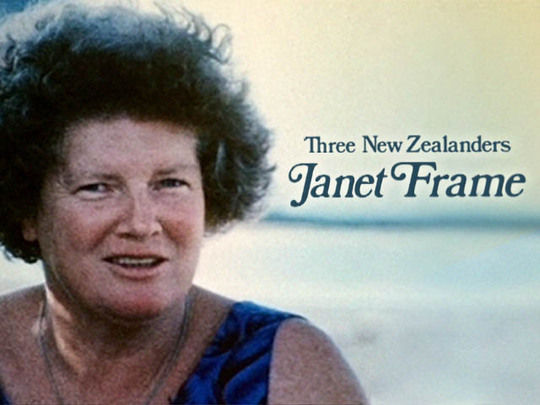
The Janet Frame Collection
This tribute collection celebrates acclaimed NZ writer...
NZ Book Collection
This collection features screen adaptations from New...
The Don McGlashan Collection
Don McGlashan plays drums, horns and guitars, has crafted...
The NZ Film Commission turns 40
A collection celebrating 40 years of the NZ Film...
The Grass is Greener - Jane Campion
Features making of material from this production
Wrestling with the Angel
A documentary about Janet Frame
Three New Zealanders: Janet Frame
A rare TV interview with Janet Frame
Holmes - Janet Frame
A 2000 interview with Janet Frame
Perfectly Frank - The Life of a New Zealand Writer
More on writer Frank Sargeson, who features in this clip
The Audition
A reenactment of Edith Campion’s audition for the film
Leave All Fair
Another NZ writer who went abroad
The Piano
Also directed by Jane Campion
Inside Out - Mental Health over 140 years
A history of mental health care in New Zealand
The Last Tattoo
Also stars Kerry Fox
Loading Docs 2015 - Madness Made Me
A documentary on psychiatric care
Mr Pip
Kerry Fox in another tale of life-saving literature
The Edge - Jane Campion interview
Jane Campion interviewed in 1993
A State of Siege
Acclaimed Vincent Ward adaptation of a Janet Frame story
One of Those People that Live in the World
Another drama dealing with psychiatric insitutions
The Strangest of Angels
An opera film inspired by Janet Frame's life
Out of Sight, Out of Mind
Documentary about terrible legacy of NZ state 'care'
The London Connection
Actor Kerry Fox is interviewed in this
Iris
Another tale about a female writer

We Were Dangerous
More drama set in a 1950s institution
The Rehearsal
Another role for Kerry Fox
Edith Collier: A Light Among Shadows
Another tale of artistic repression in NZ
Winners & Losers: A Great Day
Adaptation of a Frank Sargeson story
Night of the Red Hunter - Telefeature
Features Kerry Fox as a policewoman
Passionless Moments
A Cannes-selected short film directed by Jane Campion
Intersexion
Dr John Money also features in this
Peel
A Cannes-winning short film directed by Jane Campion
Taunt
An early Bridget Ikin production
Crush
Produced by Bridget Ikin
Autumn Fires
Featuring Martyn Sanderson
Pansy
Another artist coping with conservative 50s NZ
New Zealand Centenary of Cinema - Greg Page
This short film pays tribute
The Heart Dances - The Journey of The Piano: the Ballet
A ballet adaptation of Campion's The Piano
First Hand - Changing Minds
Real life mental health care
Lost in Wonderland
Award-winning documentary about another rebel
Sunday - Don McGlashan
Profile of composer Don McGlashan
Daytime Tiger
Trailer for a film about a man living with bipolar disorder
The Power of the Dog
Another book adaptation directed by Jane Campion
Inside Out - Genesis Potini
Chess player Genesis Potini discusses his mental health...

The People We Love
Trailer for a tale of another aspiring writer