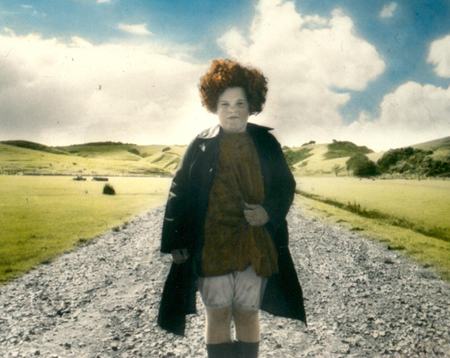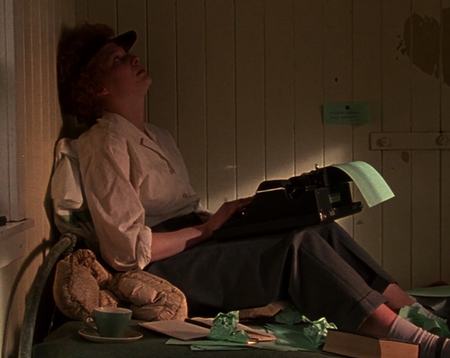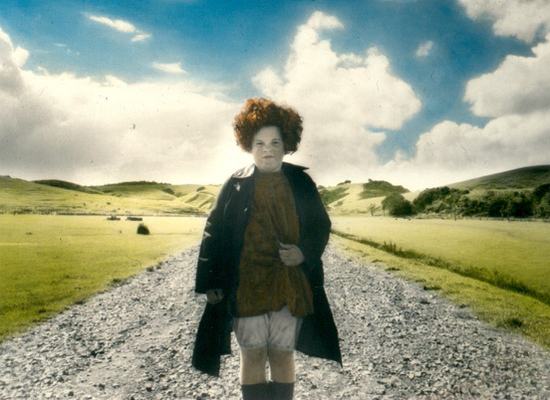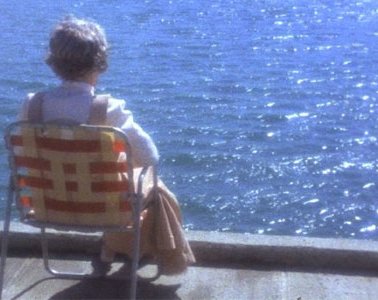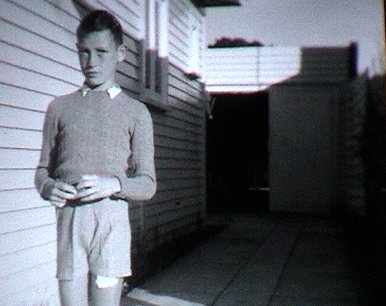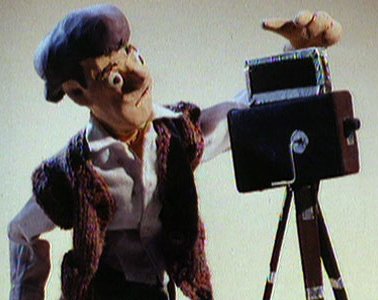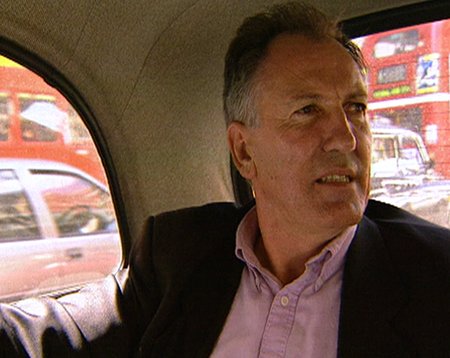
[Jane] Campion enters Frame's very soul. Rarely have childhood scenes been so evocatively recreated.
– Iain Johnstone in a Sunday Times (UK) review
It is told with a clarity and simplicity that is quietly but completely absorbing. Yes, it is visually beautiful, and, yes, it is well-acted, but it doesn’t call attention to its qualities. It tells its story calmly and with great attention to human detail and, watching it, I found myself drawn in with a rare intensity.
– Chicago Sun-Times reviewer Roger Ebert, 21 June 1991
I can't believe it! Well not everyone's that lucky Walda — not on their first try. Something must have clicked with them.
– Frank Sargeson (Martyn Sanderson) after learning that Janet Frame's novel has been accepted for publication
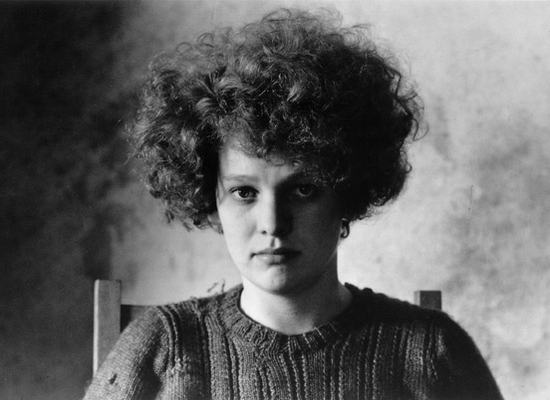
My heart really leapt when Kerry did her read, because she had that really delicious mixture of truth, embarrassment and hope in her performance. I totally believed her.
– Director Jane Campion on auditioning Kerry Fox to play Janet Frame, The Listener, 17 October 2020, page 30
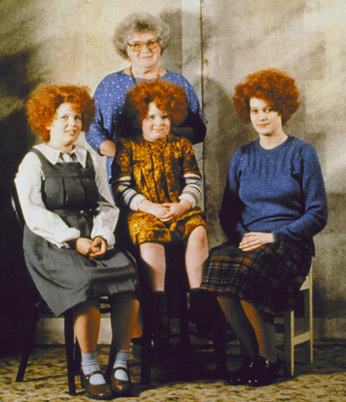
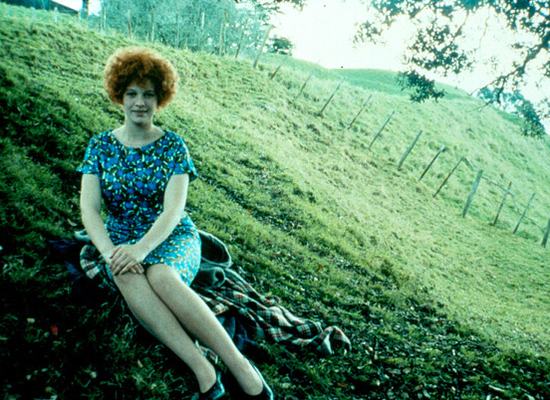
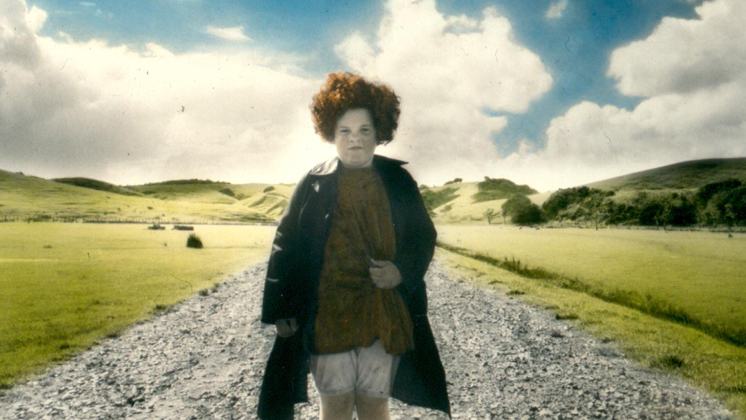
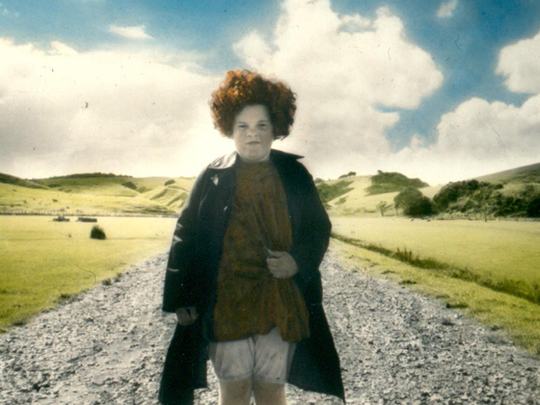
One of the problems about trying to get it funded, I remember, was that women who had power and could have funded it or could have particpated would say things like, "Oh, come on, who wants to know about a sort of plain, fuzzy redheaded girl who has problems with her first period?" You just realise that's the tradition that you only have good-looking women in films. Or it's all about their beauty and their impact on men.
– Director Jane Campion on trying to get the project off the ground, The Listener, 17 October 2020, page 30
It opened doors for me throughout the world. I've never since needed to "prove" I can act. It also set the standard for me for performance, integrity, work ethic, collaboration and a belief in the importance and impact of drama and performance on individual audience members...
– Actor Kerry Fox on how playing Janet Frame changed her life, The Listener, 17 October 2020, page 32
One of the very best films of the year.
– British reviewer Derek Malcolm, in The Guardian
It is one of the most moving books I have ever read, and is, for me, the best book ever written by a New Zealander. Frame achieved that supremely difficult task of finding a voice so natural it feels almost as if it were not written. Her autobiography does so much more than clarify her personal history of misdiagnosis — it tells us about her whole life, which was unexpectedly enchanted, but certainly tragic . . . Her ability to write about her pain and humiliation as calmly and even-handedly as her successes disarmed me. I got to know her in intimate detail and loved her tenderly.
– Jane Campion on Janet Frame's three volume autobiography An Angel at My Table, The Guardian, 19 January 2008
The book had just been published — this was 1982 — and was not yet available in Australia. So, 14 years after first opening Owls Do Cry, I was once more sitting up in my bed, once more reading Janet Frame. And as I read, I sobbed. I was not only reading about Frame's life, I was also re-experiencing my own childhood . . . Lying in bed that weekend in Sydney, I had the idea that a television series based on her story would make her work much better known.
– Jane Campion on reading the first volume of Janet Frame's autobiography while studying film in Sydney, The Guardian, 19 January 2008
...probably the best full-length feature ever produced in this part of the world . . . It is instantaneously seductive and gives the joy of prolonged, almost unquestioning surrender. The film places Campion among the world's best directors of intimate films, confidently moving in a flicker of the camera's eye between comedy, tragedy and straight drama . . . recreates a period more convincingly than any other antipodean film.
– Melbourne Age reviewer Neil Jillett, who named An Angel at My Table his favourite film of the year
Though adapted for television . . . Campion's film is both wholly cinematic and true to her own preoccupations. Her subject is the privations and anxieties of childhood and adolescence, the weird absurdity of ordinary life, and the disconcertingly thin line between normality and madness, all depicted with an unsentimental honesty that veers abruptly (but never jarringly) between naturalism and surrealism, comedy and tragedy.
– British critic Geoff Andrew in Time Out
[Jane Campion] knew immediately that she wanted to make a film based on Frame’s autobiography, and that the proper venue for the material was television. The kind of television experience Campion must have had in mind is the intimate one of watching a movie alone, which can produce a sense of solitude akin to getting lost in a book. It was only in the solitude of reading and writing, or of being alone in nature, that Frame, who was intensely shy, found pleasure in life.
– Amy Taubin on An Angel at My Table being made originally for television, Criterion website, 19 September 2005
I don't want you to leave home again — ever.
– Janet's father (Kevin J Wilson), after she leaves the mental hospital at Seacliff
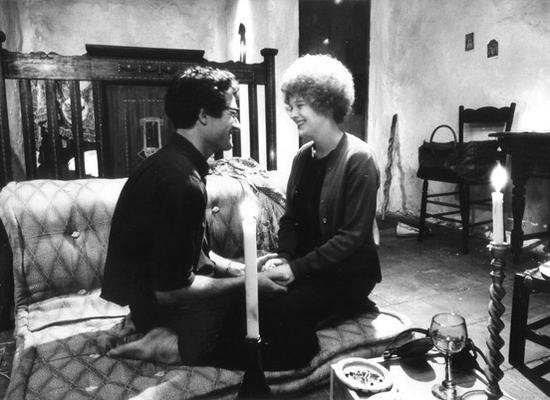
Why don't you come and live here? Well there's a bed and desk in the hut out the back, already set up. You can't write living in suburbia...
– Frank Sargeson (Martyn Sanderson) to Janet Frame (Kerry Fox)
Don't worry if it comes back. It's only your first try.
– Frank Sargeson (Martyn Sanderson) looks at the completed manuscript for Janet Frame's novel Owls Do Cry
At the Venice Film Festival, the reaction to it was unlike that to any other film of mine, before or after. At the screening, I had no feeling of how what was a very long film was going down . . . It was not the best film at the festival, but it was the most loved. When it was awarded the second prize, the Silver Lion, the crowd wouldn't allow the head of the jury to announce the winner. For 10 minutes they chanted, "Angel, Angel, Angel, Angel".
– Jane Campion on the Venice Film Festival debut of An Angel at My Table, The Guardian, 19 January 2008
Log in
×