
The Ian Mune Collection
The Ian Mune Collection
This collection has three backgrounds:
The Whole of the Mune

Ian Mune, Artistic Chameleon
In the company of Ian Mune
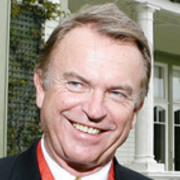
The Whole of the Mune
By Dominic Corry 19 Feb 2026
A reliable and reassuring presence throughout pretty much the entirety of the existence of the New Zealand screen industry, Ian Mune's contribution to Kiwi film and television (setting his considerable stage work aside for the purposes of this feature) is more or less immeasurable.
But you'd be hard pressed to cite any other person who's made a greater individual contribution to our canon, both in front of and behind the camera.
As a performer, his cuddly presence instantly evinces the kind of effortless authenticity that only flows from the best character actors. As a writer and director, he is responsible — in whole or in part — for some of our most defining works.
And he's still acting to this day (as of this writing), showing up in small roles in recent high-profile New Zealand feature films The Rule of Jenny Pen and Pike River, both released in 2025, and he also appears in the sci-fi comedy Mum, I'm Alien Pregnant, which premiered at Sundance 2026.
In the 2007 TV documentary The Life of Ian, Mune describes himself as an actor first, and says that he approaches everything with an actor's brain. For an actor, he certainly does a lot of writing and directing.
It's not rare — or surprising, given its relative size — for major figures in our screen industry to be jacks-of-all-trades, and Mune is perhaps the most extreme example of this. He has always had a Zelig-like tendency to show up wherever something significant involving a camera is occurring in this country; his presence and creativity are strewn throughout every major step in the evolution of film and television in New Zealand.
He was a key participant in what is viewed by many as the starting point of — or if not the starting point, then a major turning point in — the New Zealand film industry: Roger Donaldson's landmark 1977 feature Sleeping Dogs.
In addition to co-starring as Bullen, who steals lead Sam Neill's wife then "asks" him to join in the revolutionary fight against a totalitarian New Zealand government, Mune also helped adapt CK Stead's novel Smith's Dream into the film's screenplay AND functioned as one of the film's art directors alongside Donaldson. In the early days of the New Zealand film industry, everybody mucked in. Mune discusses his involvement in this interview from 2010, and there's an illuminating behind-the-scenes documentary from when the film was first released available to view here. The main participants all reunited in 2004 for a deep dive into the making of the film.
Sleeping Dogs helped kick off a fertile period in the New Zealand film industry, and most of Mune's major works were still to come. But he had been plenty busy before that, and much of this early work is available to view in its entirety on NZ On Screen.
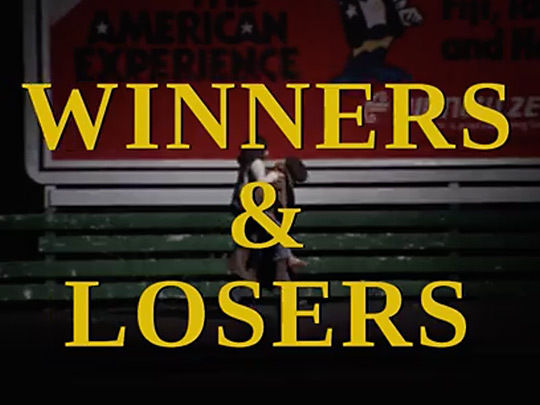
In the build-up to mounting Sleeping Dogs, Mune and Donaldson teamed up on a bunch of projects, perhaps most notably the ambitious 1976 anthology series Winners & Losers (all the episodes are available to watch). Mune and Donaldson shared directing duties across the series, with Mune doing some writing and showing up on screen as well. Mune gained his first solo directing credit on the episode Big Brother, Little Sister, which was based on a story by Witi Ihimaera. The episode dealt with urban Māori alienation, a subject Mune would later revisit as director in 1999's What Becomes of the Broken Hearted?, the sequel to Once Were Warriors. Mune and Donaldson discuss their Winners & Losers collaboration in this interview from 2018.
Mune's notable early TV work also includes the logging town-set Pukemanu (1971–72), one of New Zealand's first drama series (Mune was a writer and also showed up on screen, of course), kidult adventure Rangi's Catch (1973), which was produced as an eight-part series for British television, but screened in New Zealand theatres in a movie edit (Mune played a crim), and the 'did-this-really-exist?' student flat sitcom Buck House (1974–75), for which he was a writer. The episodes of this show on NZ On Screen are well worth a watch, and star baby versions of an alarming array of future notables, such as Paul Holmes, John Clarke and Goodbye Pork Pie lead Tony Barry.
And then there was Derek, an hour-long telefeature starring Mune as an office worker straining against irrelevance on his last day at work. Mune and Donaldson co-wrote and co-directed with David Mitchell. Somewhat controversial in its time — one reviewer called it "so close to the bone it hurt" — this fascinating (disconcerting?) insight into the mind of the New Zealand male in 1974 (we hear Derek’s often lascivious thoughts throughout) was unavailable to view until relatively recently, but thanks to a Park Road Post digitisation, you can now watch the whole messy affair on NZ On Screen. Caution: there will be a surfeit of brown suits.
All this undergirded the cumulative experience that resulted in Sleeping Dogs, and as much as that film heralded a new era (or, an era) for New Zealand cinema, it also marked the beginning of Mune's greater involvement in big screen endeavours, and his most fertile period as a filmmaker. He kept up his acting, too.
He collaborated with director Geoff Murphy on the screenplay for Goodbye Pork Pie (1981), the only film that could possibly challenge Sleeping Dogs in terms of significance to our then-fledgling industry. A throughline can be discerned from Buck House and Pork Pie. Somehow, Mune never ended up in front of the camera for Pork Pie, though.
He was a script consultant on Carry Me Back (1982), another road trip caper which felt like a spiritual follow-up to Goodbye Pork Pie, and he adapted Joy Cowley's novel The Silent One into a screenplay for the beloved 1984 movie directed by Yvonne Mckay.
But it was all preamble to the movie that Mune himself reckons will be remembered as his best: Came a Hot Friday (1985). Building on the increasing commerciality of the nascent New Zealand film industry, Came a Hot Friday felt like the closest thing we had to a rip-roaring blockbuster up until then. A crime comedy about a horse-betting scheme in post-war Aotearoa, it bursts with energy and confidence and features iconic comedian Billy T James in a prominent supporting role. Twenty-five years later, Mune directed Billy T: Te Movie (2011), a documentary about the legendary performer.
Came a Hot Friday was right at the centre of a boom time for New Zealand cinema, and Mune went straight onto a more serious endeavour that deserves to be remembered more than it is. Bridge to Nowhere (1986) is a dark thriller about young hikers (including Came a Hot Friday co-lead Phillip Gordon) running afoul of a surly farmer played by Bruno Lawrence.
Mune's next directorial effort was a made-for-TV movie with a meaningful premise. The Grasscutter (1988) follows an Irishman hiding out in New Zealand from The Troubles as his past catches up with him.
Subsequent feature directing credits include The End of the Golden Weather (1991), Mune's long-in-development adaptation of Bruce Mason's play about a young boy coming of age in 1930s New Zealand, and The Whole of the Moon (1997), a sensitive drama about sick teenagers. That led into the aforementioned What Becomes of the Broken Hearted?, which constituted Mune's last scripted feature film as director.
Throughout this period, Mune never stopped appearing in New Zealand (and some Australian) film and television projects, and he directed episodes of notable shows such as Letter to Blanchy, The Tribe and Mercy Peak.
A memorable later acting role was when Mune portrayed Prime Minister Robert Muldoon in the political mini-series Fallout (1994).
You can also spot Mune in everything from Bruce Morrison's high speed action thriller Shaker Run (1985), Harry Sinclair’s Topless Women Talk About Their Lives (1997), James Napier Robertson's I'm Not Harry Jenson (2009) and Gerard Johnstone's Housebound (2014).
The list of New Zealand-based actors with this degree of breadth in their credits is extremely short — possibly the only other names on it are Ian Watkin and Roy Billing. But Mune also happens to be one of our most accomplished filmmakers.
There are many, many more acting credits on Mune's resume, including multiple short films and various television commercials. He's directed ads too, and even wrote and directed some Ministry of Health instructional videos called Health '80, some of which he also appears in.
Mune may have slowed down a little bit of late, but he's not done yet. It's impossible to imagine the New Zealand screen industry without him.
— Dominic Corry is a freelance film and television journalist, critic and broadcaster, and is an Editor-at-Large at Letterboxd.
Ian Mune, Artistic Chameleon
By Roger Donaldson 19 Feb 2026
Ian Mune (now Sir Ian Mune) and I have been the best of friends for over 50 years.
Way back in the early 1970s, two things happened at about the same time in my life. I had the good fortune to be friends with actress Shirley Dunn, and she had the good fortune to be friends with the actor and stage director Ian Mune. Shirley knew I had ambitions to be involved in making dramatic films and she also knew her good friend Ian had similar ambitions. Shirley thought Ian and I might enjoy each other's company, so invited us both to a dinner party at her place. Her intuition was spot on — over a few glasses of vino and intense conversation, it was clear to both Ian and me that our interests were in total alignment — we instantly set fire to each other's creative juices!
Ian was performing the lead in the play Marat/Sade at Auckland's Mercury Theatre and his portrayal was riveting. He wasn't the tallest guy in the world, but he sure had a commanding voice and presence. Everything Ian did made a lasting impression! We were both about 30 at the time and felt we were in the middle of a midlife crisis, utterly convinced we must get something under our belts before we clicked over another year.
The first thing we planned, along with our good friend David Mitchell, was to make a dramatic film that the three of us co-wrote and co-directed. The film was titled Derek. It was about a character who had been fired from his job. It was Derek's last day at work. The other office workers had organised a going away party that turns embarrassingly wrong for the poor guy. Derek ultimately won praise for Ian and me, and its success helped us convince the Arts Council and Department of Education to underwrite the making of another short film based on the Katherine Mansfield story The Woman at the Store. This film was also well received and helped us raise the financing to make another six films based on Kiwi short stories.
These films were a true collaboration — we co-directed and co-produced them, with Ian acting in some of them and me in the role of cinematographer on some of them. We marketed these seven films together as a series called Winners & Losers. Ian and I took our series to MIPTV, a television trade fair in Cannes, France. At this point in time, no New Zealand films had sold internationally. As a result of our entrepreneurial efforts, the series was ultimately sold to, as I remember it, 52 countries around the world — we thought we were the bee’s knees.
The night after we made our first sale to Swedish TV we overdid our celebration a little bit at the Petit Carlton, a famous Cannes watering hole for filmmakers. As we staggered back to our hotel, we ran into Gunnel Radström, the Swedish film buyer, in the street. As we propped each other up, Gunnel jokingly summed us up, "Winners & Losers, eh? Tonight, I think you are losers." Luckily, Gunnel was wrong; we were two young guys from a country on the other side of the globe fired up with enthusiasm to put Kiwi filmmaking on the world map.
After our international sales success, Ian and I collaborated again to make Karl Stead's novel Smith's Dream into the feature film Sleeping Dogs. Ian and Arthur Baysting wrote the screenplay, and Ian played the role of Bullen opposite Sam Neill in what was Sam's first feature film.
Working with Ian was always very intense and memorable — the only disagreement we ever had was over Ian's love of smoking cigarettes. I remember unsuccessfully trying to convince him that smoking was bad for his health and failing in my attempts to banish him from whatever room we were working in.
After Sleeping Dogs, Ian and I had ambitions to make a film suitable for children, with the plan to release it in the school holidays. Ian and Keith Aberdein wrote the script for Nutcase, a caper film with Ian again playing a key on-screen role — the crazed U-Boat Commander. As with our previous films, our time on Nutcase was a hell of a lot of fun and we kept learning along the way.
Ian is a total artistic chameleon. He can draw, he can paint, he's a brilliant sculptor, he can write and direct, and boy, can he act. His enormous body of work speaks for itself. Although he had many opportunities to work internationally, Ian made the decision his future in the arts was intrinsically tied to New Zealand. New Zealand can be grateful for his unswerving commitment to the country of his birth and I will always be grateful that our paths crossed all those years ago.
— Long-time friend and collaborator of Ian Mune, Roger Donaldson (ONZM) is notable for spearheading the New Zealand film renaissance with Sleeping Dogs (1977). Since the mid-1980s, he has directed feature films in Hollywood and internationally.
In the company of Ian Mune
By Sam Neill 19 Feb 2026
I was delighted to see my friend Ian Mune knighted in 2024. This is not only thoroughly deserved but I would also say, long overdue. There is absolutely no one who has done more for the Arts in New Zealand. This speaks to his diverse and long career as a filmmaker, as a writer, a painter and — of course — as an actor. As long as I can remember, Mune has long been the most important acting figure in our country. I was fortunate to meet him in 1976. Prior to that he was already a legend in points south, and I had been lucky enough to see him in the odd theatrical piece at Downstage in Wellington, or the Mercury in Auckland.
It was a pleasant surprise that he was no bigger than me — Ian's sheer presence can easily fill an entire theatre. I have always felt that people barely notice me, and thus I am the complete antithesis of Ian's colossal personality.
We were about to embark on Roger Donaldson's Sleeping Dogs. Ian was as integral to the entire production as Roger, not just the primary acting force in it, but also writer. The whole concept was very much a partnership between him and Roger. It is easy to forget how radical a departure this production was — no one had made a proper feature film in New Zealand for nearly 20 years, and indeed, this was the first in colour! While I was nominally the lead in the film, I was also quietly learning about my craft by watching Ian carefully. As luck would have it, I had more stuff to do with him than anyone else in the cast.
It is also easy to forget how radical Ian's acting was in the context of 1976. Acting was consciously or subconsciously a rather pale imitation in those days of something that might be found at the Royal Shakespeare Company, including not very good English accents. It was Ian who impressed upon the theatre world that there is no reason why King Lear, for instance, couldn't be performed with a Kiwi accent. One must remember that English spoken by someone in Elizabethan times would have been entirely different from anything you'd hear at the RSC. Not everyone approved of this but it worked, and turned everything around. Just as well, as the country was beginning to make films and television that could only come from our part of the world.
Since that time — and that's almost 50 years — Ian has been constantly busy doing what he does best. But that best, of course, includes directing, performing, conceptualising, theatre work, producing and writing movies and television.
A highlight, certainly for me, was Came a Hot Friday — the best example of that rarity, a New Zealand comedy. I am also very fond of his adaptation of End of the Golden Weather. Then there is What Becomes of the Broken Hearted? and many more.
I note that he has some 75 credits to his name as an actor, and I'd have to say that in all of those cases Mune was exactly what was needed. It is also easy to forget that the work Ian and Roger were doing on film in the early 70s paved the way in New Zealand for film and television. Winners & Losers and The Woman at the Store instalment especially — these showed us all what was possible. Nowadays we are entirely accustomed to films and television being made in this country. Half a century ago this was unthinkable.
I should also mention that Ian's commitment to the screen was entirely focused on our own country. He has devoted all that time to the Arts here in our Aotearoa.
It was very satisfying for me to find him in our series The Twelve: Cape Rock Killer. This was a reunion some 50 years after our first meeting, and in fairness I would have to say he's still better than me! The whole country owes him a debt of gratitude. I put his consummate skill as an actor down to not just technical expertise, but a profound and wise understanding of humankind. That is rare indeed. Quite apart from the fact that he is a good friend, I think no one deserves recognition as much as Ian.
— One of Aotearoa's best-known screen presences, Sir Sam Neill has built an international career as an actor and filmmaker. His television and film work includes leading roles in a number of New Zealand projects, including the breakthrough feature Sleeping Dogs.