00:00
/
00:00
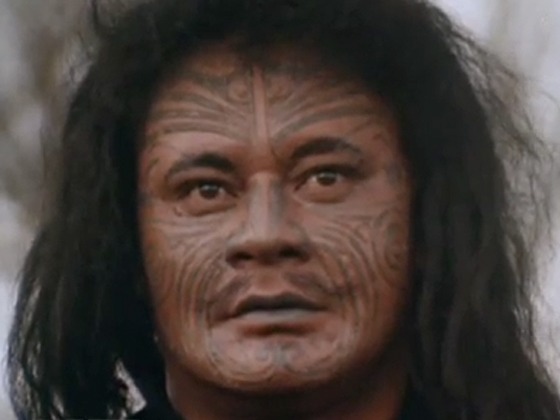
Utu
Film (Trailer and Excerpts) – 1983
A Perspective

If there was a renaissance, or ‘new wave' of NZ film making, then Geoff Murphy was riding it, and ride it he did, tall in the saddle with this vastly ambitious, but sometimes vexing ‘puha western'.
The film's antecedents are clear. Murphy wears his love for Sergio Leone's spaghetti westerns, and the countercultural attitudes of 1970s Hollywood cinema on his sleeve. But the cultural markers of NZ history poke through all the same, and give the picture a defining sense of uniqueness.
Released in 1983, when memories of Bastion Point and the Springbok Tour were fresh, Utu's mix of unresolved colonial conflict and Murphy's energetic direction promised to be as potent as the quadruple-barreled shot-gun Williamson (Bruno Lawrence) brandishes in the film.
The zeitgeist was ripe for a revisionist, genre-challenging epic made from our own muddy, blood-stained whenua. After the one-two punch of Murphy's Goodbye Pork Pie (1981) and Roger Donaldson's Smash Palace (1982), there was a palpable air of expectation. The indications were that this was going to be a breakthrough picture.
It had scale, action and adventure, played out in the wild places of the volcanic plateau; a big rich symphonic score, composed by John Charles, and performed by our very own national orchestra; it had a bunch of well-loved Kiwi thespians, led by the immortal Bruno Lawrence, who revels in the role of the avenging farmer. Most of all it had Anzac Wallace — the union delegate seen in Mangere Bridge documentary The Bridge (starring as guerilla leader Te Wheke). What an impact he made in his sporadic career.
There's much to like in the film, starting with the raw subject matter — which was inspired by real characters and events. A church scene where a Vicar loses his head, and the attack on the Williamson farm are both outstanding sequences, showing what Murphy was capable of. There is great energy and flair in the action scenes.
In The New Yorker, legendary critic Pauline Kael gave Utu an extended rave. She praised Murphy as a filmmaker with an eye for "a deracinated kind of hip lyricism", and argued that he seemed to be directing with a grin on his face. Wrote Kael: "We know this basic story of colonialism from books and movies about other countries, but the ferocity of these skirmishes and raids is played off against an Arcadian beauty that makes your head swim."
There are also moments of Murphy's trademark laconic humour, for example when a post-coital Kura (Tania Bristowe) remarks "didn't you say your gun could fire seven times without stopping?"
Utu's scale is impressive and Murphy crams it all into lavishly shot and composed scenes: threatened frontiersmen, disgruntled natives, lusty wahine, bible-bashing priests, idealistic upper crust officers and traitorous kupapa.
Murphy's work had always existed in the space between popular film genres, and a specifically Kiwi sensibility. But for the first time, he arguably failed to bridge the gap. Utu's shotgun approach to the great New Zealand (colonial) film ultimately leaves the narrative feeling episodic and tangled in the supplejack.
Yet, despite local critical ambivalence, the New Zealand public responded well; for a time it was Aotearoa's second highest grossing film after Murphy's Goodbye Pork Pie. Utu's revisionist take on 'The New Zealand Wars' helped rewire popular perceptions of our history, thanks partly to complexly motivated characters (where the good guys aren't necessarily the boys in blue, and the bad guys aren't always in harakeke skirts).
Roger Horrocks later wrote that although it was an uneven film, Utu "succeeded in stirring up more discussion of New Zealand history than any recent book has done."
Utu was the second Kiwi film officially invited to Cannes (out of competition in 1983; The Scarecrow had been invited to the Director's Fortnight the year before). Variety reviewed it promisingly: "Murphy has produced powerful images and strong performances. Action sequences, special effects, and visual exploitation of a rugged, high country location in central New Zealand are superb ..."
In early 1984 Utu producer Don Blakeney asked Murphy to recut the film to make it "more accessible", arguing that a big sale to France hinged on doing so. The recut has been referred to as 'The Director's Cut', although Geoff Murphy had nothing to do with it, and later regretted allowing it to happen. In a 1985 interview for Onfilm magazine he remarked: "I declined to recut it myself because I was absolutely exhausted and saturated with it. I couldn't face it."
The film was shortened by almost 20 minutes, and the final fireside court martial scene intercut throughout the narrative. The consensus on this cut is that it is tidier, but lacks the personality of the original version.
It would be years until others seriously essayed the territory of the colonial wars. Unfortunately, Vincent Ward's River Queen walked into some of the same holes. The challenge of large scale period recreations on low Kiwi budgets, and of reconciling story conventions with a sense of historic truth that's both respectful and accurate, remains unfulfilled.
Nevertheless in Utu there is a true raw excitement to be had in the risk; at seeing on screen the archetypes of the Western turned to post-colonial New Zealand themes for the first time. It is passionate filmmaking, and with talents like Murphy, Lawrence, Cowley and Wallace firing, a propulsively engaging attempt.
Thirty years after its initial release, Utu Redux introduced the film to a new generation of Kiwi cinema-goers. In 2013, the "enhanced and restored" cut, produced by Utu cinematographer Graeme Cowley with Murphy and editor Mike Horton, premiered at the Wellington opening night of the NZ International Film Festival, and won rave reviews.
The programme guide to the Festival touted the relevance of this "elegiac, absurdist vision of the devil's spirit in paradise", with the final campfire scene speaking "more clearly than ever to a New Zealand audience now".
Said Geoff Murphy in 1982: "When you make a film about racial conflict, you are living dangerously. When you make a film about racial conflict in a country that congratulates itself on what a successful bi-cultural society it is, the danger heightens."
Note: This piece was originally written in 2008 when clips from Utu were first uploaded to NZ On Screen. It has since been updated by NZ On Screen.
Sources include
Roger Horrocks, 'Moving Images in New Zealand' in Headlands: Thinking Through New Zealand Art. Editor Mary Barr (Sydney: Museum of Contemporary Art, 1992)
Pauline Kael, State of the Art: Film Writings 1983-1985 (New York: E. P. Dutton, 1985)
Geoff Murphy, A Life on Film (Auckland: Harper Collins Publishers, 2015)
Roy Murphy, 'Film Maker's Philosophy' (Interview with Geoff Murphy) - Onfilm Magazine, 1985
'Variety Staff', Review: Utu' - Variety, 31 December 1982

If you liked this, you might also like...
The Bruno Lawrence Collection
This collection celebrates the inimitable performances of...
Top 10 NZ Feature Films
NZ On Screen has selected an all-time NZ feature film Top...
The Geoff Murphy Collection
This collection pays tribute to filmmaker Geoff Murphy —...
The NZ Film Commission turns 40
A collection celebrating 40 years of the NZ Film...

The Merata Mita Collection
A collection celebrating Māori filmmaker Merata Mita.
Making Utu
Making of documentary
Utu Redux
Geoff Murphy's 2013 "restored and enhanced" Utu
Close Up - Utu
A Close Up special on the production of Utu
Goodbye Pork Pie
Also written and directed by Geoff Murphy
Numero Bruno
Documentary on actor Bruno Lawrence
NZ Film Commission turns 40 - Past Memories
Geoff Murphy on making this (fifth clip)
Kaleidoscope - NZ Cinema, the Past Decade
Utu features in this survey of NZ film
Wild Man
Another Geoff Murphy period tale
Blerta Revisited
Directed by Geoff Murphy
Ngāti
The story of a Māori community, featuring Wi Kuki Kaa
Crooked Earth
Feature film about contemporary Māori conflict
Little Things
Music video clip also featuring actor Wi Kuki Kaa
Tank Busters
Also directed by Geoff Murphy
Epidemic - Hemi Te Koaka (First Episode)
TV drama written by Keith Aberdein
The New Zealand Wars
The history of Māori vs Pākehā conflict
One of those Blighters
Also features Bruno and Martyn Sanderson
Koha - Mauri
Actor Zac Wallace behind the scenes
Taua - War Party
More violent revenge in the bush
The New Zealand Wars - Episode 4, Taranaki Prophets
Documentary that includes Tītokowaru’s rebellion
Never Say Die
Also directed by Geoff Murphy
Good for Nothing
Another Kiwi western
Tā Moko
Documentary about Māori tattooing
Pictures
Another film set during the New Zealand Wars
The Quiet Earth
Also directed by Geoff Murphy
Staunch
Features another notable mock trial
The Dead Lands
More Māori warriors
This Country - New Zealand
Actor Tim Eliott narrates this 60s documentary
Shipwreck - The Wreck of the Orpheus
More alleged utu
The Beaconsfield Films
Student films which cinematographer Graeme Cowley worked on
Rangatira: Merata Mita - Making Waves
Geoff Murphy talks about casting Merata Mita in Utu
The Power of the Dog
A New Zealand 'western' directed by Jane Campion

Dream in the Making - The Making of Sleeping Dogs
Geoff Murphy worked on this iconic film
Rewi's Last Stand / The Last Stand
A pioneering movie based on Māori/Pākehā conflict
One Land - Full Series
A reality show set in colonial times
NZ Wars - Stories of Tainui
Documentary about the legacy of the Waikato invasion
Savage Play - Full Series
Another 19th century drama
The Convert
Pre-colonial action drama from Lee Tamahori

Mercury Lane, Series One, Episode Seven
Interview with Director Geoff Murphy and actor Merata Mita

Close Up - Patu: Completing the Picture
Merata Mita's iconic documentary

Koha - Merata Mita Interview
Actor Merata Mita talks about the film

Mārama
A more recent film tackling themes of colonisation

NZ Wars: Stories of Tauranga Moana
A documentary looking at the New Zealand wars in Tauranga

Forgive Us All
A more recent Western film

Taggart - We Don't Take Them Like That Anymore
Writer Keith Aberdein also penned this 1975 crime drama