RupertJulian
- Director
- Actor
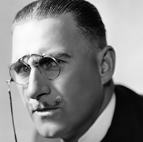
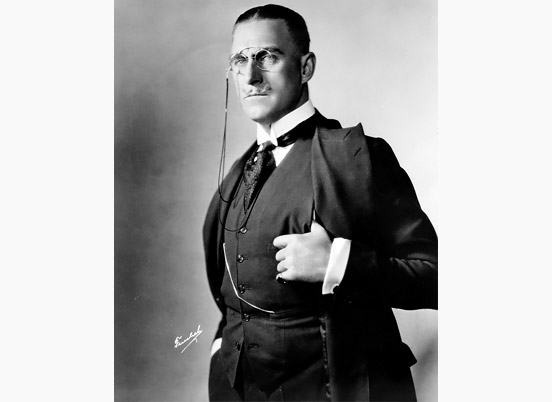
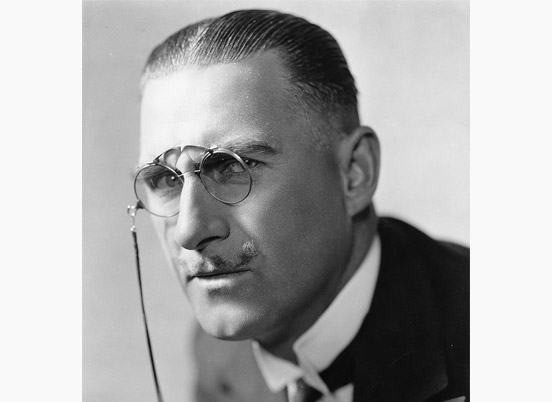
From his early days on the stage, Percy Hayes was known for singing and impressions; but it was as actor Rupert Julian that he made his name in Australia, then in the pictures in America. After earning a million dollars as director, producer, writer and star of The Kaiser, his directing career peaked with The Phantom Of The Opera in 1925, starring Lon Chaney. He stayed on in a mansion in LA's Hollywood Hills, until his death in 1943. Image: courtesy of Marc Wanamaker/Bison Archive
Biography
As a teenager, Percy Hayes became known for his singing voice and ability to do impressions. But it was after his return from the Boer War in 1902 that stage manager Leo du Chateau convinced him to join a touring theatre company from Sydney; he made his professional stage debut at the Auckland Opera House in 1902.
Born Thomas Percival Hayes in Whangaroa on 25 January 1879, he'd moved with his family to Whangarei and then Auckland while growing up. He left his studies at the Marist Brothers school, became a barber on Karangahape Road, and started performing in concerts around the area. Once the theatre had hooked him, he never looked back — moving to the Stine-Evans American Comedy Company later that year, and joining them on their tour to Australia in 1903. He adopted the stage name of Ralph, and eventually Rupert, Julian — seemingly because another Percy Hayes had been convicted of forgery in Wanganui, and he didn’t want to be confused with a criminal (indeed his family took out an ad in the Auckland paper to say they were no relation to the other Percy).
By 1905 he was in one of JC Williamson’s touring companies, where he met a young Sydney actress named Elsie Jane Wilson. They toured together that year and the next, and married in Melbourne in September 1906. The following year they moved to Julius Knight’s company, where they continued to perform throughout Australia and New Zealand. In July of 1911 they travelled by ship to New York, where they both found work, with Julian eventually starring alongside Tyrone Power Sr on a nationwide tour of Julius Caesar. Later they moved to Los Angeles, and almost immediately found work in the new film industry; within three months of arriving in 1913, Julian had appeared in no less than 15 pictures.
Moving Picture World said this about Julian, shortly after his arrival: “…he was immediately recognised as a genius for playing parts of the society-rascal type; the kind of roles that require ease, polish and intellectuality. He convinces his audiences with a cynical smile, a shifting of the eyes or a twitch of the mouth.”
He continued to direct and star (sometimes at the same time) in a variety of short films and features, during the early years of World War I; but what would change his fortunes forever was his startling resemblance to German leader Wilhelm II — which he put to good use in his 1918 feature film The Kaiser: The Beast Of Berlin. Julian wrote, directed, produced and starred in this now-lost propaganda film, which grossed a million dollars at the box office — an astonishing sum at that time, and one which made him a bankable star.
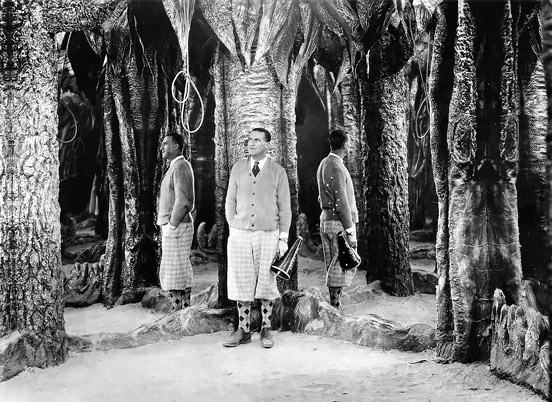
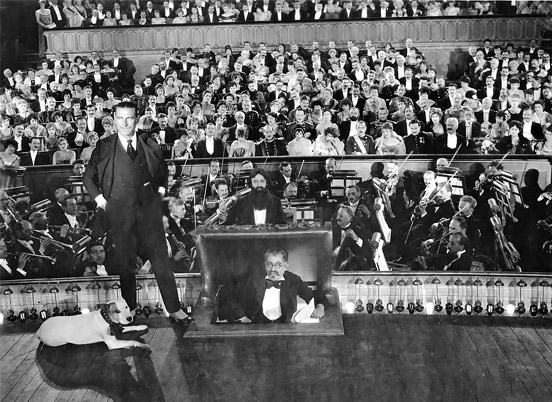
In 1923 Julian’s career took another major turn, when he was asked to replace renowned director Erich von Stroheim on The Merry-Go-Round by producer Irving Thalberg — the first time a powerful Hollywood producer fired a director from his own project. The picture did well (though much of the credit went to von Stroheim, to Julian’s annoyance), and Universal boss Carl Laemmle was grateful enough to offer him his next major project, The Phantom Of The Opera.
Phantom would turn out to be the largest undertaking in Universal’s short history to date ; a new sound stage was built to hold the Paris Opera set (which still stands today), and the biggest star in the business — Lon Chaney, who had appeared in Kaiser for Julian seven years earlier, before winning fame in The Hunchback of Notre Dame — would play the creature.
Julian spent six months in pre-production, then eleven months in production, at a time when films were typically made in two weeks. With a crew of over 150 technical experts, a cast of hundreds, and sequences being shot in new, experimental Technicolor, Phantom had the potential to either bankrupt the studio, or — perhaps — make them rich beyond measure. Julian and Chaney had issues working together, with the crew tending to take Chaney’s side; the cinematographer, Charles Van Enger, was the go-between on set, telling Chaney what Julian had requested — and sometimes being told to tell Julian where to go in return.
Universal held a test screening of the film, decided changes were needed, and brought in another director to film a new ending — the result being that trailers and credits for Phantom’s original release carry hype about Carl Laemmle’s magnificent production, but make little mention of Julian. He was reported to have left the project due to ill health, and it was completed and released without him.
Julian went on to sign a three-picture deal with Cecil B DeMille, whose secretary described him as “a dainty dresser - pretty ties of delicate pink and sometimes a brilliantly colored silk scarf draped around his neck. He is also quite affectionate, providing one gave him just a little bit of leeway…” The pictures were to be of Rupert’s choosing, and he chose quite a variety: a ‘youth-gone-wild’ romance / gangster movie, a nostalgic story of a country doctor, and The Yankee Clipper, which required cast and crew to spend six weeks filming at sea, on a genuine three-master.
His last films were at the beginning of the sound era, directing new stars who spoke and sang on screen; and his final picture would see him back at Universal directing a murder-mystery, The Cat Creeps — like many at that time, a remake of a silent film from a few years earlier. As the silent era drew to a close, so did Rupert’s career, like many actors and directors from that era. He retired in 1936 to their large home in Hollywood, and died of a stroke on 27 December 1943, at the age of 64. Elsie moved up the street to a slightly more modest home, where she remained until her death in 1964.
Profile researched and written by Robert Catto
Screenography
“He looked very severe. He was extremely dignified and he wore a little waxed moustache — it wasn’t caricature, it was a really stunning moustache. He was always beautifully groomed, a little flower in his buttonhole, and he was very, very strict.”
More information
Related images