Making Television in New Zealand
Author

Not Just Local Hits
In the last decade or two, television production has exploded and fragmented, and changed in ways that a viewer in the 1970s or 1980s would find difficult to understand.
International titles now regularly come to New Zealand to shoot. With Power Rangers and its many spin-offs, and big budget productions Sweet Tooth, Ash vs The Evil Dead, Cowboy Bebop, The Lord of the Rings: The Rings of Power, Spartacus: House of Ashur and Chief of War all being filmed here.
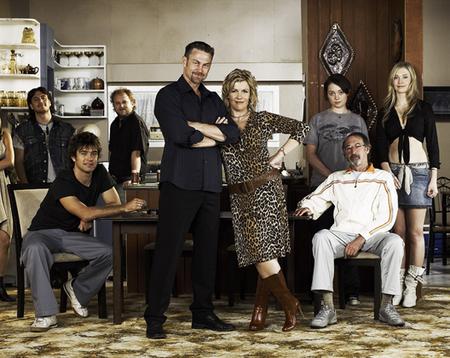
Meanwhile, shows that are written and produced in New Zealand regularly sell into overseas markets. There's Shortland Street, of course, which is shown in Australia, the UK and several territories in Europe and Asia. But it is dwarfed by The Brokenwood Mysteries, which has been broadcast in an astonishing 150 countries, and is showing no sign of slowing down.
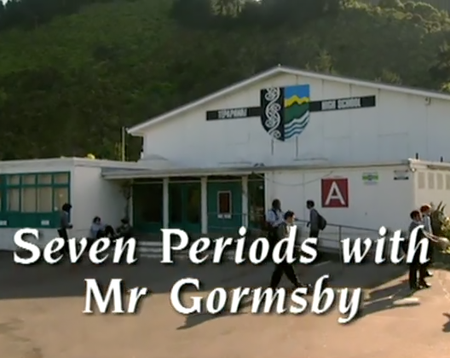
Other mainstream TV shows which have done well here, and have also been popular with international audiences, include Outrageous Fortune, Far North and After The Party - all of which have starred Robyn Malcolm, and Street Legal (2000), The Strip (2002), Seven Periods with Mr Gormsby (2005), The Cult (2009), This Is Not My Life (2010), The Almighty Johnsons (2011), Super City (2011), Reservoir Hill (2009), Top of the Lake (2013), Harry (2013), Friends Like Her (2017), The Gulf (2019), The Luminaries (2020), One Lane Bridge (2020), INSiDE (2020), Rūrangi (2020), Hounds (2021), Madam (2024) and Not Even (2024).
In fact, even as you're reading this, all of those shows are being streamed and viewed somewhere, in an international television market that has effectively become borderless to anyone with an internet connection.
But how did we get here? How did New Zealand become a place that makes great programmes for audiences all over the world?


Broadly-cast
Until the 1970s and 1980s, television production in New Zealand was made for locals only. Although many programmes achieved some level of international sales, mostly to Australia and the UK, New Zealand-made shows were mostly intended to be consumed by Kiwis.
Some early exceptions did begin to make their mark, though, and perhaps gave a few producers an idea that there might be an international market for our productions.
In 1977, the Australian and New Zealand co-production Hunter's Gold was popular in both countries. The 13 episodes of the show were set in Central Otago, during the 1860's gold rush, and starred 13 year old Andrew Hawthorn as a boy who travels to Otago to find his missing father.
With The Governor, which was broadcast the same year, Hunter's Gold represents a very early small-screen representation of a historical New Zealand. Feature film makers had been recreating New Zealand's past for audiences since the 1920s. But in the 1970s and 1980s, our television writers and producers were catching up.
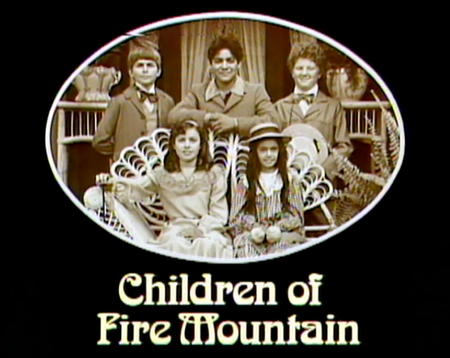
Two years later, in 1979, the show Children of Fire Mountain also depicted a version of 19th century New Zealand, but introduced a supernatural element to its storytelling. Children of Fire Mountain followed an English settler family in 1900, as they tried to establish a life for themselves. Like Hunter's Gold and The Governor, the show depicts the settlers interacting with Māori, and also paying the price for ignoring local wisdom, as a volcanic eruption wipes out their attempts to start a business on land that was not fairly purchased.
Children of Fire Mountain was shown in Australia and the UK, where it was repeated until the 1980s. The show was also broadcast in Czechoslovakia, and was re-released on DVD in the Czech Republic and Slovakia in 2010. Children of Fire Mountain is also notable for being partly filmed on Auckland's Te Henga (Bethells Beach), which would later become a major location in numerous New Zealand productions.
At the same time as our drama producers were beginning to sell their programmes internationally, the Natural History Unit, which had been established in Dunedin in 1977, was also making friends in Australia, the UK and beyond. The programme Seven Black Robins followed the incredible efforts of Kiwi conservationist Don Merton and his team to rescue the Black Robin (kakaruia, karure) from certain extinction.
In the years since Seven Black Robins and its sequels, The Natural History Unit's — later known as NHNZ — nature and wildlife shows have reached global audiences. From the early 1980s to the 1990s, a series of films made in the Antarctic, Icebird, Under the Ice, Emperors of Antarctica and Solid Water Liquid Rock, established the company as a regular provider of overseas programming — and as a trusted production partner with the American Discovery Channel and others.
From Locally Made to International Markets
Meanwhile, Closer to Home...
Meanwhile, back in Auckland, a new era was brewing. The 1981 series Under the Mountain was a stunningly successful adaptation of Maurice Gee's 1979 young-adult novel. The show's eight half-hour episodes were sold into many overseas territories or were shown together as a cut-down feature-length film.
Under the Mountain is often called a coming of age for the entire New Zealand television industry, and was a huge influence on the next generation of New Zealand writers and directors.
A few years later, in 1983 and 1984, the science fiction-themed Children of the Dog Star went into production. The show was written by local powerhouse Ken Catran, who had also adapted Under the Mountain. Children of the Dog Star followed a teen girl named Gretchen, who is sent away on holiday to her uncle and aunt's farm and stumbles across yet another alien invasion of the earth. Children of the Dog Star was sold to many overseas markets, including the UK, Australia, Malaysia, Hong Kong and several European territories.
The following year, Children of the Dog Star was joined by the fantastic Terry and the Gun Runners, which kept its action earth-bound, but also picked up a sizable local following.
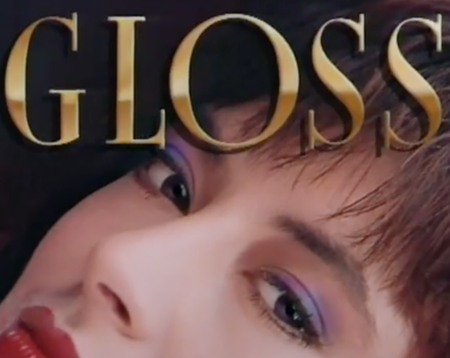
Throughout the 1980s, New Zealand-made television continued to evolve, as shows such as Gloss (1987 to 1990) expanded our base of writers, actors and directors. Gloss was also a cult hit in European and U.S markets, with viewing parties in Amsterdam and bootlegged VHS copies being mailed to desperate fans in San Francisco and New York.
Local crews also gained experience on the British and Australian co-production The New Adventures of Black Beauty, which was shot in New Zealand in 1990 and 1991. This show was also seen in North America and Europe, and it aired on ITV in the UK.
Aotearoa on International Screens
But in the early 1990s, something very odd — and overdue — happened. American producer Rob Tapert has been commissioned to make a series of TV movies, featuring the mythical Hercules as a re-imagined Conan type figure. Turnaround on these shows would be tight, and the North American winter was closing in. So Tapert decided to look at South Africa and Australia as possible locations. But a chance conversation with a fellow producer in a Los Angeles studio carpark alerted Tapert to New Zealand as an untapped resource and potentially a fantastic place to base his productions.
Tapert and a few of his partners flew into Auckland in 1994 and realised immediately they had struck gold. The landscapes around the Auckland west-coast beaches were perfect, and there was already an experienced pool of local technicians, trained up by years of smaller-scale television and film productions. Those first TV movies were soon spun into a TV series, and Hercules: The Legendary Journeys and Xena: Warrior Princess became the foundation stones of New Zealand's reputation as a place to make international TV and films.
A couple of years later, many of the crew who had gained their first international credits on Hercules and Xena would relocate to Wellington to work on Peter Jackson's Lord of the Rings film trilogy. When the first of those films, The Fellowship of the Ring, was released around the world in 2001, New Zealand quickly became a premier destination for North American and European location scouts.
But that overnight recognition had been built on the work of New Zealand's television industry, which had been making quality productions here, and sending them overseas, for years.