
At one point Mike King was so famous, he appeared on three TV channels on the same night. In this straight-talking Funny As interview, King talks beginnings, celebrity, addiction, and practice makes perfect...including:
- "Day one of my comedy career" at age eight — "probably day one of my downfall"
- Cooking for Billy T James, and admiring how Billy T was naughty, but "never crossed the line"
- The clever talking that led to his very first live performance — "the highest I've ever been in comedy"
- Adopting a bad boy, leather-jacketed persona after his television debut on A Bit After Ten
- The "down and dirty" era while hosting TV show Pulp Comedy, and regretting "hurtful" comedy material
- Becoming one of New Zealand's highest earning comics, and realising he still hated himself
For more of Mike King, check out this Funny As interview with King and fellow comedian Andrew Clark.

Hanelle Harris is the creator and one of the stars of web series Baby Mama’s Club, which brings Māori and Pasifika solo mothers into the spotlight. Hanelle discusses several topics during her Funny As interview, including:
- Enjoying playing the villains in plays from a young age, because they always had a lot of “comedy and sarcasm”
- How she believed getting pregnant at 18 meant that she couldn't have a successful acting career
- Deciding to write for the screen, because there were no stories that she wanted to direct
- Creating Baby Mama’s Club to empower young mothers to “make something of their lives”, and create positive representations of Māori and Pasifika women
- Teaming up with the cast of Flat3 to create a rap battle — Girl Fight — to tackle the issue of racism
- Reflecting on the problems of past comedy, and how modern audiences can take offense to anything

Growing up around stage shows and TV studios, future Billy T award-winner Dai Henwood knew from early on that he wanted to be involved in comedy. In this Funny As interview, the 7 Days veteran discusses several topics, including:
- Going straight from the hospital after being born, to the back of a theatre during a performance of Glide Time — which his father Ray Henwood was acting in (the play later became sitcom Gliding On)
- How doing an extended King Lear monologue is going to lose the crowd, and doing a play inside a coffin
- Doing stand-up comedy in character, as professional wrestler P-Funk Chainsaw and John D'Bankteller
- Feeling like an imposter after not being able to fill venues at the Melbourne Comedy Festival
- How touring rural New Zealand improved his comedy, through realising he could just be himself
- Finding his way as a TV presenter on shows like Insert Video Here, 7 Days and Dancing with the Stars


Director, actor and ex-stand-up comedian Danny Mulheron has a take no prisoners approach to comedy — and to interviews. Among other topics, this Funny As conversation sees Mulheron:
- Teaming up with his creative partner, writer Dave Armstrong while the pair were still in school (2 minutes)
- Being thrown in the deep end with his first acting role on long-running soap Close to Home while still a teenager (4 minutes)
- Talking about his dislike of puns (3 minutes), heading to drama school as a "grotesque" actor (7 minutes), and past adventures in Hollywood
- Stirring the pot with Stephen Sinclair in their farcical play The Sex Fiend. "It did really well. All the cool people hated it." (14 minutes)
- Doing a foul-mouthed impression of teacher Mr Gormsby — the stand-up character from Mulheron's comedy series Seven Periods with Mr Gormsby (15 minutes)
- Describing finding most of the show's "fantastic" cast of high school students on location in Wainuiomata — "they knew what it was like to be outcast" (22 minutes)
- Recalling how Peter Jackson puppet movie Meet the Feebles was made to be "as grotesque, and stupid and offensive" as possible — and being asked to mock-execute someone, while dressed in a hippo costume (27 minutes)
- Describing the reaction to pioneering Pasifika TV comedy The Semisis — "We were mobbed in Ōtāhuhu in KFCs, but avoided in Ponsonby" (35 minutes)
- “Save the best jokes for your friends” and more advice for young comedians (41 minutes)
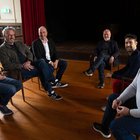
The Manawatu has provided fertile ground for New Zealand comedic talent, including producing six-person comedy group Facial DBX. In this interview, Jeremy Corbett and Dave Horn, Jon Bridges, David Downs, Paul Horan and Paul Yates talk about Facial DBX and Palmerston North’s comedy roots, as well as:
- Early influences and memories of what made them laugh, including The Goons and Monty Python
- Paul Yates seeing John Clarke “doing Fred Dagg in front of a camera” while shooting a TV advert
- Massey University’s capping revue being an “ugly duckling phase” that led them on to better and greater things
- Coming up with the “excruciating name” Facial DBX
- Being mistaken for Billy Bragg while on tour
- Wishing they were more rock’n’roll, but being the “nerdiest little tourers”
- Starting the comedy club at Kitty O’Brien’s pub in Auckland, before the “massive leap” that was setting up The Classic Comedy Club
Note: Jeremy and Nigel Corbett get their own Funny As interview here (Jeremy also did this solo interview). An interview with Jon Bridges and Paul Yates can be found here.

Musician turned TV producer turned radio presenter Simon Morris pops up among the Funny As interviews mainly to talk about John Clarke — one of the funniest guys Morris has ever met. Among the topics covered:
- How Morris and Clarke first bonded in a cafe at Victoria University
- Clarke's love of the way British comedian Peter Cook combined "low comedy and unbelievably high comedy at the same time...and that was John really"
- Joining Clarke for a badly-reviewed student extravaganza, where Clarke was one of the only stand outs
- How hit TV show Gliding On (on which Morris directed) utilised the classic sitcom formula of a bunch of characters in a single setting, who irritate one another
- Working on the TV pilot for comedy group Funny Business, who arrived "just three years too soon"
For more on John Clarke, check out this extended interview with Clarke's daughter, writer Lorin Clarke.
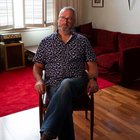
In his third interview for Funny As, comedian and 7 Days presenter Jeremy Corbett discusses more singular comedic pursuits, including his extensive career in radio and TV. On top of mentioning how his university degree ran a "distant third" to DJing on Radio Massey and the capping revue, he talks about:
- Being part of the team that established Energy FM in New Plymouth — including Steven Joyce in his pre-MP days — and being the only one to leave early and miss out on becoming a millionaire
- Spending 18 years as breakfast host on More FM, then losing interest when radio became homogenised: the "oh I put the coloureds in with the whites in the washing machine, have you ever done that? Text us" moment
- The awkward moment where he played a tasteless parody song to singer John Mayer in a radio interview
- Memories of a comedy pilot with Paul Holmes and Mike Hosking, which turned into "a pissing contest between the two of them to be either the most knowledgeable or funniest"
- 7 Days being his "dream show", the importance of the writers' room, and getting goosebumps watching the first show go to air
- Changing a te reo comedy routine on The Project, after taking on board feedback that the routine was "not particularly woke" — and the challenge of delivering the routine in Māori
Jeremy Corbett can also be seen in these Funny As interviews with his brother Nigel, and as part of comedy group Facial DBX.

Actor, writer, and director Madeleine Sami has been honing her skills in theatre, television and film since she was a teen. She talks in this Funny As interview about Kiwi humour, performing, and other subjects, including:
- Coming from a large, close extended family, where "everyone's got a good singing voice and everyone's a comedian"
- Travelling around the world to perform in Toa Fraser plays Bare and No. 2, soon after leaving high school
- Learning to write on drama/comedy TV series Super City, and playing all five lead characters in the first season
- Worries over whether Americans would get the humour in her and Jackie van Beek's film The Breaker Upperers
- Feeling excited that New Zealand comedy is respected overseas — "It feels really nice, it feels like we can be ourselves and laugh at ourselves and the rest of the world get it"
- Wanting to try stand-up comedy next

Annie Whittle had already made her mark as a singer, before she played all the female roles on the first season of comedy hit A Week of It. In this Funny As interview she talks about:
- How her musical ear and British-Kiwi upbringing helped her "hear the music in language and in accents and dialects" — which fed into her acting work on A Week of It
- How the exhilarating, adrenaline-fuelled experience of doing multiple Week of It sketches before a live audience lifted the performances higher
- Getting to play everyone from the Queen to bag ladies to "vapid blonde" barwoman Charlene on the show
- Her "gift" of a role on Shortland Street as funny, fragile PA Barb Heywood
- Acting alongside the clever, modest, enigmatic Billy T James on his sitcom

Being Chinese: A New Zealander’s Story author Helene Wong grew up in 1950s Aotearoa, and has worked in the arts as a performer, writer, and film critic. She discusses her varied career in this Funny As interview, including:
- Growing up with radio comedy, being the class clown at school, and realising that you could make people laugh with voices and accents
- The university capping review being a revelation and a liberation — how it presented an opportunity to deal with issues and was more than just "prancing about on the stage"
- How the introduction of television meant being able to see politicians — "their physicality, their flaws and their body language" — which provided wonderful source material for satirists
- Working with Roger Hall, John Clarke, Dave Smith and Catherine Downes on university revue One in Five, and mimicking three-screen promotional film This is New Zealand to open the show
- Working for Prime Minister Robert Muldoon in the 70s as a social policy advisor — despite spending “the previous few years having a lot of fun satirising him” — and feeling that he had a "kind of dark force field around him"
- Reaching a turning point in comedy about Asians in New Zealand; Asians have started to "take back the power" and "as opposed to encouraging audiences to laugh at us, we’re now getting them to laugh with us"
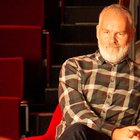
Comedian turned producer Paul Horan interviewed more than 120 people for the Funny As series. In the 100th interview for the show, he finds himself in the hot seat. Horan ranges across Kiwi comedy history as well as his own, including:
- How making John Clarke laugh was like qualifying for the Olympics — and how the distinctive voice of Clarke's character Fred Dagg was influenced by horse racing commentator Peter Kelly
- His theory that David Lange's beloved "smell the uranium" joke from 1985 may have influenced New Zealand's emerging comedians
- How comedy festivals provided a valuable education for Kiwi stand-up talents — from talking with visiting comedians after a show, to witnessing Bill Bailey spin "an extraordinary routine out of the most absurd idea"
- How Facial DBX (Horan was a member) transformed "from a group of stupid students, through to performers, through to people who ran a venue" (Auckland's Classic Comedy Club)
- Feeling "extraordinarily proud" to be part of the Kiwi comedy tradition — an art form that forged its own path and thrived despite criticism and a lack of government support
Note: Horan is also part of this Funny As discussion about comedy group Facial DBX.
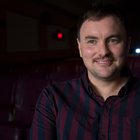
Tom Sainsbury is an accomplished playwright, actor and director, who found national fame in 2017 with his Snapchat impressions of politician Paula Bennett. In this interview he covers many topics, including:
- His early inspirations, like The Naked Gun, French and Saunders and Star Wars
- Feeling that he’s “clocked” theatre, with projects in other mediums on the go
- Working with Madeleine Sami on TV series Super City, after meeting her at a party
- How the immediacy of Snapchat makes it an ideal medium for satire
- Meeting and liking his repeated political parody victim, Paula Bennett
- His hope that political correctness will start to become the butt of jokes, rather than a comedy constraint
Sainsbury also makes an appearance in the final minutes of this Funny As interview with Chris Parker, to discuss comedy troupe Snort.

Burton Silver has created comic strips about dope-smoking hedgehogs and books about artistic cats. He also operated some remote-controlled canines on Country Calendar. In this Funny As interview, he mentions many things, including:
- How his Listener comic strip Bogor began from the idea of the fantasies people spin when they're alone — and why the hedgehog character was allowed to get stoned
- Creating ridiculous hoaxes for TV's Country Calendar
- How "if you're serious about being stupid, then it's funny"
- His joy in getting the "New Zealand humour" of his book Dancing with Cats onto America's Daily Show
- His thoughts on Kiwi humour, clever ways of winning media coverage, and the importance of combining business with creativity

The multi-talented Jim Hopkins started as a serious debater, but inspired by a more comedic style of debating, brought it to New Zealand shores. In this Funny As interview Hopkins trains his wit on a variety of topics, including:
- Wanting to study architecture and aviation, but not doing well enough in either maths or physics to measure up
- Discovering the comedic style of debating associated with the Oxford Union, while in Australia for a university debating competition
- Bringing this lighter style of debating back to New Zealand, filling halls and eventually bringing it to television
- The time a group of nuns and their pupils left mid-debate, disgruntled with the "physical and licentious" topic
- Comedy as a way of dealing with fear
James Griffin is the brains behind many successful Kiwi TV dramas and comedies (he co-created Outrageous Fortune and The Almighty Johnsons). He talks in this Funny As interview about failing, succeeding and more, including:
- Putting together a TV pilot for comedy group Funny Business, while working at TVNZ's drama department
- Writing comedy scripts for "old school gentleman" Billy T James
- How he became script editor for 1980s melodrama Gloss in his mid-20s, and drank lots of champagne
- Being asked to work on a film Pacific Islanders would like, which ultimately became hit movie Sione's Wedding
- Learning a lot from failing (City Life, Diplomatic Immunity) as "it can teach you a few things if you're smart enough to learn"
- How infusing comedy into his dramas (Outrageous Fortune, The Almighty Johnsons) "normalised" Kiwis to seeing New Zealand humour on screen
Rick Harris began working as Billy T James' minder in 1986 — "I drove the car, I rolled the smokes, I made the tea." He reminisces about the fun times they had in this Funny As interview. Billy T James Show co-star Peter Rowley joins Harris, 19 minutes in. They discuss subjects such as:
- The first time Rick met Billy
- The many sides of the man
- The real life inspiration behind Billy T's iconic laugh (13 minutes in)
- How Billy T loved to have fun, including spraying Rowley with a firehose while he was asleep in bed
- How Billy was able to get away with anything — says Rowley: "He had this lovely, almost little boy quality housed in this super talented adult" (24 minutes)
- Billy being a "law unto himself", who disliked listening to advice
- Billy's concern for his daughter Cherie when his house was shot at, and their "immense" bond
Note: For more on Billy T, check out Peter Rowley's solo interview for Funny As.

Goretti Chadwick and Anapela Polataivao have been performing as comedy duo Pani & Pani since the mid 2000s. They created and hosted TV's Game of Bros, and have appeared on Fresh. This interview includes the duo discussing:
- Taking the mickey out of their mums’ enthusiasm for potatoes while growing up
- Their early love of Billy T James, and finding the best laughs were to be had in church
- How a failed attempt to avoid a famous teacher at Auckland Girls' Grammar School led Chadwick to acting studies at Unitec, and later taking up comedy
- Polataivao finding the itch for drama through cheeky improvisation during Sunday School plays, being a founder of theatre group Kila Kokonut Krew, and why she still considers herself a dramatic actor
- How Pani & Pani was inspired by Charlotte Dawson advice show How’s Life?, and trying to make each other laugh
- How Pani & Pani are highly exaggerated versions of themselves
In this Funny As interview, writer Lorin Clarke, daughter of comedic legend John Clarke, shares memories of her “hilarious dad” and his “two separate careers in two separate continents”. From Fred Dagg to farnarkeling, she covers:
- Her dad being the “prat-falling paper collector” during pass-the-parcel games at birthday parties
- His enjoyment of “the art of exaggeration” and how he always said his greatest strength was that he came from the audience — starting with Fred Dagg
- Her dad's first day at Victoria University being a defining moment, because of the stimulating creative community he found himself in
- His move to Australia allowing the chance to reinvent himself, and “expand his career into a whole lot of new areas”
- That it wasn't so much a fear of flying that kept him in his own world, rather “that he liked to be where he was”
- How New Zealand framed much of his perspective on the world
- The “tsunami of love and support” the family received on John Clarke’s passing
Note: For more on John Clarke, check out this Funny As interview with Simon Morris.